📍Jaipur | 1 Oct, 2026, 11:07 AM
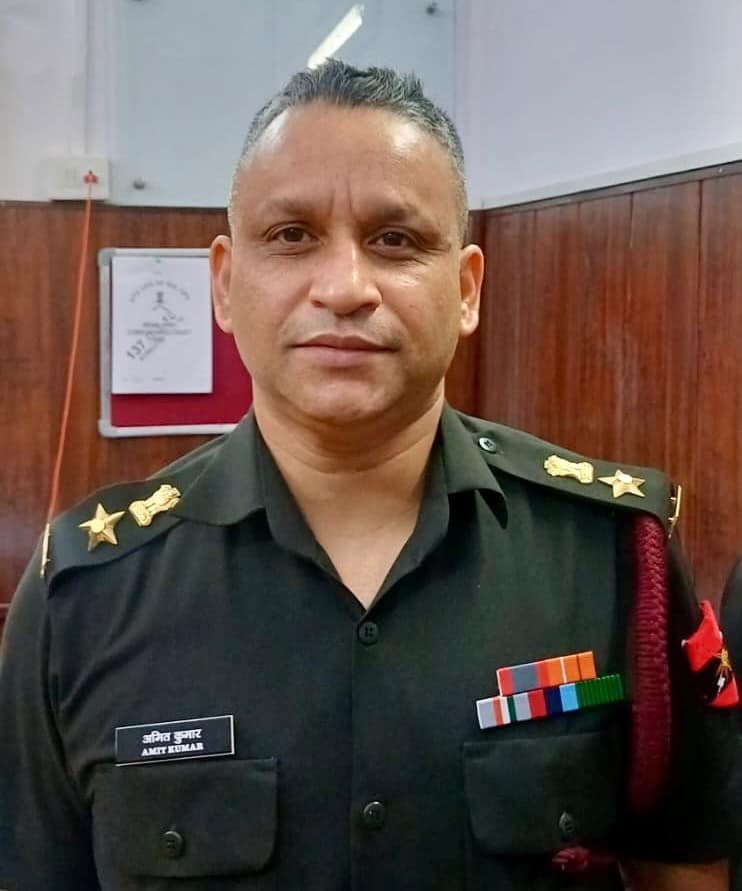
Sometime in 2011, while serving at Suratgarh as a young Major in the Army Medical Corps, I heard a Brigade Commander say something about ex-servicemen that stayed with me. He was reminding those responsible for looking after them that whenever a veteran approached us, we needed to remember who was standing before us. There was something about the way he spoke of them that touched a chord. I understood his words then, but perhaps I had not yet lived long enough in uniform to understand their full meaning.
Learning Respect from Veterans
A few years later, while serving at Base Hospital, Delhi Cantonment, that understanding deepened. A group of ex-servicemen came with a grievance. They were not getting some of their medicines and were visibly agitated. In their frustration, one of them said, almost as a reminder rather than a complaint, “We have fought the Kargil War. Just get us our medicines.” They were jawans, and I was an officer, but that distinction meant very little to me at that moment. They had served before me. They were senior veterans. Addressing them respectfully as “Sir” came naturally. I assured them that we would try to resolve their problem. What I remember today, however, is not merely the issue of medicines. I remember how much it mattered that somebody had listened.
Seeing the Uniform from the Other Side
Years have passed since then. Today, working closely with veterans and their families, I understand my Brigade Commander’s words better than I did as that young Major in Suratgarh. I am also much closer now to the other side of the uniform. A few years from now, I too will become an ex-serviceman.
And that changes the way one looks at the elderly veteran who walks through the door.
Often, he does not come to us when everything is going well. He comes when he is anxious-a medicine may not be available, treatment may have been delayed, a hospital response may have left him confused, or he may simply not know what to do next. Before looking at the file in his hand, perhaps we should first look at the person carrying it.
Offer him a chair. Let him settle down. Give him a glass of water. And then listen.
These are small things. Yet I have repeatedly seen how much anxiety can disappear when someone feels that another person is genuinely prepared to hear him.
The Power of Listening During Uncertainty
Only recently, I was reminded of this again. The son of an elderly ex-serviceman came to us deeply worried about his father. The veteran, around seventy, had multiple illnesses and had remained in hospital for several weeks, requiring ventilatory support. The son was not a doctor, but weeks beside his father’s bed had taught him enough medical terminology to understand much of what was happening. He had followed every development and was frightened by what might happen next. The hospital had begun attempting to wean his father from the ventilator. To the son, however, the discussion about the coming days sounded almost like a deadline. His anxiety was visible. There was little that we sitting across the table could change about his father’s illness. Nor could we promise an outcome that medicine itself could not promise.
But we could explain.
We told him what the process meant and that further decisions would depend upon how his father responded. A senior colleague sitting with me shared his own experience of having seen seriously ill patients improve when circumstances had initially appeared discouraging. Gradually, the son’s anxiety began to settle. Before he left, we gave him our contact details and asked him to keep us informed.
His father’s medical condition had not changed during those few minutes.
But the son who walked out of the room was calmer than the son who had walked in.
Compassion as a Form of Care
Perhaps that is one of the simplest lessons my years in medicine and uniform have taught me. We cannot solve every problem, cure every illness or promise every family the outcome it desperately wants. But we can always listen, explain and treat anxiety with patience and uncertainty with compassion. When the person before us is an ageing veteran, there is something else worth remembering. The elderly man who walks slowly into our office today was not always old. There was a time when he could march farther than many of us, endure conditions that would test us today, stay away from his family for months and stand his watch while the country slept.
Age may have slowed his steps, but it cannot erase the journey that he bravely lived.
International Day of Older Persons: Looking Beyond Numbers
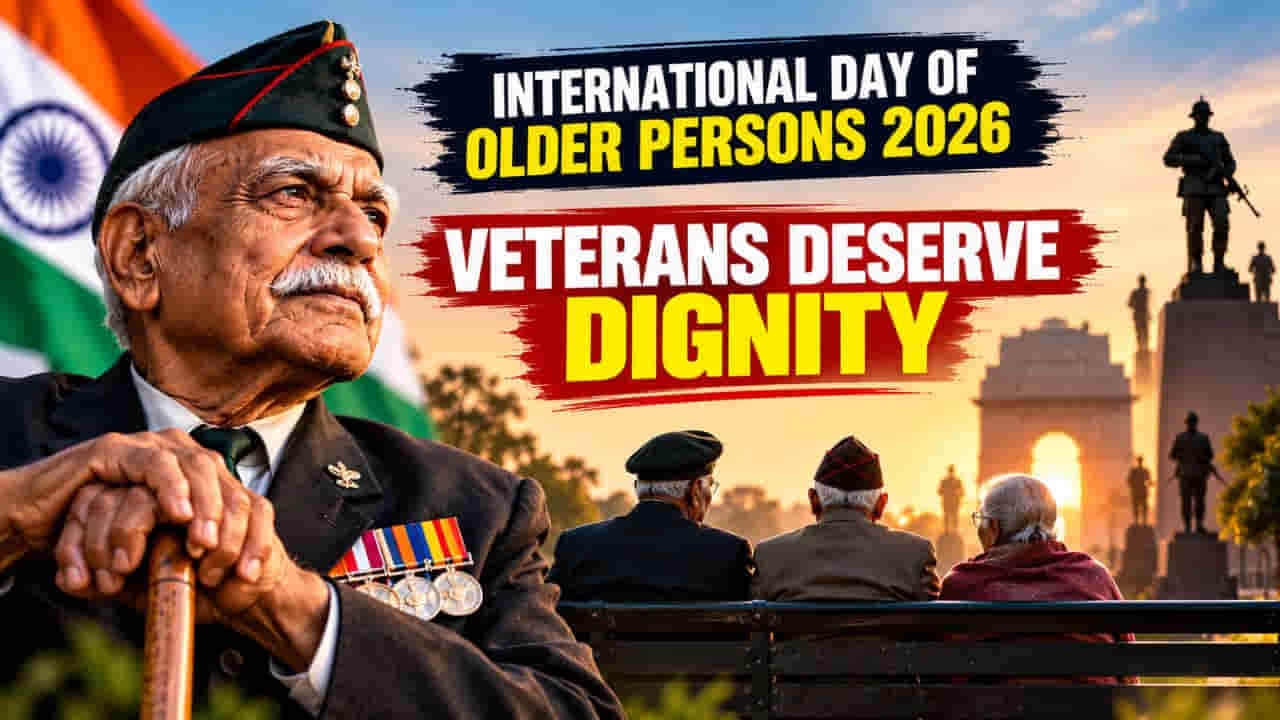
Every year on 1 October, the International Day of Older Persons gives us an opportunity to reflect on this. Ageing is often described through numbers- age, blood pressure, blood sugar, medical conditions or degree of dependence. Somewhere among these numbers, however, we can easily lose sight of the person.
Behind every ageing face is a lifetime.
There are families raised, responsibilities shouldered, difficult decisions taken, sacrifices made, losses endured and contributions that may never find a place in any official record. Growing old may change what a person can physically do, but it does not diminish what that person has been-or what he continues to mean.
Patience: The Unwritten Prescription
Healthcare for the elderly, therefore, cannot be measured only through medicines, investigations, procedures and hospital beds. There is another component of care that does not appear on a prescription.
It is patience.
An elderly person may take longer to describe his symptoms. He may ask the same question twice. He may struggle to understand why a document has to be uploaded or why something once done across a counter must now be completed on a screen. Slowness should never be mistaken for inability. Nor should assistance gradually become a substitute for autonomy. There is a difference between helping an elderly person and taking over his decisions simply because doing so is faster. True assistance should enable him to retain as much independence as possible.
Dignity Lies in the Small Details
Dignity also lies in details. A name, an age, a medical history or an investigation report may appear to be just another entry in a busy healthcare system. But to the person whose life that record represents, it is not a minor detail. Accuracy tells the patient that somebody has paid attention.
A patient should never feel that he has become merely a number in a system.
Dignity also depends upon whether the system created to provide care actually works. A healthcare facility may possess equipment and established procedures, but their value lies in whether they are available when a patient needs them. For the elderly person waiting for care, the consequence of a system not working is simple: treatment is delayed.
Age may slow a veteran’s steps. Our procedures should not slow them further.
Bridging the Digital Divide
Technology has added another dimension to ageing. Digital systems have made healthcare faster and more transparent, but the transition has not been equally easy for everyone. What appears to us as a simple OTP, portal, QR code or online form can become a genuine obstacle for someone who spent most of his working life in a world where services were delivered face to face.
Digital literacy must never become a new test of eligibility for dignity. A counter that takes two additional minutes to explain a procedure, a healthcare worker who repeats an instruction without irritation, or a younger person who helps with an online form without making the senior citizen feel helpless- these are small interventions. Yet they can make the difference between dependence and dignity.
Accountability and Compassion Must Coexist
Healthcare systems also require checks and accountability. Public resources must be protected and irregularities examined. Compassion cannot mean abandoning scrutiny. But scrutiny must be fair. A discrepancy deserves examination, but examination should begin with facts rather than conclusions. Sometimes an explanation will reveal a simple error. At other times, closer examination may uncover something requiring action. The objective should neither be to find wrongdoing everywhere nor to explain every irregularity away. It should be to establish the truth. And throughout that process, the beneficiary should never become collateral damage. Perhaps that is what a truly veteran-friendly healthcare system means. It is not a system without rules. It is one in which rules, accountability, efficiency and compassion work together without losing sight of the person for whom the system exists.
The Responsibility Begins at Home
This responsibility does not begin or end at a hospital or government office. It begins at home.
Our parents and grandparents may repeat stories we have already heard. Their pace may no longer match ours. They may require help with things that once came naturally to them. In the rush of our own lives, patience can sometimes become the first casualty. Perhaps that is precisely when it is needed most. One day, if we are fortunate, we too will grow old. The technologies around us will have changed. The world may move at a speed unfamiliar to us. We too may stand before a counter trying to understand a procedure that seems obvious to the person on the other side.
And perhaps what we will want at that moment will not be sympathy. We will want time. We will want to be heard. Above all, we will want to be treated as adults whose lifetime of experience has not disappeared merely because our bodies have begun to slow down.
Standing Watch Over Their Dignity
The International Day of Older Persons therefore need not be marked only through ceremonies, messages or tributes. Its meaning can be found in ordinary behaviour—in listening without impatience, explaining rather than dismissing, protecting without patronising and recognising the individual behind the age. For those of us privileged to work with veterans, there is an additional reason to remember this. The elderly veteran before us is not simply an ageing beneficiary of a healthcare system. He is someone who once stood his watch so that others could live their lives in relative security. Today, perhaps, it is our turn to stand watch over something equally precious-his dignity. A society should not be judged merely by how rapidly it progresses. It should also be judged by whether, in its rush towards the future, it remembers those who helped bring it this far.
When Age Slows the Steps, Dignity Must Never Fade
On 1 October, perhaps our tribute to older persons can begin without grand promises.
It can begin with a chair.
- A glass of water.
- A few minutes of patient listening.
- An explanation offered without irritation.
- A helping hand offered without taking away independence.
And the understanding that the elderly person standing before us was not always elderly.
Once, he stood where we stand today. And one day, if life is kind enough to give us those years, we may stand where he stands today. That thought alone should be enough to remind us:
When age slows the steps, dignity must never be allowed to fade.