Home Blog Page 9

The bow cannon project started in 2011, not completed even after 15 years of delivery; PAC led to the delay

Dhanush gun production
Dhanush Gun Production Delay: PAC Report Reveals Why 155mm Indigenous Howitzer Took So Long. (Image for representational purpose only. AI-Generated Image)

Dhanush gun delay: Public Accounts Committee of Parliament i.e. Public Accounts Committee (PAC) has expressed concern on delays in the production of Indian Army’s indigenous bow 155 mm/45 caliber cannon. Many of the most important things that are related to are revealed. This report doesn’t just matter the delay in the delivery of bow cannon, but also tells what technical difficulties, lack of infrastructure and skill gaps were encountered while developing this system in India.

As per PAC report Bow Project Started in 2011. The motive was to prepare an electronic and mechanically upgraded cannon of 155 mm/45 caliber for the Indian Army. The first Ordnance Factory Board in this work i.e. OFB’s major role. After the corporateization of OFB, the company associated with ARMAMENTS is associated with AIWEIL i.e. Advanced Vapons and Equipment India Limited (AWEIL) production.

Dhanush gun production delay: Why need the bow project?

Indian Army Has Long 155 Mm/39 Caliber Boforce Sops existed. The contract of the purchase of these cannons took place in 1986 with Sweden’s company AB Boforce. The agreement also included technology transfer, creating some assemblies and sub-assemblies in India.

But the new artillery gun may not be included for a long time. The reduction of 39 caliber cannons was significantly increased by 2009. Following this, India chose to develop new cannon based on its existing potential. The Defence Acquisition Council i.e. DAC approved the ‘Bi Indian’ category for the purchase of 155 mm/39 and 45 caliber guns in October 2011. Then the bow project began.

Technical Challenges in the beginning

The Ministry of Defence in the report pointed out that before India Artillery Gun was not designed and manufactured. Prepared within 12 months close to the approval of the first two prototype DAC. After this, the detailed investigation and trial of these began. Further prototypes were prepared based on the results of the trial.

According to the Ministry of Defence, the problem was that many important parts of the Gun as well as it had to be designed and developed for the first time in India. So the method of testing and evaluation as well as the production gradually evolved. Dhanush Gun delay production

Damage to barrels and mascara brakes during test in 2012

Validation firing was carried out in May 2012 at the earliest stage of bow development. Damage to the barrel and mascara brake of the gun during this time.

Thereafter new approval for further process in September 2012 based on 45 caliber barrels and electronic subsystem checks. Indent of creating guns to OFB in March 2013.

Some technical problems were revealed even in subsequent tests. Majal Break during User Exploitation Firing in July 2017 and all-systems associated with him were spoiled. It was then examined.

Ministry of Defence No one reason in the subsequent investigation was found responsible for the event. During the investigation into the Balasore-based Proof and Experitial Establishment i.e. PXE, pressure oscillation was observed due to the burning of propelent. In the Board of Officers’ Investigation Report in July 2018, the failure of the mascara break was not linked to the wastage system. Dhanush Gun delay production

User trials were longer than normal guns

Testing of bows also remained longer than normal process. The ministry told the PAC that the bow was also tested in three guns’ True Formation and six guns’ battery formation.

In general, a new gun can also be checked as a single gun during a user trial. But the bow was laid in different formulations as per the need for the army.

Bulk Production Clearance (BPC) for bow as per report found in February 2019. Earlier, it took a long development, trial and event phase. Dhanush Gun delay production

BPC milled in 2019, yet production stuck

A few bow guns were released to the army in March 2019 after receiving the BPC. After that the factory started preparing for mass production.

The factory had prepared several sub-assemblies at its level. But the final integration of the gun was connected to electronic suits and electrical systems. As per report BEL These systems meet in January 2020.

Following this, some guns were sent PXE Balasore by 20 March 2020 for the final proof test. During this, the national lockdown began in the country due to the COVID-19 pandemic.

2021 Technical Review

In addition to the Department of Defence Production for reviewing all the parties connected to the bow project, the Secretary meeting on July 29, 2021. The technical issues taken in this meeting as per the Ministry were resolved after the joint effort of the concerned parties.

Then the gun was passed proof and the successful confidence firing occurred in the Pokhran Field firing range on March 8, 2022. The process of incorporating the gun into the army was followed. Dhanush Gun delay production

Indigenous Power Pack also added

An important change in the bow project took over the power pack. At the beginning this power pack was imported from the Foreign Agricultural Equipment Manufacturers.

Later it was replaced with Indigenous Power Pack. The new power-packed bow guns are given to the Army Units as per the report. This reduces the dependence on imports and increases the share of indigenous content. Dhanush Gun delay production

What was the major cause of delay in production?

Several reasons have been shown in the Pac report. The biggest problem was that India hadn’t had the first experience of creating this level of artillery gun.

Indigenous 155mm barrel design during the project, new mascara brakes, ballistics expertise, gun electronics, navigation systems, and advanced sightseeing systems came out with ballistic computers like integrations.

Also, important parts such as auto-lewing technology, micro-alloy steel, casting, forging and electronic relay were also challenged to make indigenous. Dhanush Gun delay production

Infrastructure and Supply Chains also became the challenge

The ministry told the committee that the production infrastructure available at the time of starting a large project like a bow was not enough as per its need. The infrastructure was gradually strengthened.

Also in the beginning there were no such supply chains that could prepare this level of complex artillery component. Several new suppliers and technical capabilities developed during bow project. Dhanush Gun delay production

Created for Project Monitoring Technical Oversite Group

Old to monitor bow project OFB Regular monitoring was carried out at the level. In addition, the Artillery Directorate of the Indian Army created the Technical Oversite Group i.e. TOG.

This group consisted of different parties connected to the project. It was aimed at reviewing technical issues and advancing project progress.

Despite the PAC found that the project was behind several timeframes. The Committee has described the need for much active monitoring on production, supply chain and technical problems. Dhanush Gun delay production

Delayed impact on Army Artillery Preparation

The Ministry of Defence himself told Pac that the delay in the production of bows was influenced by the Operational Preparedness of the Indian Army, especially on Artillery.

The Army took several other measures to reduce the difference of this capacity. These included upgrading 130mm guns to 155mm/45 caliber sarang and sultem guns, including U.S. M-777A2 155mm/39 caliber guns, indigenous development of 155mm/52 caliber ATAGS and inclusion of K-9 vazra-t guns. Life extensions of old guns were also done. Dhanush Gun delay production

New time-frame of production March 2027

The target of production and delivery was placed within 36 months after the indent given in March 2013 as per the basic plan.

After the corporateization of the OFB, the decomited contract was carried out on 28 September 2021, which was modified on 10 October 2023. As per the existing scheme, AIWEIL has set a goal to complete the delivery of all ordered bow guns by March 2027. Dhanush Gun delay production

What did PAC say on delay?

Pac said in its report that the delay in the bow case was not just a production problem. The committee described the preparation of domestic technical capacity, infrastructure, skill and supply chains need to be adequately examined before the project began.

The Committee also said that it is necessary to identify the need for technical expertise and trained HR for difficult indigenous projects of the Defence Sector. The report has been recommended to introduce specialized Skill Development Courses through technical institutions such as IITs and regularly upskill employees of companies from Defence PSU Sector.

23-liter chamber barrel of 155MM in the process of bow project, indigenous ballistics, gun electronics, navigation, advanced sightseeing, auto-lewing, micro-alloy steel and many important sub-system devloped. These capabilities in the PAC report have been reported as the key technical learning from this project. Dhanush Gun delay production

Air Force will replace 150 Advanced Jet Trainer, Hawk-132 NCST-generation Aircraft

IAF 150 Trainer Aircraft
IAF Starts Process to Acquire 150 Next-Generation Trainer Aircraft to Replace Hawk Mk-132 (Image for representational purpose only. AI-Generated Image)

IAF 150 Trainer Aircraft: Indian Air Force is preparing to upgrade their fighter pilot training system. Air Force has released the Request for Information i.e. RFI to start the purchase process of 150 new advanced jet trainer aircraft. Under this, the next generation trainer aircraft will be purchased replacing the existing Hawk MK-132 Advanced Jet Trainer.

These will be used at a time when the pilot is ready to go to the cockpit of the modern fighter plane by exiting the trainer plane. Where the pilot needs training associated with radar, electronic warfare, data link and modern wastage system.

This stage-3 trainer will be the plane of the category. It will be used in the final flight stage of aircraft training, after which the pilot is in the operational fighter squadron.

IAF 150 Trainer Aircraft: Purchase Process Starting For 150 Aircraft

Indian Air Force Needs about 150 Next-Generation Trainer Aircraft. Technical information has been sought from currently companies and aircraft manufacturers. The last date for submission of responses to RFI is 5 October 2026.

The RFP will be released in the next phase. The goal of releasing RFP is placed December 2027. After the contract is effective, the delivery of the aircraft and the induction of the system is kept to be completed within 60 months. (IAF 150 Trainer Aircraft)

The new trainer will replace the Hawk MK-132

Indian Air Force Hawk MK-132 Served in February 2008. This aircraft has been playing a key role in Stage-3 training for a long time.

Hawk is used at the time when the pilot is ready for the operation of a fast-paced jet and fighter plane after completing basic and intermediate training. The pilot in this training is acquainted with flight conditions like the fighter jet.

Air Force now wants a plane that can be used in training more than the modern fighter jet system. (IAF 150 Trainer Aircraft)

What is Stage-3 Training?

Fighter Pilot The training of becoming is in several stages. The pilot is taught basic flight skills at the starting stage. It is followed by Intermediate Trainer to train jet flight and more difficult techniques.

The pilot is offered a fighter jet blowing training in Stage-3. A number of trainings are offered in this stage, including fast speed, modern cockpits, vanity systems, radars and missions.

The new plane is to be prepared by taking into account the same need. The objective is to prepare the pilot for training of aircraft like Sukhoi-30MKI, Rafael, Tejas and further advanced Medium Combat Aircraft i.e. AMCA.

Fly-by-wire system in new trainer

The most important for the new trainer in RFI Fly-by-wire flight control system is. The control input of the pilot in the fly-by-wire is transported to the control surface of the aircraft by processing the electronic system. It helps to control the aircraft and experience modern fighter aircraft such as flight control system can be found during training.

Glass cockpit is also demanded in the aircraft. Digital display is used replacing traditional analog meters in glass cockpit. The second important information associated with flight, navigation and aircraft is visible on the screen. (IAF 150 Trainer Aircraft)

Fighter-like training from HOTAS control

The hands on throttle and stick in the new trainer, i.e. the HOTAS system has also been described.

HOTAS means that the pilot can operate the hands off the main stick and throttle without many important controls. In the modern fighter jets, it makes ease of pilot work as it does not need to be handed over and over again to separate switches or controls.

The pilot will be used in the trainer to introduce the operation of the modern fighter cockpit.

Navigation from sailor, GPS and GLONASS

New Aircraft of India Navik GPS and GLONASS navigation system will be equipped with satellite navigation system. Such multi-system navigation allows the aircraft to get their status and direction information from different satellite navigation sources. (IAF 150 Trainer Aircraft)

The control will allow the aircraft to be handled on the discount

An important need associated with the security of the new trainer is that the aircraft can avoid going to a sudden uncontrolled flight situation.

RFI has demanded aircraft that are resistant to depolarization conditions. The system should be able to bring the aircraft back to controlled flight if the pilot leaves control over the plane in a position.

Such a facility holds special importance in the training plane, as new pilots practice complex flight conditions.

Zero-Gero Ejection Seat Also Required

The requirement of Zero-Gero Ejection Seat is also laid in the aircraft. This means an ejection seat that can be used to protect the pilot even in case of standing on the plane ground or too low altitude and speed.

The ejection system is involved in critical safety devices of the aircraft, taking into account safety during training. (IAF 150 Trainer Aircraft)

Why is Necessary in the Round of Tejas and AMCA?

Indian Air Force fighter aircraft fleet includes modern platforms like Tejas and Rafael. Also programmes like Tejas MK-2 and AMCA are also linked to combat aircraft capacity.

It is not enough to give only general jet flight experience to pilots that blow such planes. They have to be prepared in line with modern cockpits, digital avionics, radars, electronic systems and network based battle systems.

That’s why the new trainer will not only be a flight training plane, but a platform that plays the role of the lead-in fighter trainer. (IAF 150 Trainer Aircraft)

HAL also in Race

Both Indian and foreign aircraft manufacturers can offer their technology in this event. Hindustan Aeronautics Limited (HAL) is the chief contender in the Indian side.

HAL has introduced plans to deliver supersonic lead-in fighter trainer named HLFT-42. This aircraft is designed by taking into account the training needs of modern combat aircraft.

HLFT-42 was displayed as a model in Aero India 2023. The programmes connected to it have been described as the engine needs of 95 to 100 kN. However, the existing development phase of the programme has not been given complete information. (IAF 150 Trainer Aircraft)

Foreign companies can also Claims

RFI also has opportunities for foreign aircraft manufacturers with Indian companies. Italy’s Leonardo M-346 in the potential international platform, South Korea’s KAI T-50, Russia’s Yak-130 and US’s Boeing T-7A are in the aircraft discussion.

Aircrafts such as M-346 and T-50 are already being used in military training of many countries. While T-7A has been developed as a new supersonic trainer with a digital design.

The final selection will not be based only on the name or performance of the aircraft. Field trial will be done in India after technical assessment. After this, the purchase process will proceed from technically qualified proposals. (IAF 150 Trainer Aircraft)

Yashus and HLFT-42

HJT-36 has also been important in the Indian Trainer Aircraft Program. This aircraft was renamed as Aero India 2025. Long worked on many technical problems associated with handling of aircraft during its development.

HLFT-42 on the other hand is now at the level of the development program. So a new program with 150 planes is linked to a large level of technical check for both Indian and foreign platforms. (IAF 150 Trainer Aircraft)

Now, the enemy’s submarines in the sea are not well, two new Indian warships are engaged in the preparation of these indigenously advanced sonars, 16

NPOL Indigenous Sonar System
Indigenous Sonar Systems Boost Indian Navy’s INS Dunagiri and INS Agray with Advanced Underwater Surveillance Capability. (Image for representational purpose only. AI-Generated Image)

NPOL Indigenous Sonar System: The Indian Navy is not only a roll of missiles, warships and submarines in increasing strength, but has also grown from techniques that can identify hidden threats within the sea. Indigenous sonar systems have been deployed in two indigenous warships of the Indian Navy recently commissioned INS Dunagiri and INS Agray. On June 21, Prime Minister Narendra Modi had joined the Navy to both the indigenous warships in Kolkata. Over 75 percent of indigenous materials have been used in these ships.

Sources pointed out that these sonar systems are located Kochi DRDO The laboratory of Naval Physical and Oceanographic Laboratory (NPOL) has developed.

Let's say that Stellth Frigate INS Dunagiri and Anti-Submarine Warfare Shalo Water Craft INS Agray has been built by Garden Reach Shipbuilders and Engineers (GRSE).

NPOL Indigenous Sonar System: How does the sea work within the sonar?

The sonar is equally important for any warship within the sea, as much as radar for flying aircraft in the sky. This system works to detect hidden submarines, torpedo and other hazards within the water.

Sonar is considered to be the eye and ears that are seen and heard within the water of any warship. The submarines inside the sea, torpedo and other underwater platforms do not appear from the normal radar. Sonar identifies them through sound waves.

The sonar works in two ways. In the active mode it sends the sound wave and detects the location of the target from the return echo. In the Passive mode it only listens to the surrounding sounds and identifies the target based on them. The role of sonar in the modern naval war is considered to be extremely important as the dangers from the submarines are constantly increasing.

Why is NPOL special?

Kochi-based Naval Physical and Oceanographic Laboratory (NPOL) is considered as the backbone of India’s underwater surveillance and anti-submarine warfare techniques. This lab has been devoting sonar and underwater sensors for Indian Navy for years.

Sea temperature in the Indian Ocean region, water depth, sea streams and vessels movement is constantly changing. It is not easy to detect submarines in such an environment. The systems of NPOL are designed to take into account these challenges. (NPOL Indigenous Sonar System)

INS Dunagiri Felt on HUMSA-2020

Project-17A Under Ready INS Dunagiri A modern stalth guided missile is Frigate. This warship needs to identify the enemy’s submarines and other underwater threats at a long distance.

The warship has been equipped with HUMSA-2020 i.e. HUMSA-NG Mark-II Sonar, according to sources.

It is the fourth generation hull-mounted active-low-passive sonar. It has been designed by NPOL, while it has been built by Bengaluru-based India Electronics Limited.

This system works in both active and passive modes. The active detection range of HUMSA-2020 is about 40 kilometres. It can track eight different targets simultaneously. It has facilities like Automated Torpedo Detection, Digital Data Recording, Target Library and Advanced Signal Processing.

High-resolution multi-function consoles have been installed in order to inform the operators of the warship. These consoles show together the data from sonar and other sensors, allowing operators to decide faster. (NPOL Indigenous Sonar System)

monitors the activity of the enemy submarine

HUMSA-2020 includes several advanced features. It has capabilities such as Adaptive Processing, Broadband and Narrowband Analysis, Digital Data Recording and Automated Torpedo Detection.

The system also prepares the target library for acoustic identification of the target. A submarine or underwater platform can be identified more accurately.

If an enemy submarine is detected already, the warship can use torpedo, anti-submarine rocket or other weapons safely.

It also has facilities like Sonar Performance Modeling System and Near-field Acoustic Characterization System. High-resolution multi-function consoles are available for operators, where information from radar and sonar can be viewed together. (NPOL Indigenous Sonar System)

This system is already deployed on many warships

Sources pointed out that DRDO had developed HUMSA-2020 by upgrading HUMSA-NG with new electronic architecture from 2019 to 2022. The system has already been deployed on several warships of the Indian Navy.

More than 16 orders have been given for this. These include seven warships of Project-17A, Warship of the Sword Category, Additional Sword Class Ship, INS Rana and INS Brahmaputra. (NPOL Indigenous Sonar System)

INS Abhay PG specially designed for Agray

Where INS Dunagiri works in the open sea, INS Agraha The main task of is to explore submarines in coastal and shallow marine areas. The sonar operation in such areas is much challenging as marine waves, rocks, sea level textures and traffic of ships affect sound signals.

That’s why NPOL has paved the special Shalo water sonar named Abhay PG for INS Agray. It also works in both active and passive modes.

This is a compact hull-mounted active-low-passive sonar designed specifically for small warships and anti-submarine warfare platforms. (NPOL Indigenous Sonar System)

able to identify submarines in shallow seas

PG Shello Water sonar suit part of. It can detect, localize, classify, and track both of the targets present within the surface and water.

This system includes transducer array, data emission system, power amplifier and dual multi-function console. It has been used advanced signal processing technology, allowing real targets to be identified by separating unwanted noises present in the sea.

This system is considered to be the indigenous option of the system of foreign and Russian origin, previously used. (NPOL Indigenous Sonar System)

16 Anti-submarine warships will take it sonar

The sources pointed out that Abhay PG plans to plant 16 Shalo Water Crafts of the Indian Navy. These include the Arnala Class Anti-Submarine Warfare Ship being made by GRSE and Cochin Shipyard Limited.

The main task of these warships is to protect the coastal areas of India and important marine routes. Sonars that work effectively in the shallow sea are considered essential. (NPOL Indigenous Sonar System)

Special design for Indian Ocean conditions

The sources pointed out that both sonar systems have been developed by taking into account the special conditions of the Indian Ocean region. Sound behavior in tropical marine areas is different from cold seas. The foreign system does not always give the best results.

NPOL has prepared these systems in line with Indian marine conditions. This gives Indian Navy better underwater monitoring capacity in local environments. (NPOL Indigenous Sonar System)

UP Defence Corridor: Modern Emissions for Tanks and Artillery, erected in Kanpur, preparation for 30 crore pills and millions of grenades

Kanpur Defence Manufacturing Hub
Copyright © 2019 Image for representational purpose only. All Rights Reserved.

Kanpur Defence Manufacturing Hub: Uttar Pradesh is now not only as industrial and agriculture state, but also strengthening its identity as the country’s fast emerging defence manufacturing centre. Activities associated with defence production in Kanpur under Uttar Pradesh Defence Industrial Corridor are constantly increasing. From the manufacture of tablets for small arms to the ammunition of large caliber used in tanks and artillery systems, Kanpur is now becoming an important centre of indigenous defence production.

The ongoing expansion and increasing production capacity in the Emission Manufacturing Facility at Kanpur, Adyani Defence and Aerospace have identified this area new. The company says that India’s defence needs are being worked towards fulfilling investment, modern technology and mass production.

Kanpur Defence Manufacturing Hub: Scope of Defence Industry Growing in Kanpur

Kanpur The unit of Adani Defence and Aerospace established in the elephant area of the country is being guinea in the country’s major private defence construction facilities today. During a recent special visit, the Company’s Chief Executive Officer (CEO) Ashish Rajvanshi informed the existing capacity and extension plans of the unit.

He said that the company has already invested about Rs 4,000 crore in Kanpur. Now about 250 acres for the expansion of the unit is ongoing preparations to develop additional areas. Investment of Rs. 2,000 crore is proposed in this expansion project. Also, the scheme of making additional investment of Rs. 4,000 crore was also stated in the coming years.

Kanpur Defence Manufacturing Hub
Raksha Samachar

Increased employment opportunities

Defence Manufacturing The effect of expansion is also visible on employment. At present, there are about 2,000 skilled and unskilled employees in this unit. Increased production capacity as well as increasing employment opportunities in areas associated with manufacturing, supply chains, logistics, machine operation and technical services.

The advantage of other industrial activities that are developed under the Defence Industrial Corridor is also getting a local look. This has a new dimension to the industrial identity of Kanpur. (Kanpur Defence Manufacturing Hub)

Preparation of 30 crore round tablets annually

At this unit at Kanpur, about 15 crore rounds are being produced every year. The goal of the company is to increase this production capacity to reach 30 crore rounds annually.

This tablets are prepared for various weapons used by the Army, the Semi-military Forces and other security agencies. The purpose of increasing production capacity according to the authorities is to meet domestic demand and reduce dependence on import. (Kanpur Defence Manufacturing Hub)

Kanpur Defence Manufacturing Hub
Raksha Samachar

Emission from small arms to artillery

Several types of mutations are being constructed and assemblyed in this manufacturing facility. It includes Small Caliber emission, used in rifle and other small arms.

More Large Caliber Emission Also being built, which is used in tanks and artillery systems. The authorities pointed out that the preparation for the production of medium caliber emission is also ongoing. Such amission is used in auto canon and other modern weapon systems.

Increased even in grenade production capacity

The company also informed the plan to increase the grenade construction capacity. Under this target to achieve 40 lakh grenades production capacity by 2027 annually.

Significant instruments used in grenade military campaigns include. So these indigenous productions are being considered important in the defence sector. Production facilities are being developed in accordance with the company to ensure adherence to quality and safety standards. (Kanpur Defence Manufacturing Hub)

Kanpur Defence Manufacturing Hub
Raksha Samachar

The message of self-reliance received from the operation center

CEO Ashish Rajvanshi In recent years, military campaigns and global conditions have clarified how important it is to self-reliant in defence production for any country.

He told that during the operation shifter it was felt that friends in crisis situations can be prepared for country cooperation, but they also have their own strategic priorities. The supply of important military material in such a remains likely to delay. This is why there is a special focus on enhancing the production of ammunition and defence equipment in India. (Kanpur Defence Manufacturing Hub)

Abhay Rifle and Praharan LMG pulled attention

Several indigenous weapon systems were also demonstrated in the unit. The Abhay Rifle was the centre of special attractions. This rifle is capable of using both 5.56MM and 9MM MUs as per the authorities.

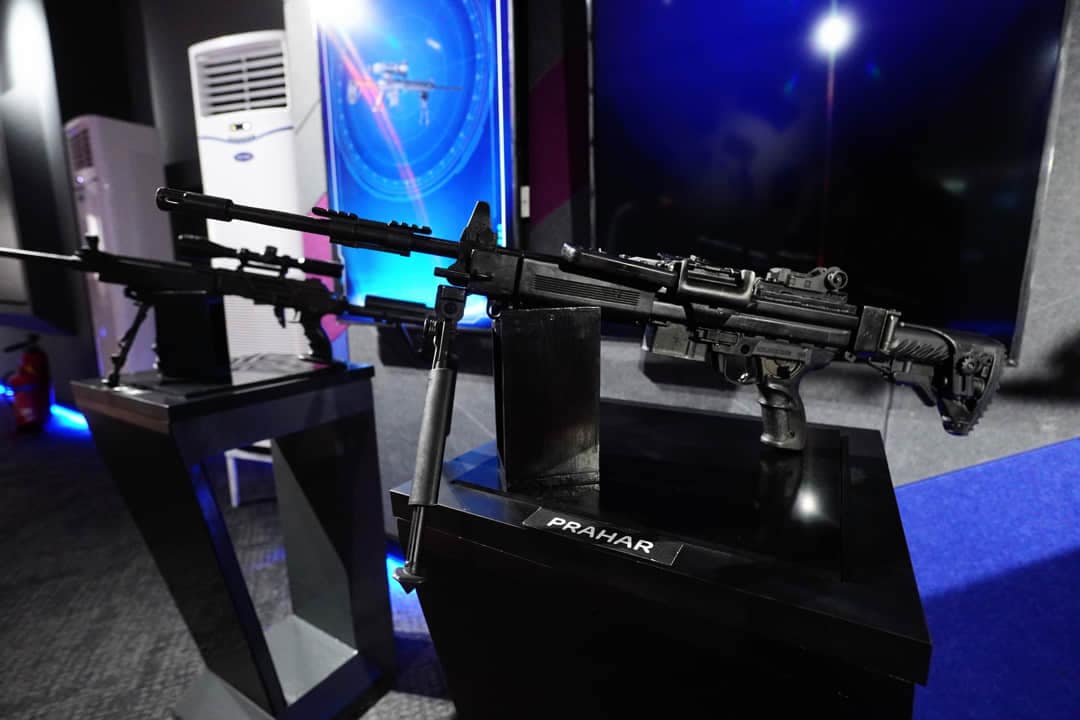
Also displayed Prahar Light Machine Gun. The company claims that this weapon has received good feedback from the Indian Army. Here many other categories of Pistol, Rifle and Machine Gun were also shown.

Kanpur Defence Manufacturing Hub
Raksha Samachar

Quality Checking from Artificial Intelligence

The use of modern technologies in defense manufacturing is increasing rapidly. Artificial Intelligence i.e. AI based inspection system is being used in this unit of Kanpur.

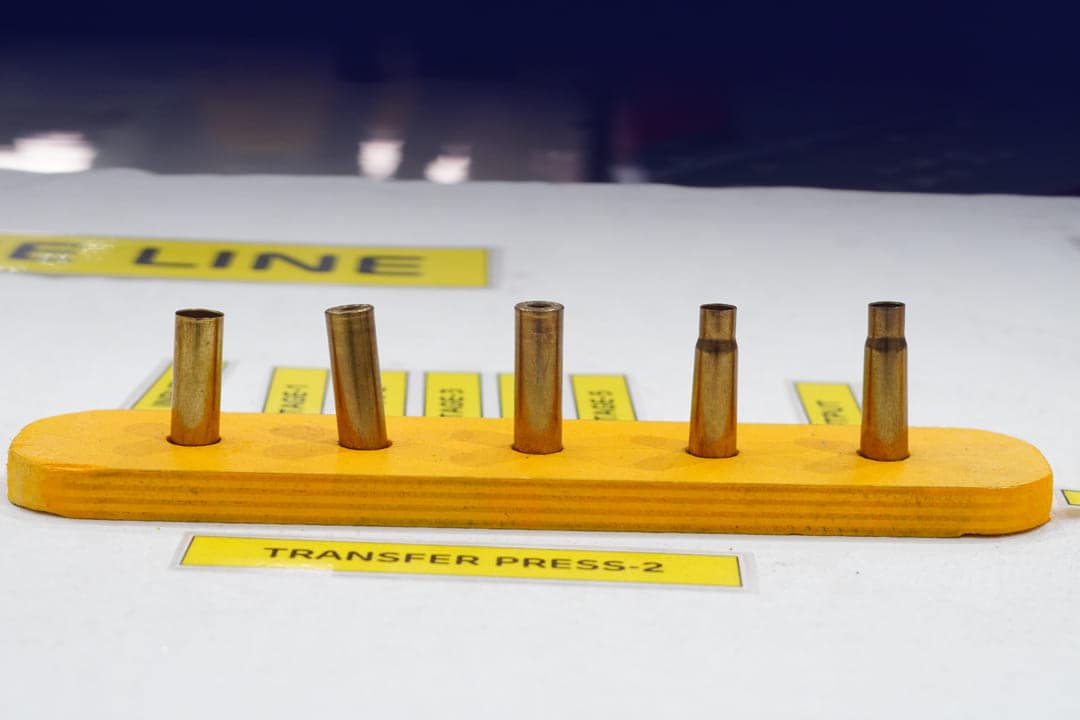
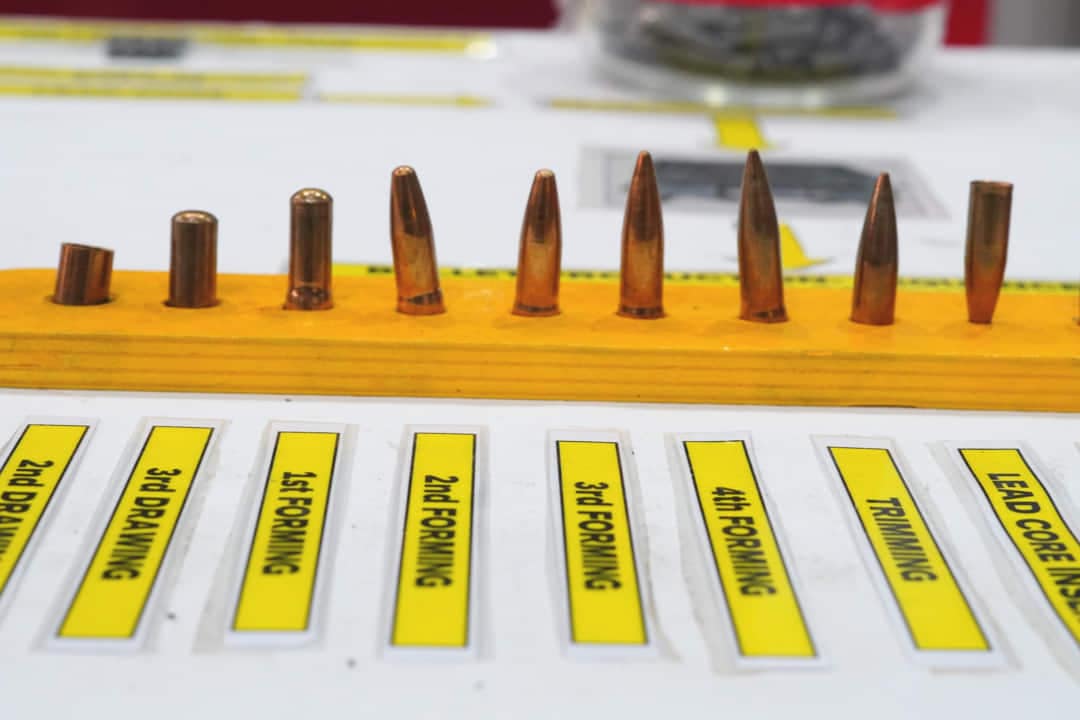
Each emission case is checked with the help of case-line inspection technology as per the authorities. This system evaluates the quality of the product as per the prescribed standards. This makes the inspection process more fast and accurate and helps maintain uniformity in production. (Kanpur Defence Manufacturing Hub)

Construction conforming to NATO standards

The company’s officers pointed out that many types of mutations and artillery systems being prepared here are being tailored to NATO standards.

Adhering to the NATO standards means that the quality, reliability and performance of the products are kept consistent with international standards. This ensures better interoperability between weapon systems and maintains uniformity in performance.

Interest has also been shown on behalf of friend countries for some defence products being prepared in Kanpur as per the authorities. The capacity being developed under Uttar Pradesh Defence Industrial Corridor is incorporating the state into the country’s major defence manufacturing centres, where the production of ammunition, small arms and advanced military systems is rapidly functioning. (Kanpur Defence Manufacturing Hub)

LAC and LoC will deliver drones to high-altitude checkpoints of Ration, Medicine and Ammunition, the new plan of DRDO will need helicopters finish!

DRDO VTOL Logistics Drone
Indigenous High-Altitude VTOL Logistics Drone Project for Indian Army Forward

DRDO VTOL Logistics Drone: One of the biggest challenges of the Indian Army is to deliver timely logistics to soldiers deployed in elevated hillsides. In many areas of control line (LOC) and real control line (LAC) the soldiers are positioned at heights ranging from 12,000 feet to more than 18,000 feet. It has always been difficult and costly to deliver rations, medicines, ammunitions, communication equipments and necessary spare parts in these areas.

Taking into account the same challenge DRDO Launched a new indigenous project. According to the RFI on behalf of the DRDO, such a high-altitude VTOL logistics drone will be developed, which can fly without runway, get into difficult hills and reach forward posts with heavy payloads. The project aims to make logistics supplies more fast, secure and reliable inaccessible areas.

DRDO VTOL Logistics Drone: Why is the Supply Large Challenge in Higher Places?

Several military checkpoints located on the northern borders of India are in areas where road contact is limited. Supply routes are disrupted several times due to heavy snowfalls, landslide, avalanche, fast winds and excessive cold. Under such circumstances, the army has to be dependent on the armpits, human porters and helicopters.

Helicopter There are effective means, but their flight costs are higher. Flights are affected in bad weather and a limited number of helicopters are planted in a variety of military works. Also the flying operation in areas with height is technically difficult.

That’s why it’s now being stressed on devloping a system that can automatically transport the required material troops without a pilot. (DRDO VTOL Logistics Drone)

What is High-Altitude VTOL Logistics Drone?

This will be a special type of unmanaged aerial vehicle, which VTOL i.e. will be developed with vertical take-off and landing capacity. This means that no runway will be needed to fly or descend.

The drone will fly from the smallest and no runway terrain of only 5×5 m and descend. This capacity is considered extremely important in the hillsides as the availability of flat lands is very low.

The complete design of this system will be indigenous and the technologies developed in India will be used.

Capacity up to 200 kg

The payload capacity of the drone will be up to 200 kg according to the project. The drones can be delivered a large amount of ration, medical material, ammunition or other essential military equipment at once.

The total weight of the drone will be more than 700 kg. It will be able to fly for about 100 kilometres, including 50 kilometres of one-way mission.

Maximum speed is placed about 120 kilometres per hour. This can significantly reduce the time it takes to deliver the material to the squares located in the dumb areas. (DRDO VTOL Logistics Drone)

Operational capacity up to 25,000 feet

One of the most important features of this project High-Altitude has capacity. The drone is being designed for service sealing up to 25,000 feet.

It will take-off from areas with a height of up to 15,000 feet. At such height, the air density decreases, which affects the performance of the normal engine and rotor system.

Due to this, the project has been emphasized to develop the propelation system necessary for a particular high-altitude operation. (DRDO VTOL Logistics Drone)

Indigenous heavy-fuel engine will be the most important part

The operation of the drone will be from the engine heavy-fuel internal condition engine (IC engine). This engine will be able to run on military fuels like JP-8 and diesel.

Heavy-fuel engine is considered more safe and practical for military use as the military is already using such fuels extensively.

Maintaining the performance of the engine in low oxygen conditions in altitude areas is a huge technical challenge. So the engine will be designed specifically for high-altitude operations.

The FADEC technology will be from engine control

Full Authority Digital Engine Control i.e. FADEC technology will be used in this project.

FADEC is a digital system that automatically controls engine fuel flow, power output, and performance. This increases the efficiency of the engine and gives better performance in changing conditions.

Temperature, air and air pressure are constantly changing in elevated mountain areas. The FADEC technology in such environments helps to maintain stable performance to the engine. (DRDO VTOL Logistics Drone)

The mission will be complete without the pilot

Military-grade autonomous flight control system will be applied in the drone. This system will be able to automatically blow the drone according to the preset route.

The drone will be equipped with capabilities such as point navigation, identification of obstacles and emergency recovery. If there is a communication block due to any reason, it will securely complete the mission or return to the prescribed location. (DRDO VTOL Logistics Drone)

Navigation will be in Multi-Layer Security

It is extremely important to secure navigation systems in border areas. So this drone will be mounted GPS, GLONASS and sailor based multi-configuration GNSS system.

The internal navigation system will also be used with it. Even if the satellite signal is blocked, the drone will continue the flight by estimating its position.

The drone will also have anti-jamming and anti-spoofing technology so that its functionality does not affect in the event of an electronic war. (DRDO VTOL Logistics Drone)

Precise delivery within two meters

The accuracy of payload delivery as per project is laid within two meters CEP.

CEP (circular error probability) means that the material delivered by the drone will drop or descend from the set location to the average of only two meters. It is considered to be extremely important capacity for hilly areas and small squares.

This will make it easier to deliver ammunition, medical material and other essential tools to the right place.

Extremely tough weather will also make operation

The drone will be made workable at temperatures ranging from minus 40°C to plus 60°C. It will withstand winds from 50 to 60 kilometres per hour during flight. Operation will also be possible in the air of 25 to 30 kilometres per hour at the time of take-off and landing. The weather changes rapidly in bordering mountain areas. So all-veder capacity is the key part of this project. (DRDO VTOL Logistics Drone)

Special Attention to Secure Communications and Cyber Security

Encrypted Military Datalink will be used for safe data communication between drone and ground control station.

The system will include AES-256 level encryption technology. Also special measures will be taken to protect against cyber attacks, signal spoofing and electronic disruptions.

It will be ensured that the information associated with the mission does not reach any unauthorized person.

Ground control station will be monitored

Portable and rugged ground control station will be developed for the operation of the drone. This station will display the information of drone status, speed, height and payload in real-time. Monitoring and control of multiple drones from the same station will also be possible. The mission planning and flight management software will also be developed with it. (DRDO VTOL Logistics Drone)

Emphasis on self-sufficient defense technique

Not only drones under the project but also the engine, flight control system, navigation computer, datalink, mission software, power management system and other important sub-systems have been emphasized indigenously devloping.

Technical proposals have been sought from industry, research institutes and academic organizations for this. A detailed description of the use of development time, cost, human resources, infrastructure and indigenous content has also been sought.

Technical components have been sought from Industry, Research Institutes and Academic Organizations for this project. He has also been asked how long it will take to develop this drone system, what will be the estimated cost, how many manpowers will need, what kind of infrastructure will be needed and how indigenous content will be used in the system. (DRDO VTOL Logistics Drone)

The new P-75i submarine of the Indian Navy will be engaged in indigenous lithium-ion batteries, now and late cane indoors

P75 India Submarine
(Image for representational purpose only. AI-Generated Image)

P75 India submarine: The ability to perform long-looking operations within the sea is considered to be the greatest strength of any modern submarine. As long as the submarine can remain within the water without the surface, the more the warfare capacity is considered. That is why the world’s major navys are now increasingly working on advanced lithium-ion battery technology replacing traditional lead-acid batteries.

The Indian Navy is also taking a big step towards the next generation submarines. The process of developing indigenous lithium-ion battery systems has been introduced to give new generation submarines more energy, long underwater endurance, faster charging and better protection. The objective of this initiative is not only to increase the efficiency of submarines, but also to achieve self-reliance in strategically critical energy storage technology.

Mazgaon Dock Shipbuilders Limited (MDL) P-75 India Expansion of interest is sought from companies for design, development and supply of lithium-ion battery systems and battery management systems for project. This battery system will be used in six new diesel-electric attack submarines to be built under the P-75 India program.

P75 India submarine: What is P-75 India Project?

P-75 India Indian Navy is one of the most important submarine projects. Under this, six state-of-the-art diesel-electric submarines are to be constructed. In these submarines Air Independent Proplation i.e. AIP technology, advanced sensors, modern wastage systems and NCST generation energy systems will be included.

Presently Indian Navy Calvary Category submarines are created under Project-75. All six submarines of this series have been found to the Navy with the inclusion of INS Wagshir in January 2025. Now the focus of the navy is on the next generation more capable submarines.

The lithium-ion battery system in the corresponding new project is going to play a major role.

What is MDL demanded?

MDL wants to shortlist such Indian companies that can design, develop, trial and supply lithium-ion battery systems and battery management systems.

Battery systems with about 20.64 MW-hour capacity are needed for these six submarines. While the rated voltage of the battery pack will be about 740 to 800 volt DC.

Companies will not only provide battery cell, but also have to develop the entire battery system. It will include full responsibility of cell selection, battery module design, battery pack, battery management system, cooling system, trial and production series. (P75 India Submarine)

Why is the battery so important for submersible?

Submarine It is often called a moving electricity system within the sea. When the submersible is on the surface or moving in the snorkeling mode, the diesel generators make electricity. But when he is completely watered, he has to depend on his batteries.

This batteries provide energy to the sensors, navigation systems, vanity control systems, life protector devices, and propulsion systems of the submersible.

The submersible will stay within the water for a long time if the battery capacity is high. That’s why battery technology is considered to be extremely important in the modern naval war.

What is the difference between lithium-ion batteries and lead-acid batteries?

Most of the world’s traditional diesel-electric submarines have long been using lead-acid batteries. Although new generation submarines are rapidly moving towards lithium-ion batteries.

The energy density of lithium-ion batteries is higher. This means that more energy can be stored in equal space. These batteries charge faster, their lifetime is high and their maintenance is even relatively low.

The most important thing is that such batteries provide the submarine the ability to stay within the water for a longer time. This leads to both its privacy and combat ability. (P75 India Submarine)

Why was LFP technology chosen?

Whereas, only lithium-ion phosphate (LFP) chemical technology will be used in this project. LFP batteries are considered more secure than other lithium-ion techniques. These reduce the risk of fire by thermal runaway.

Safety is the biggest priority in closed and sensitive environments such as submarine. So LFP technology is selected. Also LFP batteries are also known for longevity and stable performance.

What will battery management system do?

Only having a battery is not enough. The battery management system is equally important in the modern battery system. BMS monitors every cell of battery. It constantly monitors temperature, voltage, charge level and performance.

BMS immediately warns if abnormal activity appears in a cell and takes the necessary safety steps. In the submersible where thousands of battery cells are connected together, BMS ensures the safety and reliability of the whole system. (P75 India Submarine)

Cooling system will also be extremely important

More capacity batteries produce heat during operation. Performance may be affected if this heat is not controlled. That’s why MDL has sought to develop effective thermal management i.e. cooling systems from companies. This system will maintain batteries at safe temperatures and ensure their functionality for a long time.

Battery Cells Will Become In India

One of the most important conditions of EOI is that all battery cells should be manufactured in India. MDL has also clarified that production technology cannot be taken from a country that shares land border with India. The condition is laid in view of national security and strategic self-sufficiency.

Reducing foreign dependence in critical equipment used in the Defence Sector is involved in the major priorities of the Government. (P75 India Submarine)

Not only new submarines, focus on old submarines

On the other hand, the Indian Navy is focusing on maintenance and lifecycle support of its existing Calvary category submarines.

Recently Naval has introduced the procurement process of key spare parts such as Static Frequency Converter and Steering Gear Console for P-75 fleet. (P75 India Submarine)

These are tools that are extremely important for the electrical system and direction control of the submersible.

What to do Static Frequency Converter?

It is necessary to control and stabilise the electricity coming from different sources within the submarine.

The static frequency converters do this job. They transform electricity into a form that can safely use submarine sensitive equipment.

Significant systems such as navigation, monitoring and weapon control may be affected if the system is deteriorated. (P75 India Submarine)

Why are the necessary steering gear consoles?

Steering gear console are the key part of the submersible direction and depth control system.

Through these, the crew bends the submersible, controls its depth and ensures safe operation. Availability of high quality spare parts is necessary for such equipment as their failure can lead to severe operational risk.

The process will start from the prototype

MDL will not directly produce. First companies have to develop prototypes. For this, the arrangement of the land-based testing facility will also be made to the concerned company himself. Production Series will begin only after successful testing of the prototype.

Companies will also have to submit technology verification process, risk management plan and detailed development timelines. (P75 India Submarine)

36 months to complete work

Whereas, the design, development, testing and supply work of a set after the order is met will be completed within 36 months. It will also include prototype testing. Next process will begin for the Production Series. (P75 India Submarine)

What is the New Coalition of Saudi Arabia, Turkie and Pakistan? What is behind Maize Defense Agreement? The whole story, why is India alert

Mecca Defence Pact Explained
(Image for representational purpose only. AI-Generated Image)

Mecca Defence Pact: The whole world is worried about these days from the ongoing turmoil in West Asia. Saudi Arabia, Turkey, and Pakistan knocked a new security agreement on August 7 between the US-Iran conflict, the surge tensions around the Red Sea and the Hormuz Jaldambadhya. This agreement is named as Maize Joint Defense Agreement (MJDA). It is being viewed as a system of collective security (Callective Security) and collective resistance (Callective Distance).

While the entire provisions of the Agreement are not made public, the joint statement issued on behalf of the three countries stated that if a member is attacked by the country, he will be considered to be attacked by three countries. The same line has pulled the attention of the whole world to its side.

A comparison NATO Being from Article-5 of which a member is considered to be attacking the entire alliance under which the attack is carried out. This is also a step towards the possible "Muslim NATO" in some circles. While Saudi Arabia has dismissed this claim publicly.

Mecca Defence Pact: What is Maize Joint Defense Agreement?

Maize Joint Defense Agreement is a trilateral security agreement with Saudi Arabia, Turkey and include Pakistan. The agreement has emerged at a time when looking for new options regarding security arrangements in West Asia.

According to the joint statement, three countries will increase cooperation in security cases and a member will see the military attack against the country as a collective threat. While it has not yet been clear of what kind of military assistance will be given in case of a crisis, at what level the soldiers will be deployed or how the command and control arrangement will be.

That’s why many questions are still made about the agreement.

What is the difference in "Callective Security" and "Military Alliance"?

The military coalition means that the member country fight the battle united against its enemies. While countries in the collective security system try that disputes are resolved by negotiations and remain regional sustainability. At the same time, the maize agreement should be seen from the same perspective. (Mecca Defence Pact)

Why did U.S.-Iran struggle after its discussion?

It is necessary to understand the background of this agreement. West Asia has long been facing safety volatility. The activities of Iran and its allied groups, Israel-connected tensions, security of marine routes and apprehension of attacks on energy frameworks have been a great concern for regional countries.

Specially saudi arabia In the last few years, the attack on its oil establishments and important infrastructure has taken place. Also, the security of marine routes such as Hormuz Jaldmiroomad and Bab-Al-Mandeb is very important for it as the larger part of Global Energy Supply passes through these paths.

Saudi Arabia began to work on new options of security cooperation in the same background. Earlier in September 2025, efforts such as Strategic Mutual Defence Agreement (SMDA) and Multinational Marine Defense Alliance have also come to the forefront between Saudi Arabia and Pakistan. (Mecca Defence Pact)

क्या यह वास्तव में “मुस्लिम नाटो” है?

समझौते की घोषणा के बाद सबसे ज्यादा चर्चा इसी सवाल पर हुई। कई अंतरराष्ट्रीय मीडिया संस्थानों और रणनीतिक विशेषज्ञों ने इसे संभावित मुस्लिम नाटो की शुरुआत बताया।

हालांकि सऊदी उप विदेश मंत्री ने स्पष्ट किया कि यह किसी सैन्य धुरी या सांप्रदायिक गठबंधन बनाने की कोशिश नहीं है। उन्होंने यह भी कहा कि इसका उद्देश्य हथियारों की दौड़ या परमाणु महत्वाकांक्षाओं को बढ़ावा देना नहीं है।

इसके बावजूद बहस इसलिए जारी है क्योंकि समझौते में यह स्पष्ट नहीं किया गया है कि मुख्य खतरा किससे है। संयुक्त बयान में न तो ईरान का नाम लिया गया, न इजरायल का और न ही क्षेत्र में सक्रिय गैर-राज्य समूहों का।

यही अस्पष्टता इस समझौते को लेकर अलग-अलग व्याख्याओं को जन्म दे रही है।

सऊदी अरब को क्यों करना पड़ा यह समझौता?

विश्लेषकों का मानना है कि इस समझौते का केंद्र बिंदु सऊदी अरब की सुरक्षा जरूरतें हैं। सऊदी अरब का रक्षा बजट लगभग 83 अरब डॉलर माना जाता है, जो दुनिया के सबसे बड़े रक्षा बजटों में शामिल है। इसके बावजूद उसे कई प्रकार की सुरक्षा चुनौतियों का सामना करना पड़ता है।

इनमें ड्रोन और मिसाइल हमलों का खतरा, तेल प्रतिष्ठानों की सुरक्षा, समुद्री व्यापार मार्गों की रक्षा और आंतरिक सुरक्षा संबंधी चिंताएं शामिल हैं।

सऊदी अरब लंबे समय तक अमेरिकी सुरक्षा व्यवस्था पर निर्भर रहा है। लेकिन बदलती परिस्थितियों और क्षेत्रीय तनावों ने उसे वैकल्पिक साझेदारों की तलाश के लिए प्रेरित किया है। तुर्किये और पाकिस्तान इसी रणनीति का हिस्सा माने जा रहे हैं। (Mecca Defence Pact)

तुर्किये इस गठबंधन में क्या लेकर आया है?

तुर्किये आज पश्चिम एशिया और यूरोप के बीच स्थित एक महत्वपूर्ण सैन्य शक्ति है। पिछले एक दशक में उसने अपने रक्षा उद्योग का तेजी से विस्तार किया है।

तुर्किये के रक्षा निर्यात का आंकड़ा लगभग 10 अरब डॉलर सालाना तक पहुंच चुका है। ड्रोन, बख्तरबंद वाहन, मिसाइल सिस्टम, नौसैनिक प्लेटफॉर्म और इलेक्ट्रॉनिक वॉरफेयर सिस्टम्स के क्षेत्र में उसकी क्षमताएं लगातार बढ़ी हैं।

रक्षा उत्पादन के क्षेत्र में तुर्किये की आत्मनिर्भरता भी बढ़ी है। यही वजह है कि सऊदी अरब और पाकिस्तान दोनों तुर्किये के रक्षा उद्योग में रुचि दिखा रहे हैं।

एमजेडीए के जरिए तीनों देशों के बीच सैन्य तकनीक, संयुक्त उत्पादन और रक्षा सहयोग बढ़ने की संभावना पर चर्चा हो रही है।

पाकिस्तान के लिए यह समझौता कितना महत्वपूर्ण है?

पाकिस्तान लंबे समय से सऊदी अरब के साथ घनिष्ठ रक्षा संबंध बनाए हुए है। पाकिस्तानी सेना में लगभग 6.6 लाख सक्रिय सैनिक हैं, जो उसे मुस्लिम वर्ल्ड की सबसे बड़ी सेनाओं में शामिल करता है।

सऊदी अरब में पहले भी पाकिस्तानी सैनिकों की तैनाती हो चुकी है। दोनों देशों के बीच सैन्य प्रशिक्षण और सुरक्षा सहयोग का लंबा इतिहास रहा है।

However pakistan के सामने अपनी कुछ मुश्किलें भी हैं। उसकी ईरान के साथ लगभग 900 किलोमीटर लंबी सीमा लगती है। देश के भीतर बड़ी शिया आबादी मौजूद है और उसे अफगानिस्तान तथा आंतरिक सुरक्षा से जुड़ी चुनौतियों का भी सामना करना पड़ता है।

इसी कारण कई विशेषज्ञ मानते हैं कि पाकिस्तान किसी ऐसे क्षेत्रीय संघर्ष में सीधे शामिल होने से बचना चाहेगा जो ईरान के साथ उसके संबंधों को प्रभावित करे। (Mecca Defence Pact)

क्या तीनों देशों के बीच मतभेद भी हैं?

यह समझौता जितना महत्वपूर्ण दिखाई देता है, उतना ही जटिल भी है। तीनों देशों के बीच कई ऐतिहासिक और राजनीतिक मतभेद मौजूद रहे हैं।

सऊदी अरब और तुर्किये आज भले साथ दिखाई दे रहे हों, लेकिन उनके बीच लंबे समय से अविश्वास भी रहा है।
ओटोमन साम्राज्य के दौर में अरब क्षेत्रों पर तुर्क शासन था। सऊदी शासकों के इतिहास में उस दौर की कई कड़वी यादें मौजूद हैं।

इसके अलावा तुर्किये के राष्ट्रपति रेचेप तैयप एर्दोआन अक्सर मुस्लिम दुनिया में नेतृत्व की भूमिका की बात करते रहे हैं। दूसरी तरफ सऊदी अरब खुद को इस्लाम के दो सबसे पवित्र स्थलों मक्का और मदीना का संरक्षक मानता है।

तुर्किये के राष्ट्रपति रेचेप तैयप एर्दोआन की नव-उस्मानी सोच और मुस्लिम दुनिया में नेतृत्व की महत्वाकांक्षा कई बार सऊदी दृष्टिकोण से टकराती रही है।

2018 में सऊदी पत्रकार जमाल खशोगी की इस्तांबुल स्थित सऊदी वाणिज्य दूतावास में हत्या के बाद तुर्किये और सऊदी अरब के रिश्तों में काफी तनाव आया था। तुर्किये से लीक हुई जानकारियों ने उस समय सऊदी क्राउन प्रिंस मोहम्मद बिन सलमान की अंतरराष्ट्रीय छवि को नुकसान पहुंचाया था।

हालांकि बाद के सालों में दोनों देशों ने रिश्ते सुधारने की कोशिश की।

इसी तरह पाकिस्तान और सऊदी अरब के बीच भी कुछ मुद्दों पर मतभेद रहे हैं। अतीत में सैनिक तैनाती, कमान व्यवस्था और ईरान से जुड़े मामलों पर दोनों देशों के दृष्टिकोण पूरी तरह समान नहीं रहे। (Mecca Defence Pact)

क्या यह गठबंधन सैन्य रूप से प्रभावी हो सकता है?

सैन्य दृष्टि से देखें तो तीनों देशों की क्षमताएं एक-दूसरे की पूरक हैं। सऊदी अरब के पास विशाल रक्षा बजट है। तुर्किये के पास विकसित हो रहा रक्षा उद्योग है। पाकिस्तान के पास बड़ा मिलिट्री स्ट्रक्चर और ऑपरेशनल अनुभव है।

यदि तीनों देश संयुक्त अभ्यास, वेपन सिस्टम्स की इंटरऑपरेबिलिटी, तकनीकी सहयोग और रक्षा उत्पादन पर काम करते हैं तो इससे उनकी सामूहिक क्षमता बढ़ सकती है।

इसी वजह से इस समझौते को केवल राजनीतिक बयानबाजी के रूप में नहीं देखा जा रहा, बल्कि इसे रक्षा सहयोग के एक संभावित ढांचे के रूप में भी समझा जा रहा है। (Mecca Defence Pact)

यह समझौता किसके खिलाफ है?

पहली नजर में ऐसा लग सकता है कि यह समझौता ईरान को ध्यान में रखकर किया गया है। क्योंकि हाल के वर्षों में ईरान और खाड़ी देशों के बीच तनाव रहा है। ईरान समर्थित समूहों ने कई बार क्षेत्रीय सुरक्षा चुनौतियां पैदा की हैं।

लेकिन कुछ विशेषज्ञों का मानना है कि इस समझौते का असली फोकस केवल ईरान नहीं है। उनके अनुसार तुर्किये के लिए इजराइल एक बड़ी रणनीतिक चुनौती बनकर उभरा है, खासकर सीरिया के घटनाक्रम के बाद।

तुर्किये और इजराइल के बीच बयानबाजी लगातार तेज हुई है। कई इजराइली नेताओं ने हाल के महीनों में तुर्किये को क्षेत्रीय चुनौती बताया है। वहीं तुर्किये के राष्ट्रपति रेचेप तैयप एर्दोआन भी इजराइल की सैन्य कार्रवाइयों की लगातार आलोचना करते रहे हैं। (Mecca Defence Pact)

क्या अमेरिका है इस समझौते के पीछे?

मक्का जॉइंट डिफेंस एग्रीमेंट को केवल सऊदी अरब, तुर्किये और पाकिस्तान के बीच सुरक्षा समझौते के रूप में नहीं देखा जा रहा है। बल्कि इसे पश्चिम एशिया में बदलती अमेरिकी भूमिका से भी जोड़कर देखा जा रहा है।

दरअसल, पिछले कुछ सालों में अमेरिका ने पश्चिम एशिया में अपनी प्रत्यक्ष सैन्य मौजूदगी को सीमित करने की नीति अपनाई है। अफगानिस्तान से अमेरिकी वापसी, इंडो-पैसिफिक क्षेत्र पर बढ़ता फोकस और घरेलू प्राथमिकताओं ने क्षेत्रीय देशों को अपनी सुरक्षा व्यवस्था को लेकर नए विकल्प तलाशने के लिए प्रेरित किया है।

सऊदी अरब लंबे समय तक अमेरिकी की सुरक्षा में रहा है। 1991 के खाड़ी युद्ध से लेकर हाल के सालों तक अमेरिकी सैन्य उपस्थिति ने सऊदी सुरक्षा व्यवस्था में महत्वपूर्ण भूमिका निभाई। लेकिन 2019 में सऊदी के अबकैक और खुरैस तेल प्रतिष्ठानों पर हुए ड्रोन और मिसाइल हमलों के बाद यह बहस तेज हुई कि क्षेत्रीय देशों को अपनी सुरक्षा के लिए केवल अमेरिका पर निर्भर नहीं रहना चाहिए।

इसी पृष्ठभूमि में सऊदी अरब ने चीन, तुर्किये और पाकिस्तान समेत कई देशों के साथ रक्षा सहयोग बढ़ाना शुरू किया। मक्का समझौते को भी इसी व्यापक रणनीति का हिस्सा माना जा रहा है।

हालांकि इसका मतलब यह नहीं है कि सऊदी अरब अमेरिका से दूरी बना रहा है। अमेरिका आज भी सऊदी अरब का सबसे बड़ा रक्षा साझेदार है। सऊदी वायुसेना के एफ-15 लड़ाकू विमान, पैट्रियट और थाड मिसाइल डिफेंस सिस्टम समेत कई प्रमुख हथियार अमेरिकी मूल के हैं।

वहीं, मक्का जॉइंट डिफेंस एग्रीमेंट का एक उद्देश्य यह भी हो सकता है कि क्षेत्रीय देश अपनी सुरक्षा जरूरतों के लिए एक अतिरिक्त गठबंधन तैयार रखें, ताकि किसी संकट की स्थिति में केवल बाहरी शक्तियों पर निर्भर न रहना पड़े। (Mecca Defence Pact)

चीन की भी अप्रत्यक्ष भूमिका?

विश्लेषकों के अनुसार इस पूरे समीकरण में चीन भी एक महत्वपूर्ण भूमिका निभा रहा है। तुर्किये और पाकिस्तान दोनों के चीन के साथ रक्षा संबंध मजबूत हैं। पाकिस्तान पहले से चीनी हथियारों और सैन्य तकनीक का बड़ा उपयोगकर्ता है। वहीं तुर्किये भी रक्षा उत्पादन के क्षेत्र में तेजी से आगे बढ़ रहा है।

आज पाकिस्तान, तुर्किये और चीन कई रक्षा परियोजनाओं में सहयोग कर रहे हैं। इसी नेटवर्क के जरिए सऊदी अरब अपनी सैन्य औद्योगिक क्षमता बढ़ाना चाहता है। (Mecca Defence Pact)

भारत इस समझौते को कैसे देख रहा है?

भारत के लिए यह समझौता स्वाभाविक रूप से महत्वपूर्ण है क्योंकि इसमें पाकिस्तान शामिल है। नई दिल्ली की चिंता केवल पाकिस्तान तक सीमित नहीं है, बल्कि तुर्किये की दक्षिण एशिया में बढ़ती रणनीतिक सक्रियता पर भी नजर रखी जा रही है।

तुर्किये पिछले कुछ सालों में पाकिस्तान के साथ रक्षा सहयोग बढ़ा चुका है। नौसैनिक परियोजनाओं, ड्रोन तकनीक और रक्षा उद्योग में दोनों देशों के बीच सहयोग बढ़ा है।

ऐसे में भारत इस नए सुरक्षा समझौते का अध्ययन कर रहा है कि इसका क्षेत्रीय सुरक्षा संतुलन पर क्या प्रभाव पड़ सकता है।

हालांकि कई विशेषज्ञों का मानना है कि भारत और सऊदी अरब के संबंधों की प्रकृति पाकिस्तान से अलग है। (Mecca Defence Pact)

भारत और सऊदी अरब के संबंध क्यों हैं महत्वपूर्ण?

भारत दुनिया के सबसे बड़े ऊर्जा आयातकों में से एक है। सऊदी अरब भारत के प्रमुख तेल आपूर्तिकर्ताओं में शामिल है। दोनों देशों के बीच व्यापार, निवेश, ऊर्जा और रणनीतिक सहयोग लगातार बढ़ा है।

भारत सऊदी अरब का एक महत्वपूर्ण आर्थिक साझेदार है। दोनों देशों के संबंध अपेक्षाकृत स्थिर और व्यावहारिक माने जाते हैं।

इसी कारण कई जानकारों का मानना है कि सऊदी अरब भारत को एक स्थिर और भरोसेमंद साझेदार के रूप में देखता है। इसलिए यह संभावना कम मानी जाती है कि रियाद भारत के खिलाफ किसी पाकिस्तानी सैन्य एजेंडे का समर्थन करेगा। (Mecca Defence Pact)

भारत को किस बात पर नजर रखनी चाहिए?

विशेषज्ञों के अनुसार भारत को तीन प्रमुख बातों पर नजर रखनी होगी। पहली, पाकिस्तान और तुर्किये के सैन्य सहयोग की गति। दूसरी, सऊदी अरब की रक्षा खरीद और रक्षा उत्पादन परियोजनाओं में पाकिस्तान तथा तुर्किये की भूमिका। तीसरी, चीन-पाकिस्तान-तुर्किये नेटवर्क के साथ सऊदी अरब के बढ़ते रणनीतिक संबंध।

हालांकि अभी यह कहना जल्दबाजी होगी कि मक्का समझौता क्षेत्रीय शक्ति संतुलन को कितना बदल पाएगा। लेकिन इतना तय है कि इस समझौते ने पश्चिम एशिया की सुरक्षा राजनीति में एक नया समीकरण जोड़ दिया है, जिस पर भारत समेत कई देश करीबी नजर बनाए हुए हैं। (Mecca Defence Pact)

इजरायल, यूएई और भारत का भी बढ़ा जिक्र

मक्का समझौते के बाद कुछ रणनीतिक विश्लेषकों ने एक अन्य संभावित समीकरण की भी चर्चा शुरू की है। उनके अनुसार तुर्किये, पाकिस्तान और सऊदी अरब की बढ़ती निकटता के बीच इजरायल, संयुक्त अरब अमीरात और भारत के संबंधों का महत्व भी बढ़ सकता है।

भारत और इजरायल के बीच रक्षा सहयोग पिछले कई सालों में मजबूत हुआ है। ड्रोन, मिसाइल, निगरानी प्रणाली और सैन्य तकनीक के क्षेत्र में दोनों देशों की साझेदारी महत्वपूर्ण मानी जाती है।

संयुक्त अरब अमीरात भी भारत का प्रमुख रणनीतिक और आर्थिक साझेदार है। इसलिए पश्चिम एशिया में बदलते समीकरणों के बीच इन संबंधों पर भी नजर रखी जा रही है। (Mecca Defence Pact)

समझौते को लेकर सबसे बड़ा सवाल क्या है?

मक्का जॉइंट डिफेंस एग्रीमेंट को लेकर सबसे बड़ा सवाल यही है कि इसका वास्तविक स्वरूप क्या होगा। अभी तक केवल संयुक्त बयान सामने आया है। समझौते का पूरा विवरण सार्वजनिक नहीं किया गया है।

यह स्पष्ट नहीं है कि सामूहिक सुरक्षा की स्थिति में सदस्य देशों की क्या जिम्मेदारियां होंगी, सैन्य सहायता का स्वरूप क्या होगा, कमान व्यवस्था कैसे चलेगी और यह सहयोग किस स्तर तक जाएगा। यही वजह है कि फिलहाल यह समझौता जितना चर्चा में है, उतने ही सवाल भी इसके साथ जुड़े हुए हैं। (Mecca Defence Pact)

No longer helicopter, the supply of ammunition and ration from the drone to forward posts, is the new logistic plan of the air force

IAF Logistics Drone System
(Image for representational purpose only. AI-Generated Image)

IAF Logistics Drone System: It has always been a great challenge to deliver timely essential goods to soldiers deployed in high mountains, snow-covered areas and inaccessible borders. Logistics supply is affected by many times weather, poor geographical areas and limited transport means. The supply is not affected, the Indian Air Force is preparing large.

Ministry of Defence J&K The Request for Information (RFI) has been released for the Hiring of the Air-Based Logistic Payload Delivery System for the Pulwama-based Avantipura Air Force Station. It is aimed at incorporating such air systems, which can rapidly transport medicines, spare parts, communication tools, ammunitions and other essential materials to soldiers deployed in further checkpoints and border areas.

IAF Logistics Drone System: Emphasis on delivering the ultimate end supply to soldiers

Indian Army Air Force Many of the squares are located in areas where it is difficult to reach the road. The weather in some places also affects helicopter flights for several days.

In such an air-based logistic payload delivery system will make the end end to the troops i.e. the last mile support. This system will use drones, unmanned aerial platforms (UAVs) or similar technologies instead of traditional transport means.

This system will also be used in emergency situations in addition to regular supply as per RFI. It can be used both day and night.

Two different heights will do at work

Air Force needs two types of systems. The first category is for areas where the launching platform can be at a height from the sea level to 11,000 feet. The system can operation at least 18,000 feet in this category.

The second category is for more challenging areas. It must have the ability to fly from areas with a height of up to 15,000 feet and operate at least 24,000 feet. (IAF Logistics Drone System)

Payload from 50 kg to 200 kg

Air Force has sought the ability to deliver 50 kg of payloads to a one-sided distance of at least 50 kilometres as a minimum requirement.

However, the need is far more. RFI As per the documents, the Air Force will prioritize the system that can be weighed up to 150 kilometres or more.

This means that in the future this system can be able to deliver not only small packages, but also heavy military materials and necessary equipment.

The system will also fly without ready runway

Runway or helipad are not available everywhere in border areas. That’s why Air Force has demanded a system that can fly even from a ready-made area.

The system will have the ability to launch and recover in a maximum of 20 meters multiplied area of 20 meters as per RFI. It will also be possible to use hill squares, temporary military bases and remote areas. (IAF Logistics Drone System)

Fully Autonomous Operation

Air Force has not only demanded remote control base platform. But his focus is on the full Autonomous Operational Capacity. The system must have full autonomic mode, manual mode and return-to-home mode.

If communication is interrupted for some reason or the control of the operator is broken, the system will return to its fixed base or safe place. This feature is quite important in conditions like tough weather and war. (IAF Logistics Drone System)

Facility of monitoring both day and night

Modern sensors will be installed in every system. The platform will have to have Color Day Video Camera and Monochromatic Night Thermal Sensor. This allows the operator to monitor both days and nights. The thermal sensor will help to see the position of the target area even in low visibility and darkness. (IAF Logistics Drone System)

Also, features like auto tracking and detection have been sought.

Air Force also says the system has to be able to work with multiple satellite based navigation networks like GPS, Glonass, Sailor and IRNSS.

Air Force has also said that the user can select the Lattyud-Longitud Cordinates or Indian Military Grid Reference System as required. More than one navigation sourceage is used to enhance the reliability of the system. (IAF Logistics Drone System)

Protection from jamming and electronic war must

In Modern Battlefield Electronic War Have become a big challenge. Due to this, the RFI incorporates anti-jamming and anti-spoofing capacity as critical need. The system must be hardened against electronic interference. Also it should be equipped with an IFF facility for identification of friends and enemies. It aims to reduce the likelihood of confusion or accident with its own air platform.

Highly heat and even operation in the cold of the bitters

Weather conditions are quite different on Indian borders. somewhere the temperature drops below several degrees from zero, the desert areas have excessive heat. That’s why AF has sought to make the system operational at minus 30 °C to plus 50 °C or higher temperatures. Environmental tests for this will be tailored to Indian military standards. (IAF Logistics Drone System)

Thrust secure data links and encryption

The RFI states that the ground control station should be of portable and robust design, so that it can be easily deployed in different locations.

The data link will work in the S and C band frequency range. With this 128 bit or 256 bit AES encryption will be used.

It aims to protect data and protect communication from unwanted interference. (IAF Logistics Drone System)

Feature of Artificial Intelligence!

RFI also states that taking into account future needs can be upgraded from the Artificial Intelligence system. Onboard recording, real time video transmission and advance surveillance systems should be available in the system.

Also, the emergency release facility is required when the payload is protected, leaving in the prescribed place and need. (IAF Logistics Drone System)

The Indian Navy’s new lotoring mission will be extremely special, up to 1,000 km away from the sea. Attack will last for 9 hours in the air!

Indian Navy Loitering Munition
(Image for representational purpose only. AI-Generated Image)

Indian Navy Loitering Munition: Indian Navy Works Long Distance From Their Warships Loiting Transition Preparing to include. The Ministry of Defence has released the Request for Information (RFI) for the Loiting Museum Range i.e. LM (MR). It has been sought for information of systems that can be launched from the Naval Ships and used against the Sea as well as Targets on the ground.

Indian Navy Loitering Munition: The ship will be launched by the Loiting Munition

The proposed LM (MR) for the Navy will be different from the general drone. It will be placed in the Canister on the Warship and can be launched from the ship at the time of need.

It will be developed as sea-based i.e. ship-mounted systems in RFI. It can be used against targets present on sea and ground. Also, the system can work in days and nights and different weather conditions.

While, it will also include the mission control console, ground control console, ground data terminal, launcher, recording unit, and the embedded simulator for training.

it Indian Navy The Combat Management System will also be added. At the same time, information that meets the sensors of the ship will be used with the mission system of the lotoring mission.

Range of 1,000 kilometres, wind capacity for up to 9 hours

RFI has given clear parameters regarding flight capacity of LM (MR). Its maximum range should be at least 1,000 kilometres. While it has the ability to stay air for at least 9 hours.

The minimum speed of 75 nots and minimum speed of 200 nots are placed during the attack during the looting. Its maximum flight height will be 15,000 feet.

There is CEP Circular Error Probable Less than one meter. The provision of both RF and Satcom data links has also been placed in RFI.

The size is also limited. The length of LM should be maximum 2.5m and wingspan maximum three meters. Its radar cross section i.e. RCS should not exceed a square meter. Indian Navy Loitering Munition

Navigation capability will also remain on data link breakdown

This system also has the capability of automatic navigation. The operator will control the LM through RF or Satcom data link. Many chordinates can be fixed before the mission is launched. Next, LM will navigate itself between these cordinettes.

LM will have the system to go back to the position of the last known ground data terminal if the data link is broken during the flight. At the same time, if the data link is not re-established, there is also the ability to automatically go to the previously fixed termination point.

One operator can handle 10lm

The mission of this system will be the control console its important part. Open architecture has been sought for MCC in RFI. This will allow new sensors and other tools to be added as needed.

An operator will handle a maximum of 10 looting funds at a time. The operator will be able to plan the mission, view the status of the LM and use the data available during the mission.

MCC has to be able to simultaneously use the information that meets its sensors of LM as well as ship sensors. Indian Navy Loitering Munition

The second ship can be controlled

RFI also has the facility to transfer the control of the LM from one platform to another. Apart from the ship where LM has been launched, the Mission Control Console and Ground Data Terminal on the other ship will also be monitored.

It will not necessarily have to have separate launcher or ground control consoles on the other ship. This will allow the system to share the control of the LM between the different platform of the Navy. Indian Navy Loitering Munition

Monitoring will be from EO and IR Caker

Electro-optical and infrared i.e. EO/IR securer will also be applied in LM. This hacker will be used in the work associated with navigation, monitoring, target identification and attack.

It has demanded MWIR capacity with forward looking infrared i.e. FLIR. Also the SWIR capacity is laid with the Day Camera.

Whereas, the LM will be placed in the Canister onboard. Canisters must be prepared for safe storage, transportation, handling and launch in marine environments.

There is also a refueling system before placing the LM in the canister. This will allow it to be stored in a de-feild position as needed. Boosters will also need for launch from the canister. Also, emergency jets have been arranged to separate the LM in an emergency onboard.

Naval sensors will be connected with the system

LM (MR) will be linked to the current data network of the ship. RFI describes the need for interfaces with systems like Combat Management System, GNSS, Sailor, Zero and Anemometer through Ship Data Network.

It will also have the ability to take data from electronic support Majors i.e. ESM, surveillance radar and Early Warning radar. The Ship Vapon should also have an interface with the interlock and safety system.

The system can also work in GNSS-deanide environment. In such a situation, the ability of navigation should remain even when the general satellite navigation signals are not available. Indian Navy Loitering Munition

The ability to work in the difficult atmosphere of the sea

The system used on the warship must work in difficult conditions of the sea. The LM system should be workable at a temperature of 40°C to 95 percent relative humidity and air up to 50 nits. Its operational temperature range minus is laid from 20 ° C to plus 60 ° C.

The system must be able to work on an electrical supply of 380 to 415 volts, given the electrical system of the ship. Indian Navy Loitering Munition

10 years of service life, upgraded facility

The service period of the important parts of LM (MR) should be at least 10 years as per RFI. It has also been laid for the next 10 years.

While this system is based on modular and open architecture. It will have a plug-and-play feature, allowing new tools and sensors to be added as needed. Manufacturers will also have to facilitate hardware and software upgrades for the system. Upgrades should be done in such a way that large changes in the existing system are needed at least. Indian Navy Loitering Munition

Information sought from Indian companies

Ministry of Defence has sought their technical and production capacity from companies through RFI. It has also been asked whether they can provide LM (MR) under Bay Indian-IDDM or by Indian category.

By Indian-IDDM For Indigenous design and at least 50 percent of Indigenous content information has been sought. At least 60 per cent of indigenous content is sought in the Indian category.

Also, the production capacity, GNSS-deanide and anti-jamming capacity from companies, has also been sought to facilitate maintenance and overhaul in India and experience related to supply. Indian Navy Loitering Munition

Large step of DRDO! Preparation of the mass production of small gas turbine engines for cruise missiles and drones

DRDO GTRE Expendable Engine
(Image for representational purpose only. AI-Generated Image)

GTRE Expendable Engine: The demand for cruise missiles, high-speed drones, lotteringmunitions and other once used platforms in Indian forces is constantly increasing. After which the Gas Turbine Research Establishment (GTRE) coming under the DRDO is preparing large to enhance the production of small gas turbine engines in the country.

GTE has started the process of selecting two additional Indian industry partners for manufacturing, assembly and supply of Expendable Gas Turbine Engine, which can manufacture high-tech aerospace and gas turbine components.

GTRE Expendable Engine: GTRE working on gas turbine technology

Bengaluru-based GTREE Long working on gas turbine technology. GTRE has built a small size twin-spool gas turbine engine designed for expandable applications. Expenditable means a platform that is used once during the mission and not brought back later.

Limited industrial capacity is available for production of such engines so far. That’s why GTRE has decided to include two additional Indian industry partners for its production and. The current manufacturer has been excluded from this process in accordance with Jari RFP on behalf of GTRE to get a chance to new industries and divide production capacity into multiple places. (GTRE Expendable Engine)

What is Expendable Engine

GTRE made this engine a twin-spool Gas Turbine Engine is. The twin-spool design means that high pressure and low pressure sections in the engine work on different spools. This improves engine functionality and performance.

This engine is specially developed for expandable application. Platforms that are used during a mission and are not required to recover.

This engine includes over 15 major sub-assemblies and over 400 engineering drawings. It is used special steel, aluminum alloy, titanium alloy and nickel and cobalt based super alloy in construction. The diameter of several important components is about 400 millimeters.

which will be used in military platform

GTRE has developed this engine exclusively for expandable platform. These long-distance cruise missiles are prominent.

drones around the world over the past few years and Loweringmission Use is fast. Similarly, the need for such small but reliable gas turbine engines has increased. The demand for engines of this categorie is constantly increasing due to work on a variety of indigenous drones and missile programs by Indian forces. (GTRE Expendable Engine)

Three Engines

All partners involved in this process have to create three engines. A total of six engines will be prepared by both companies in this way. These engines will be manufactured, assembly, testing and delivery by companies altogether, while design and technical documents will make GTRE available. Whereas, any other agency designated by the Armed Forces or Government of India will also purchase the engine of the Production Series directly from these companies under the competitive process. (GTRE Expendable Engine)

The engine assembly will be in clean room

General production area cannot be used for engine assembly. RFP According to the selected industries must have ISO-8 or better clean room. The engine will be assigned in the same control environment. GTRE has also clarified that engine assembly cannot be outsourced to any other company.

Also, the company must have at least three years of experience in the aerospace sector. He must experience working with special steel, titanium and nickel or cobalt based super alloys.

The company has successfully completed an aerospace order of at least Rs 10 crore in the last three financial years. While the average annual turnover of the company is required to be Rs 300 crore or more. Also in the last three years the company has successfully completed a single aerospace order of at least Rs 10 crore.

At the same time, it is mandatory to be Indian of the industry as per DAP 2020. Outsourcing of foreign cooperation, foreign production or critical actions will not be allowed.

GTRE has set clear timelines for the project. Each industry has to be given within 24 months of issue of order for the first engine first article inspection. The rest of the two engines have to be delivered within 36 months.

The selected industry must also undertake the function of engine re-build if required. It will include opening, cleaning, repairing and reassessing the engine. (GTRE Expendable Engine)