Home Blog Page 4

Now IED will be the risk of bursting low, the army is going to buy 250 advances telescopic manipulators with 4 meters range

Indian Army Telescopic Manipulator
Indian Army Plans To Procure 250 Telescopic Manipulators For Safe IED Handling And Bomb Disposal Operations.

Indian Army Telescopic Manipulator: The Indian Army has launched an important procurement process to enhance the security of bomb restrained teams deployed in terrorist affected areas and counter-IED campaigns. The Indian Army has released the Request for Information (RFI) for the purchase of telescopic manipulators. This equipment bomb disposal will help operators to handle suspicious packages, improvised explosive devices (IEDs), broken ammunitions and other hazardous objects safely. The objective is to keep the operator away from the area of danger directly and reduce its risk in the event of an explosion. The Army plans to buy around 250 telescopic manipulator systems.

Indian Army Telescopic Manipulator: Extremely Required for Counter-IED Operation

The Directorate of Combat Engineers of the Army Engineer-in-Chief Branch has written the RFI released for the purchase of telescopic manipulator that the IEDs are considered one of the biggest threats in modern military campaigns. Security forces in J&K, Northeast and other sensitive areas often face roadside-mounted explosives, suspected bags, packages and ammunition.

RFI states that the telescopic manipulator will be used eOD i.e. Explosive Ordnance Disposal Teams.

Safe distance between the bomb and the young

Terrorism affected areas, border areas and security agencies in cities often suspected bags, packets or IED Notice of meeting. In such a situation, the bombing seals have to go close to the object by taking considerable exposure.

If in the object Explosives If there is an explosion, then the risk of life increases. The purpose of the telescopic manipulator that the army wants to buy is to reduce the same danger.

This equipment maintains a range of meters between the young and the dubious object. This allows the operator to take full action in a relatively safe place. Indian Army Telescopic Manipulator

What is a telescopic manipulator?

The telescopic manipulator is a long mechanical equipment with a special claw on the front side. This claw is able to capture, rotate, tilt and lift the dubious object.

The most important part of this equipment is its close. The army wants it to be able to rotate 360 degrees in both directions.

This equipment should have at least 4 meters of distance from the clock to the control point according to the need for the army. i. The operator will work at four meters or more.

This machine will pick up at least 10 kg of weight when spreading completely. That’s why it can be used to handle a wide range of suspicious packages from small IEDs. Indian Army Telescopic Manipulator

Light Weight

The Army has clarified the RFI that the weight of the equipment should be that a person can easily move it. The weight of it should not exceed 15 kg after the support wheel removal. The operator will lift it with the help of a shoulder strap. It can be used not only in open grounds, but also under narrow streets, buildings, stairs and vehicles.

While it is made of aluminum, carbon fiber or other modern composite materials to make telescopic pole lighter and stronger. This will reduce the weight of the equipment and remain firm. Bomb restraining teams will be easier to walk by lifting it for a long time.

The wire inside the equipment will be completely hidden so as not to threaten the strands or breaks of a wire during operation. Indian Army Telescopic Manipulator

Work continuously for a half hour

The telescopic manipulator will run completely battery. The Army has fixed its minimum operational endurance 1.5 hours. Once charged, it will work continuously for one and a half hour. This will help bombardment teams to complete multiple operations. RFI The information related to battery quality, charging cycle, spare batteries and availability in Indian market is also sought.

At the same time, the Army has sought to keep the equipment a splash proof. So that the equipment can be carried out even in rains, mud or water splashes. Also, information related to the ability to withstand temperature, height, humidity, shocks and vibrations from companies is also sought. Indian Army Telescopic Manipulator

Focus also on video feed and night operation

If a company’s system is equipped with a camera, it should be able to deliver live video feed both day and night. This will allow the operator to stand away and see the questionable object on the screen. The camera will work in both days and night conditions. Information of facilities like Night Vision, Zoom and Live Video Transmission is also sought from companies. Having a night vision and video feed can make operation and safe in areas with dark, smoke or limited visibility. Indian Army Telescopic Manipulator

This purchase process has been given special emphasis on self-sufficient India and Make in India.

The Army wants the equipment to include at least 50 per cent of the indigenous content. Companies have to tell how much part of design, software, component and construction has been prepared in India. Being native production will enable spare parts, repairs, technical support and future upgrades to be readily available.

The Army has sought detailed technical and business information from companies. Questions related to RFI can be sent upto 7th October. Last date for submission of documents is laid on November 6. The correct system will be selected through technical equipment, field trial and other processes. Indian Army Telescopic Manipulator

Indigenous Marine Gas Turbine Engine Preparations for Navy started, proposals demanded from companies, near select countries. This technology

Indigenous Marine Gas Turbine
Indigenous 24-28 MW Marine Gas Turbine Program to Reduce Foreign Dependence

Indigenous Marine Gas Turbine: The Indian Navy has started the preparations to develop indigenous 24-28 MW Marine Gas Turbines for its warships. The Ministry of Defence has sought expression of interest (EOI) from companies for its indigenous construction. This is the engine used to drive navy warships or generate electricity onboard. Defence Acquisition Council chaired by Defence Minister Rajnath Singh on 7th September (P)DAC) Indigenous Marine Gas Turbine Project was approved at the meeting. At the moment India is dependent on foreign companies for this technique. This advance technique exists only near US, UK, Ukraine and some select European companies. This project will be further extended under the Make-1 category of Defence Acquisition Process 2020.

Indigenous Marine Gas Turbine: Large raft of navy relies on foreign engines

Indian Navy Many of the major warships still depend on foreign gas turbines today. Platforms such as Kolkata Class and Visakhapatnam Class Distroire, Shivalik Class and Eucalyptus Class Frigate and Aircraft Vessel INS Vikrant are mainly used in the vigorous Mashproact of Ukraine and General Electric LM-2500 Gas Turbine of America.

Although the assembly and testing of LM-2500 engines occurs in Hindustan Aeronautics Limited (HAL) Bengaluru, the core technology of the engine, hot section, blade design and other important technical parts remain under foreign control.

Sources say that spare parts during war or international crisis, overhaul and technical help may be indictable. The government has taken lessons from the challenges in the Global Supply Chain after the Russia-Ukraine war. That’s why Indian Navy had long started working towards developing indigenous gas turbines.

Early approval was found in July 2025

The event was received on 28 July 2025, when the project was given the Approval in Principal (AIP). Subsequently, the Navy began assessing the technical potential of various Indian companies and organizations.

During this study of capabilities such as design capacity, precision manufacturing, testing infrastructure, metallurgy, digital control system and life cycle support. On September 7, 2026, the project has started formally development phase after meeting the AON. The Government under Make-1 category can bear up to 70 percent of the cost of prototype developers. The cost of this entire program has come between about Rs 4,000 to Rs 5,000 crore. Marine Gas Turbine

Why is the 24-28 MW engine so important?

24-28 MW Power category engines are considered suitable for the main propulsion system of modern large warships. The same category consists of several marine engines of General Electric LM-2500 and Thrust-Mashproact.

The strength of so MW gives the warship the ability to perform fast operation in fast speed, fast acceleration, long sea deployment and warfare conditions. Modern Navals are using systems like CODOG, COGAG and Integrated Electric Propulation. Indian gas turbines will also have to be compatable with these modern systems.

According to the Naval Scheme, this engine will be used in future distroires and warships of the Frigate category. Marine Gas Turbine

Making gas turbines involves the world’s most difficult techniques

According to formulas Gas Turbine Technology is guinea in the most difficult techniques of aerospace and defense sector. It requires highly temperature-coming materials, precision engineering and advanced manufacturing techniques.

The temperature inside the turbine can reach 1200 to 1400 °C or more. Single crystal superalloy, thermal barrier coating and special cooling channels are needed for blades working in such environments.

Gas Turbine Research Establishment (GTERE), Kaveri engine program and private industries in India have gained experience in this field, but it is still considered challenging to develop the necessary technology for large marine engines. Marine Gas Turbine

Save Engines in Marine Environments

Constant salt in the sea, moisture and vibration conditions. This is why no gas turbines can be prepared directly for marine use. The engine consists of special coating, air filtration system, sealing technology and corrosion protection measures. This process is called Marineization.

इसके अलावा इंजन का फुल अथॉरिटी डिजिटल इंजन कंट्रोल सिस्टम यानी फेडेक युद्धपोत के कॉम्बैट मैनेजमेंट सिस्टम से जुड़ा होता है। इसलिए इंजन का प्रदर्शन हर परिस्थिति में स्थिर और विश्वसनीय होना आवश्यक है। (Indigenous Marine Gas Turbine)

चार प्रोटोटाइप बनाकर होंगे परीक्षण

प्रोजेक्ट के तहत शुरुआती चरण में चार प्रोटोटाइप इंजन डेवलप किए जाने की योजना है। इन इंजनों पर प्रयोगशाला और समुद्री वातावरण दोनों में विस्तृत परीक्षण किए जाएंगे। इन परीक्षणों में ईंधन दक्षता, अधिकतम शक्ति, लंबे समय तक संचालन क्षमता, नमक प्रतिरोध, कंपन सहनशीलता और रखरखाव संबंधी मानकों की जांच होगी। सफल परीक्षणों के बाद कम से कम 40 इंजनों की खरीद की जा सकती है।

कई सरकारी और निजी कंपनियां आ सकती हैं साथ

इस प्रोजेक्ट को इंडस्ट्री बेस्ड मॉडल पर डेवलप किया जाएगा। गैस टर्बाइन रिसर्च एस्टेब्लिशमेंट (GTREE) डिजाइन और रिसर्च में महत्वपूर्ण भूमिका निभा सकता है। भारत हेवी इलेक्ट्रिकल्स लिमिटेड (बीएचईएल) बड़े औद्योगिक सिस्टम निर्माण का अनुभव रखता है। हिंदुस्तान एयरोनॉटिक्स लिमिटेड के पास एलएम-2500 इंजन असेंबली का अनुभव है।

निजी क्षेत्र में भारत फोर्ज जैसे समूह भी महत्वपूर्ण भूमिका निभा सकते हैं। कंपनी विशाखापत्तनम में मरीन गैस टर्बाइन रिपेयर और डेवलपमेंट सुविधाओं पर काम कर रही है। जून 2026 में भारत फोर्ज को 1.25 मेगावाट मरीन गैस टर्बाइन जनरेटर के 12 सेट बनाने का कॉन्ट्रैक्ट भी मिला था। (Indigenous Marine Gas Turbine)

तीन तरह के इंजन पर काम

भारत फिलहाल तीन लेवल पर समानांतर काम कर रहा है। पहला 1.25 मेगावाट मरीन गैस टर्बाइन जनरेटर कार्यक्रम है, जिसका इस्तेमाल जहाजों पर बिजली उत्पादन के लिए किया जाएगा। दूसरा 4 मेगावाट कैटेगरी का गैस टर्बाइन जनरेटर है, जिसे मेक-1 कैटेगरी के तहत डेवलप किया जा रहा है।

तीसरा और सबसे महत्वपूर्ण कार्यक्रम 24-28 मेगावाट मुख्य प्रोपल्शन गैस टर्बाइन का है। इसी वजह से नौसेना ने स्टेजवाइज स्ट्रैटेजी अपनाई है, ताकि मेटलर्जी, कम्बशन टेक्नोलॉजी, फेडेक कंट्रोल और मरीनाइजेशन जैसी जटिल तकनीकों को धीरे-धीरे मैच्योर बनाया जा सके।

यह परियोजना भारतीय नौसेना की आत्मनिर्भरता से सीधे जुड़ी हुई है। स्वदेशी गैस टर्बाइन उपलब्ध होने पर भविष्य के युद्धपोतों के लिए इंजन, स्पेयर पार्ट्स, मरम्मत और ओवरहॉल की पूरी व्यवस्था देश के भीतर विकसित की जा सकेगी। (Indigenous Marine Gas Turbine)

Will IAF meet Tejas Mk-1A from September next year? New Delivery Timeline by Ministry of Defence!

Tejas Mk-1A Delivery Delay
Will the IAF receive the Tejas Mk-1A by September next year? Generated Image

Tejas Mk-1A Delivery Delay: The Indian Air Force’s most important indigenous fighter aircraft is constantly delaying delivery of Tejas MK-1A. In February 2024, the Indian Air Force had to get the first Tejas MK-1A, but a single aircraft has not been formally assigned to the Air Force by September 2026. Now the Annual Report of the Ministry of Defence has been revealed in 2025-26 that the delivery of Mark-1 alpha may be further delayed.

Let’s tell US company GE Aerospace HAL has got a total of 10F-404IN20 engines from August 2026.

Tejas Mk-1A Delivery Delay: What is said in the defence ministry report?

Annual Report of the Ministry of Defence as on 2025-26, "97 additions between Hindustan Aeronautics Limited (HAL) and Ministry of Defence on 25th September 2025 Tejas MK-1A The planes were contracted. This order includes 68 single-seater fighter jets and 29 twin-seater trainer planes. The report stated that the delivery of these 97 aircraft will begin from September 2027 and will be completed by September 2033. ""

This order is different from the contract of 83 Tejas MK-1A aircraft already present. The Indian Air Force has a total of 180 fast MK-1A aircraft. Yet one of the 83 Tejas MK-1A planes of the first order is not even the fighter jet deliverer. However, there is no timeline for the delivery of the first batch order in the report. (Tejas Mk-1A Delivery Delay)

2021 got the first big order

Tejas MK-1A program was started in February 2021. At that time, Indian Air Force ordered 83 aircraft. These included 73 single-seater fighter and 10 twin-seater trainer aircraft. The first aircraft as per the basic scheme was to be assigned to the Air Force by 3 February 2024. It was followed by an aim of giving about 16 aircraft every year. The whole order was to be completed by 2028-29.

But the situation until September 2026 is that the first delivery is running about 2 years behind 7 months. (Tejas Mk-1A Delivery Delay)

HAL has many aircraft ready

HAL in front of the Standing Committee on Defence of the Lok Sabha reported March this year that he has about five Tejas MK-1A aircraft ready for delivery.

HAL Officers Parliamentary Committee "We have five aircraft ready for LCA Mark-1 alpha," explained. The integration of radar and DWU has been completed. ASRAM Air-to-Air Missile and Astra Beyond Visual Range Missile have also been successfully completed. ""

While, HAL has prepared about 30 airframes as per sources. Many of these have reached the Advance Phase of Aircraft Production and Trials. HAL aims to prepare the first complete squadron by March 2027. Afighter squadron normally consists of 18 to 20 aircraft. (Tejas Mk-1A Delivery Delay)

Engine Supply Increased Hardships

The biggest cause of delay in the program is engine reduction. US company GE Aerospace’s F-404IN20 turbofan engine is applied in Tejas MK-1A. The global supply chains after the covid pandemic could not be timely due to problems and production challenges.

इंजन नहीं मिलने की वजह से एचएएल तैयार एयरफ्रेम को अंतिम रूप नहीं दे पाया। कई विमान असेंबली पूरी होने के बावजूद उड़ान और डिलीवरी चरण तक नहीं पहुंच सके। अगस्त 2026 तक एचएएल को कुल 10 इंजन मिल चुके हैं। इनमें अगस्त के दौरान पहुंचे तीन नए इंजन भी शामिल हैं।

जीई एयरोस्पेस की 2026-27 के दौरान 24 इंजन और उसके बाद हर साल लगभग 30 इंजन देने की योजना है। इसी के आधार पर उत्पादन प्रक्रिया में तेजी आने की उम्मीद जताई जा रही है। (Tejas Mk-1A Delivery Delay)

नासिक में खुली तीसरी प्रोडक्शन लाइन

रिपोर्ट के मुताबिक, तेजस कार्यक्रम की सबसे बड़ी चुनौती केवल इंजन नहीं बल्कि उत्पादन क्षमता भी थी। इसी को देखते हुए एचएएल ने महाराष्ट्र के नासिक स्थित एयरक्राफ्ट डिवीजन में तीसरी प्रोडक्शन लाइन शुरू की है। इस लाइन की सालाना 8 विमान है। बेंगलुरु की दो मौजूदा लाइनों के साथ मिलाकर अब एचएएल की कुल उत्पादन क्षमता 24 विमान प्रति वर्ष हो गई है।

17 अक्टूबर 2025 को रक्षा मंत्री राजनाथ सिंह ने नासिक स्थित इस नई सुविधा का उद्घाटन किया था। इसी दौरान नासिक में निर्मित पहले तेजस एमके-1ए विमान को औपचारिक रूप से फ्लैग ऑफ भी किया गया था।

एचएएल ने संसद की समिति को बताया कि तीसरी लाइन शुरू होने के बाद उत्पादन क्षमता 16 विमान प्रति वर्ष से बढ़कर 24 विमान प्रति वर्ष हो गई है। (Tejas Mk-1A Delivery Delay)

तेजस एमके-1ए में क्या है खास?

तेजस एमके-1ए भारतीय वायुसेना की जरूरतों को ध्यान में रखकर विकसित किया गया आधुनिक मल्टीरोल फाइटर जेट है। इसमें एडवांस एईएसए रडार लगाया गया है, जो एक साथ कई लक्ष्यों को ट्रैक और एंगेज करने में सक्षम है। विमान में नया इलेक्ट्रॉनिक वॉरफेयर सूट, आधुनिक एवियोनिक्स, एयर-टू-एयर रिफ्यूलिंग क्षमता और बेहतर मिशन कंप्यूटर भी शामिल हैं। (Tejas Mk-1A Delivery Delay)

डीआरडीओ ने बनाया स्वदेशी रेडोम

रिपोर्ट के मुताबिक, तेजस एमके-1ए कार्यक्रम में डीआरडीओ की भी महत्वपूर्ण भूमिका रही है। डीआरडीओ ने विमान के लिए स्वदेशी रेडोम विकसित किया है। रेडोम विमान के नाक वाले हिस्से पर लगा विशेष कवर होता है, जिसके अंदर रडार सिस्टम स्थित रहता है। इसका काम रडार सिग्नल को न्यूनतम हानि के साथ बाहर जाने देना और संवेदनशील उपकरणों की सुरक्षा करना होता है। रक्षा मंत्रालय के अनुसार मई 2025 में स्वदेशी रेडोम का इंटीग्रेशन ट्रायल सफलतापूर्वक पूरा किया गया था। (Tejas Mk-1A Delivery Delay)

भारतीय वायुसेना के लिए क्यों जरूरी है तेजस?

भारतीय वायुसेना की अधिकृत जरूरत 42 फाइटर स्क्वाड्रन की है। वर्तमान में यह संख्या लगभग 29 से 31 स्क्वाड्रन के बीच है। मिग-21 विमान सेवा से बाहर हो चुके हैं। आने वाले सालों में जगुआर, मिग-29 और मिराज-2000 जैसे पुराने लड़ाकू विमानों की संख्या भी धीरे-धीरे कम होगी। (Tejas Mk-1A Delivery Delay)

China decreased by 50,000 soldiers on LAC? Larger Disclosure in the Ministry of Defence, yet Indian Army on High Alerts

PLA Deployment Along LAC
Copyright © 2019 Ministry of Defence. All Rights Reserved.

PLA Deployment Along LAC: Annual Report of the Ministry of Defence between the military tension released for the past few years on the actual control line (LAC) between India and China in 2025-26 states that China has notedly cut the deployment of the People’s Liberation Army (PLA) in front of the northern borders. While India has cleaned that its army is fully prepared and strong in all sectors of LAC.

PLA Deployment Along LAC: What is said by the Ministry of Defence?

That said in the report, "In front of the northern borders in the year 2025 PLAY A significant reduction in deployment of forces has been observed. 10-10 Command Arms in LAC and Traditional Training Areas were deployed forces of Brigade Size. The deployment of the Indian Army is fully prepared to deal with strong, balanced and any emerging situation in all sectors of LAC. ""

According to the military sources, this assessment means being assumed that China has withdrawn some of the advances deployed near LAC. There are about 5,000 soldiers in a Combined Arms Brigade of PLA. The reduction in the level of 10 brigade in such a means a reduction in the number of approximately 50,000 soldiers. (PLA Deployment Along LAC)

Does not endanger?

Although defence experts believe that the number reduction of soldiers does not mean that China has reduced its military capacity or has ended the danger on the border. A report by the U.S. Department of Defense stated that China had deployed around 1.20 lakh soldiers in different regions of the LAC. More than 20 Combined Arms were present on Brigade Advance Fronts in Western, Central and Eastern Sectors as per the report.

China still possesses a large number of soldiers, missile systems, according to sources Air Defense SystemKeeping the artillery and tank deployed. In the past few years, China has also expanded the road, rail, airbase and military framework in Tibet and Xinjiang regions. (PLA Deployment Along LAC)

China side terrain leveling

The Indian Army has no reduction in its deployment. The Ministry of Defence has repeated reports that the Army is ready to deal with every situation.

The formula suggests that China’s terrain is mostly flat plateau area. There is a sharp movement of troops, tanks and military equipment possible. There are high mountain and difficult geological conditions in Indian areas. This is why India has to maintain a sufficient number of soldiers in advance areas.

In 2020 East Ladakh The Indian Army has significantly increased its monitoring, infrastructure and deployment capacity on LAC after the military detention started in. (PLA Deployment Along LAC)

I Sustainability from Negotiation

The Ministry of Defence has reported a significant cause of sustainability on the border of political, diplomatic and military level interactions between India and China in its report. As per the report, the 33rd and 34th meeting of Working Mechanism for Consultation and Coordination (WMCC) was held in March and July 2025. In addition, the talks of special representatives on the India-China border dispute also resumed.

On December 2024 and August 2025, the National Security Advisor Ajit Doval and Foreign Minister Wang Yi of China. During the meeting in Beijing in August 2025, both sides agreed to continue efforts towards the political resolution of the border dispute. (PLA Deployment Along LAC)

Modi-Shi Jinping Meets

The report stated that after October 2024 extended the contact between the top leadership of both countries. Several important meetings were taken between Prime Minister Narendra Modi and Chinese President Xi Jinping.

In August 2025, Prime Minister Modi took part in the Shanghai Cooperation Organization (SCO) Summit held in Tianjin City of China. The Ministry of Defence believes that the high-level interaction during this time helped create a positive environment in both countries’ relationships. (PLA Deployment Along LAC)

Military Dialogue Continues In Eastern Ladakh

India and China also continue to negotiate the military level. Report on 25-26 October 2025 in East Ladakh on 23rd Core Commander Level meeting was held.

The Ministry of Defence said that regular border personal meetings are also released between the troops of both the countries at the ground level. The purpose of these meetings is to address locally generated issues and prevent stress from growing.

"Border personal meetings with PLAs in all sectors continue in a harmonious and friendly environment to address the issues of anxiety. PLA Deployment Along LAC

Rapidly growing infrastructure in border areas

Infrastructure development has also been mentioned in the border areas in the Ministry of Defence. Border Roads Organization (BRO) is continuously strengthening all-veder connectivity in height and strategically critical areas.

Report of Eastern LadakhEnglish Airfield is also referring. Located at a height of about 13,700 feet, it is considered the highest airfield of Indian Air Force. It has strengthened the military and logistic capabilities in the Laddakh sector.

In addition, BRO has completed a large upgrade of Helipad in Anini, Arunachal Pradesh. The first here was the small landing ground, the size of which the pavement quality concrete helipad has been built.

This new and large helipad will make the heavy helicopters easily landed here. This will make the movement of goods, essential materials and soldiers in the borderline. This helipad will prove quite helpful even in natural disaster, relief work and emergency situations. (PLA Deployment Along LAC)

The operation was targeted at Jacobabad in Sindoor. The deadly drones made of Pakistan’s many F-16, AEW&C and Turkie, big disclosure in the Ministry of Defence report.

Operating System:
Operation Sindoor Report Reveals S-400 Kill, Damage To Pakistani F-16s And Major Airbase Strikes. (AI Generated Image)

Operation Sindoor Mod Report: Annual Report of the Ministry of Defence in 2025-26, Operation Cindoor has been reported an important military action in India’s anti-terrorism campaign. The report revealed that many F-16 fighters on the Jacobabad airbase had damage to aircraft. While the report also reported that the military’s exclusive teams have left the potential threat to disable hundreds of explosives safely without dropping drones, missiles and bursts during the war.

Operation Sindoor Mod Report: Controlled Indian Action

The Annual Report of the Ministry of Defence has been reported an important military action in the Anti-Terrorism Campaign of India in 2025-26. The report stated that India targeted several military capabilities of Pakistan using joint military power, modern weapons and integrated air defense networks during operation shifts. As well as the Indian side attempted to keep the action controlled and non-existent.

The report stated that the campaign showed that Indian forces Multi-Domain Operations,Advanced Technology,Intelligence Network and Joint Force are able to use together. At the same time, India started a comprehensive review of its military abilities following the operation, including Force Restructuring, better jointness and emerging technology among the three forces.

Operating System:
Discussions at the Highest Level during Op Sindoor (Pic: MoD)

Indian Air Force Handled Air Superiority

The advanced air defense system of Indian Air Force played a significant role during operation shifts as per the Ministry of Defence. Indian defence forces attacked nine panic camps and related infrastructure located in Pakistan and POK. The report stated that the Air Defence System such as S-400 and Shurya failed several Pakistani air hazards, helping India maintain air sensitivity and the operational capacity of Pakistan Air Force was limited.

Indian Air Force during Operation S-400 The Air Defense Unit successfully shot a special mission aircraft in Pakistan from a distance of 314 km. It is considered one of the campaigns that hit the air from the world’s longest-range surface.

According to the report, the military bases on behalf of Pakistan between 8 to 10 May 2025 were also tried to target civil structures, religious sites, schools and medical centers. In response to this, Indian Air Force took action on several important military targets.

Six radar and two air defense targets

According to the report, Indian Air Force successfully targeted six radars and two air defence bases of Pakistan using air launch weapons and loitering munuition. The action was carried out with the aim of affecting Pakistan’s air surveillance and air defense capacity.

Indian Action in Chaklala, Rhim Yaar Khan, Sukkur, Murid, Sargodha, Jacobabad और भोलारी जैसे स्थानों का उल्लेख किया गया है। रिपोर्ट के अनुसार इन ठिकानों पर हमले भारत की “डिमॉन्स्ट्रेटिव कम्पेलेंस” रणनीति का हिस्सा थे, जिसका उद्देश्य सीमित लेकिन प्रभावी सैन्य दबाव बनाना था। (Operation Sindoor Mod Report)

जैकोबाबाद में एफ-16 और ड्रोन सिस्टम को नुकसान

पाकिस्तान के जैकोबाबाद एयरबेस के बाारे में कहा गया है कि 10 मई 2025 को भारतीय वायुसेना ने चार ऐसे हैंगरों को निशाना बनाया, जिनमें लड़ाकू विमान, एयरबोर्न अर्ली वार्निंग एंड कंट्रोल विमान और मानव रहित विमान रखे गए थे।

रिपोर्ट में कहा गया है, “जैकोबाबाद में मौजूद कई एफ-16 विमान, एक एईडब्ल्यू एंड सी विमान और अकिनची तथा टीबी-2 श्रेणी के कई यूसीएवी नष्ट या क्षतिग्रस्त हुए।” साथ ही कई पाकिस्तानी सैन्य कर्मी भी हताहत हुए थे।

Operating System:
Planning Military Operations (Pic: MoD)

सरगोधा और रहीम यार खान की रनवे स्ट्राइक

ऑपरेशन सिंदूर के दौरान भारतीय वायुसेना ने पाकिस्तान के दो महत्वपूर्ण एयरबेस के रनवे भी निशाना बनाए। रिपोर्ट के अनुसार सरगोधा और रहीम यार खान के रनवे पर सटीक हमला किया गया, जिससे उन्हें नुकसान पहुंचा।
रिपोर्ट में इन हमलों की तुलना 1971 के युद्ध के दौरान पूर्वी पाकिस्तान के एयरफील्ड को निष्क्रिय करने वाली भारतीय वायुसेना की कार्रवाई से की गई है।

वहीं ऑपरेशन के दौरान चकलाला और मुरीद स्थित कमांड एंड कंट्रोल सेंटरों को भी सफलतापूर्वक निशाना बनाया गया। रिपोर्ट के अनुसार चकलाला पाकिस्तान वायुसेना के एयर डिफेंस कमांड का मुख्यालय है।

कमांड एंड कंट्रोल सेंटर किसी भी सैन्य नेटवर्क का दिमाग माने जाते हैं। यहां से रडार, मिसाइल सिस्टम, एयर डिफेंस नेटवर्क और लड़ाकू विमानों के ऑपरेशन को कॉर्डिनेट किया जाता है।

रिपोर्ट के अनुसार भारतीय वायुसेना ने जैकोबाबाद स्थित कूलिंग प्लांट और रहीम यार खान के टर्मिनल क्षेत्र को भी निशाना बनाया। इन टारगेट् को एयरफील्ड इंफ्रास्ट्रक्चर का हिस्सा बताया गया है। ऐसे स्ट्रक्चर किसी एयरबेस की नियमित संचालन क्षमता बनाए रखने में महत्वपूर्ण भूमिका निभाते हैं। (Operation Sindoor Mod Report)

आईएसीसीएस नेटवर्क ने निभाई अहम भूमिका

रिपोर्ट में भारतीय वायुसेना के इंटीग्रेटेड एयर कमांड एंड कंट्रोल सिस्टम यानी IACC का विशेष उल्लेख किया गया है। मंत्रालय के अनुसार यही नेटवर्क पूरे ऑपरेशन के दौरान एयर डिफेंस ऑपरेशन की रीढ़ बना रहा।

आईएसीसीएस में सैन्य और नागरिक दोनों प्रकार के निगरानी सेंसर जुड़े रहते हैं। इससे सभी संबंधित एजेंसियों को एक साझा एयर पिक्चर उपलब्ध होती है। रिपोर्ट के अनुसार चार दिन तक चले संघर्ष के दौरान यह नेटवर्क अपेक्षा के अनुरूप काम करता रहा। (Operation Sindoor Mod Report)

Operating System:
Validation Missile Firing by IN Ship during Op Sindoor. (Pic: MoD)

ऑपरेशन सिंदूर में शामिल थी भारतीय नौसेना की स्पेशल फोर्सेज

पहलगाम आतंकी हमले के बाद भारतीय नौसेना ने अपने प्रमुख युद्धपोतों, एयरक्राफ्ट कैरियर बैटल ग्रुप और पनडुब्बियों को उत्तर अरब सागर में अग्रिम मोर्चे पर तैनात कर दिया। नौसेना पूरी तरह युद्धक तैयारी की स्थिति में थी और आदेश मिलने पर समुद्र तथा जमीन पर चुने गए टारगेट्स पर हमला करने की क्षमता रखती थी।

भारतीय नौसेना ने अपने युद्धपोतों, विमानों, स्पेस बेस्ड सिस्टम्स और तटीय संसाधनों की मदद से समुद्री क्षेत्र की लगातार निगरानी बनाए रखी। नौसेना की अग्रिम तैनाती से पाकिस्तान के लिए समुद्र में ऑपरेशन करना मुश्किल हो गया और समुद्र पर भारत का प्रभावी नियंत्रण स्थापित किया।

इसके अलावा, भारतीय नौसेना के स्पेशल फोर्सेज भी 6-7 मई 2025 को आतंकवादी इंफ्रास्ट्रक्चर पर किए गए सटीक हमलों का हिस्सा थे। इन अभियानों में उच्च सटीकता वाले हथियारों का इस्तेमाल किया गया था।

वहीं, इंडियन कोस्ट गार्ड ने भारतीय नौसेना के साथ मिलकर भारत के पश्चिमी समुद्री तट पर अपने संसाधनों को तैनात किया और निगरानी को और मजबूत किया। जिससे संवेदनशील क्षेत्रों में किसी भी शत्रुतापूर्ण समुद्री गतिविधि या खतरे को रोकने में मदद मिली।

वहीं, क्रीक क्षेत्र में भी आईसीजी ने संबंधित एजेंसियों के साथ समन्वय बनाकर लगातार निगरानी रखी और जरूरत पड़ने पर जमीनी बलों की तुरंत तैनाती के लिए पूरी तैयारी बनाए रखी। (Operation Sindoor Mod Report)

ऑपरेशन सिंदूर के दौरान 220 यूएक्सओ को किया निष्क्रिय

ऑपरेशन सिंदूर के दौरान काउंटर एक्सप्लोसिव डिवाइस यूनिट (सीईडीयू) की टीमों ने बड़ी संख्या में बिना फटे हथियारों और ड्रोन से जुड़े खतरों को सुरक्षित तरीके से निष्क्रिय किया। उत्तरी कमान (नॉर्दर्न कमांड) के जिम्मेदारी क्षेत्र में सीईडीयू टीमों ने 220 अनएक्सप्लोडेड ऑर्डनेंस (यूएक्सओ) यानी ऐसे बम, मिसाइल या गोला-बारूद जो फटे नहीं थे, उन्हें सुरक्षित रूप से नष्ट किया। वहीं पश्चिमी कमान (वेस्टर्न कमांड) क्षेत्र में 13 यूएक्सओ को सफलतापूर्वक निष्क्रिय किया गया।

इसके अलावा, उत्तरी कमान क्षेत्र में गिरे तीन ड्रोन के मलबे को भी सीईडीयू टीमों ने सुरक्षित बनाया और आगे की तकनीकी जांच के लिए संबंधित एजेंसियों को सौंप दिया। इन ड्रोन में लगे वारहेड (विस्फोटक हिस्से) को मौके पर ही नष्ट कर दिया गया।

जांच के दौरान एक ड्रोन की पहचान तुर्की निर्मित बायकर वाईआईएचए-III (Baykar YIHA III) के तौर पर की गई।
पश्चिमी कमान में सीईडीयू टीमों ने मिनी अकिली मुहिमाद (एमएएम) म्यूनिशन को भी निष्क्रिय किया। माना जाता है कि ये हथियार तुर्की के बायराक्तर टीबी-2 ड्रोन द्वारा दागे गए थे। इसके साथ ही टीमों ने दो पीएल-15 मिसाइलों को भी सुरक्षित तरीके से निष्क्रिय कर क्षेत्र को खतरे से मुक्त किया।

वहीं, भारतीय सेना ने साल 2025 में चिल्लम फील्ड फायरिंग रेंज की पूरी तरह से सफाई और सुरक्षा सुनिश्चित करने का अभियान भी पूरा किया। इस अभियान के तहत करीब 1.27 लाख वर्ग मीटर क्षेत्र की जांच की गई।

इस दौरान कुल 29 अनफटे बम (यूएक्सओ) और बड़ी मात्रा में धातु के टुकड़े (स्प्लिंटर्स) बरामद किए गए। बाद में इन सभी खतरनाक विस्फोटकों को कंट्रोल्ड एक्सप्लोजन तकनीक यानी नियंत्रित विस्फोट के जरिए सुरक्षित रूप से नष्ट कर दिया गया। (Operation Sindoor Mod Report)

9 मई को हुई थी डीएसी की विशेष बैठक

9 मई 2025 को रक्षा अधिग्रहण परिषद (डीएसी) की एक विशेष बैठक आयोजित की गई थी। इस बैठक में इमरजेंसी प्रोक्योरमेंट (ईपी)-2025 के तहत सेना की तत्काल जरूरतों से जुड़े कई पूंजीगत खरीद मामलों को मंजूरी दी गई। यह फैसला ऑपरेशन सिंदूर के पहले चरण से मिले अनुभवों और सबक के आधार पर लिया गया। भारतीय सेना ने माना कि बदलते युद्धक्षेत्र में कुछ महत्वपूर्ण क्षमताओं को तेजी से मजबूत करने की जरूरत है। इसी कारण सेना की ताकत बढ़ाने के लिए विशेष और आधुनिक उपकरणों को शामिल करने की प्रक्रिया शुरू की गई।

इसमें अनमैन्ड एरियल सिस्टम (यूएएस) यानी ड्रोन, काउंटर-यूएएस (सी-यूएएस) यानी दुश्मन के ड्रोन को रोकने वाली प्रणालियां, लोइटर म्यूनिशन, एयर डिफेंस सिस्टम और इलेक्ट्रॉनिक वॉरफेयर सिस्टम शामिल थे। (Operation Sindoor Mod Report)

The Army’s K-9 will become awkward and malignant; the new navigation upgrade going to meet, the shoot and scoop will have capacity and strong

K-9 Vajra Sigma 30N-600
© Copyright 2017 Generated Image. All rights reserved.

K-9 Vajra Sigma 30N-600: Indian Army is taking a big step towards making its most important self-propelled artillery platform’s-9 Vajra more accurate and modern. The most modern and malignant self-propelled artillery system of the army has now begun to equip the state-of-the-art navigation technology. France’s company is preparing to purchase the Essential Navigation Unit from the neuraan for the 9th edition of the Ministry of Defence.

This system will help K-9 Vazra to create more accurate location, instant deployment and accurate targets without external signals in Battlefield.

K-9 Vajra Sigma 30N-600: Why is it important for K-9 Vajra this system?

Integrated Headquarter (Army) Advances of Cleanliness Electronics and Defense Internal Navigation Unit (INU) Sigma 30N-600 is released RFP under Single Tender Inquiry (To Bid System) for supply of 18 units. This procurement is linked to the repat order of K-9 Vajra with L&T in December 2024.

The Essential Navigation Unit detects the status and direction of the platform without relying on any external signal. Even if the enemy jams the GPS or block the satellite signal, this system works.

The army believes that the "shoot and scoop" capacity of K-9 Vazra will be better after the Sigma 30N-600 is applied. Soup will quickly change its place by fireping faster, making it easier to avoid the enemy’s accountable attack.

What is Sigma 30N-600?

Sigma 30N-600, Company of France Cleansing The built-in ring is laser jairo (RLG) based strapdown essential navigation system. It is specially designed for Artillery, Multiple Rocket Launcher, Mortar and Self Propelled Cannons.

This system can also work in extreme challenging situations. If the GNSS, GPS or other satellite based navigation services are not available, it also provides accurate direction and location information to the cannon. The heading precision of Sigma 30N-600 is about 0.9 mill RMS, while the roll and pitch precision is about 0.35 mill RMS. Its horizontal position error is around 0.05 per cent distance (CEP).

The system seems to work perfectly in a few minutes and its power consumption is also quite low. It can be run from 18 to 32 volt power supply and its consumption is less than 30 watts. (K-9 Vajra Sigma 30N-600)

GPS will continue even when closed Operation

The importance of electronic warfare in battlefields around the world in recent years has been rapidly enhanced. Many countries have developed systems that can jam or spoof GPS signals. Traditional navigation systems can be affected in such a situation, but Sigma 30N-600 works independently on being based on the essential principal.

That is why Indian Army K-9 Vajra Incorporating this system in the new batch of so that the attacking capacity of the cannon is not affected under any circumstances. (K-9 Vajra Sigma 30N-600)

NAVIC-GLONASS receiver will also get

Several agencies will also be given along with each of the Essential Navigation Unit as per the need for the Army. These include GPS antenna, interface cable, mounting bracket, ICC (interface control component) and IRNSS-GLONASS receiver.

IRNSS i.e Navik (NavIC) भारत की स्वदेशी सैटेलाइट नेविगेशन प्रणाली है। इसका इस्तेमाल भारतीय मिलिट्री प्लेटफॉर्मों में लगातार बढ़ाया जा रहा है। नैविक और रूसी ग्लोनास रिसीवर से यह फायदा होगा कि जरूरत पड़ने पर भारतीय सैटेलाइट नेटवर्क का भी इस्तेमाल किया जा सकेगा। (K-9 Vajra Sigma 30N-600)

जबलपुर में होगी डिलीवरी

सभी 18 यूनिट की डिलीवरी कॉन्ट्रैक्ट लागू होने के 18 महीने के भीतर पूरी करनी होगी। इन सिस्टमों की सप्लाई जबलपुर स्थित सेंट्रल ऑर्डनेंस डिपो को की जाएगी। साथ ही मूल निर्माता को सेना के ईएमई (इलेक्ट्रॉनिक्स एंड मैकेनिकल इंजीनियर्स) कर्मियों को इंस्टॉलेशन, फिटमेंट और रखरखाव का प्रशिक्षण भी देना होगा। कंपनी को दो सालों तक इंस्टॉलेशन और कमीशनिंग मदद निःशुल्क उपलब्ध करानी होगी। (K-9 Vajra Sigma 30N-600)

भारत में होगा निर्माण

दिसंबर 2025 में इंडिया ऑप्टेल लिमिटेड (IOL) और साफरान के बीच सिग्मा 30एन सिस्टम के प्रोडक्शन ट्रांसफर को लेकर समझौता हुआ था। इस समझौते के तहत भारत में सिस्टम की असेंबली, परीक्षण, रखरखाव और लाइफ-साइकिल सपोर्ट की व्यवस्था विकसित की जा रही है। ताकि भविष्य में इनर्शियल नेविगेशन सिस्टम के अधिक हिस्सों का निर्माण भारत में ही किया जा सके। (K-9 Vajra Sigma 30N-600)

के-9 वज्र भारतीय सेना की प्रमुख सेल्फ प्रोपेल्ड गन

के-9 वज्र भारतीय सेना की सबसे आधुनिक 155 मिमी/52 कैलिबर ट्रैक्ड सेल्फ-प्रोपेल्ड हॉवित्जर है। इसे एलएंडटी ने दक्षिण कोरिया की हनव्हा एयरोस्पेस के सहयोग से विकसित किया है। पहली 100 के-9 वज्र तोपों की सप्लाई 2021 तक पूरी हो चुकी थी। इसके बाद दिसंबर 2024 में दूसरी खेप के लिए 100 अतिरिक्त तोपों का कॉन्ट्रैक्ट किया गया था। वहीं, सेना की योजना करीब 300 और तोपों का ऑर्डर देने की है, लेकिन अभी यह प्रोपेजल लेवल पर ही है। (K-9 Vajra Sigma 30N-600)

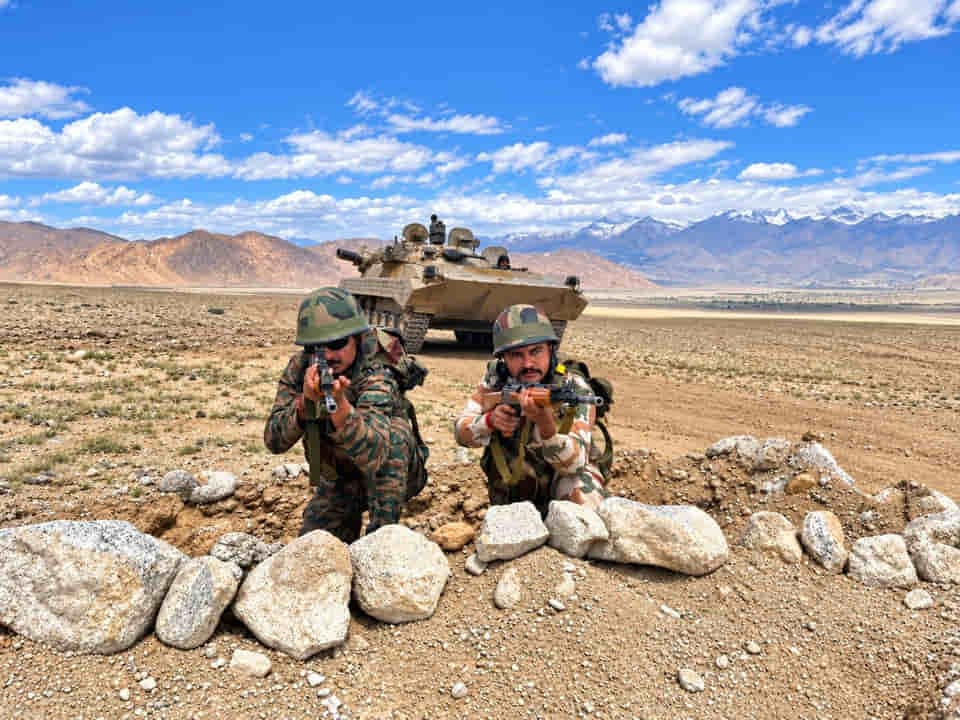
Joint Drill of Army-ITBP in Ladakh near LAC, BMP-2 and Missile Simulator used in Exercise

Army ITBP Joint Training Ladakh
© 2016 - 2017 Eastern Ladakh with BMP-2 and Missile Simulator. All rights reserved.

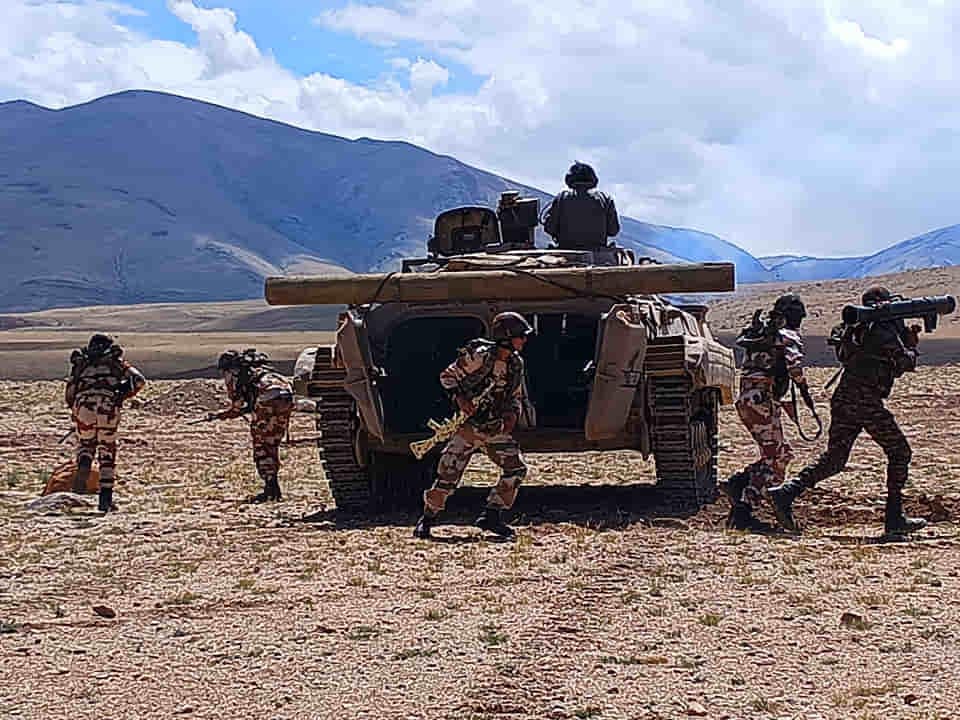
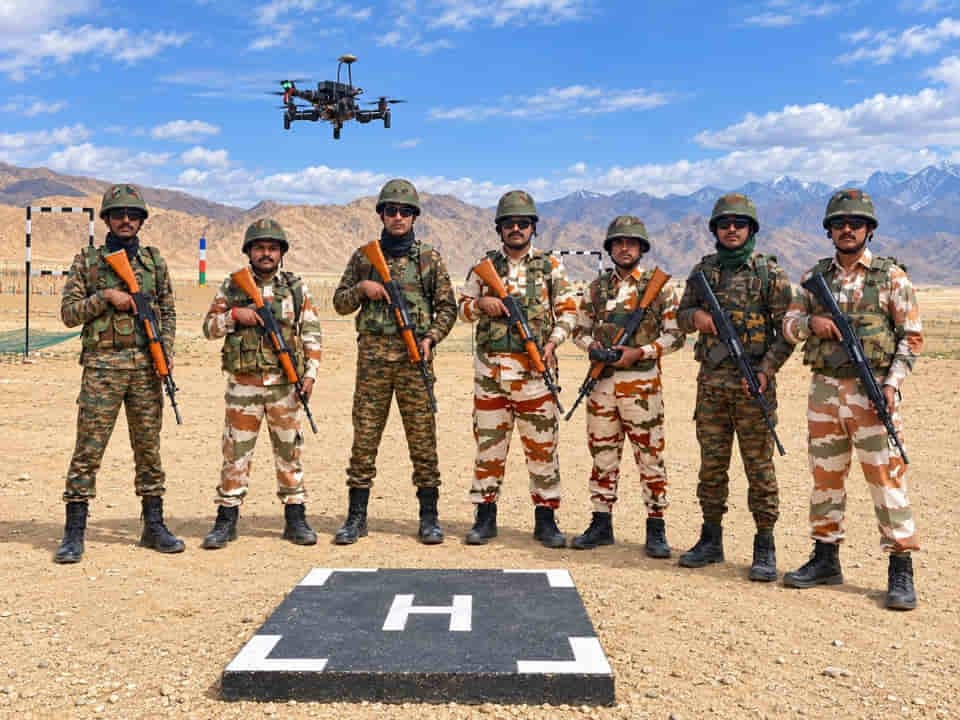
Army ITBP Joint Training Ladakh: Indian Army is now focusing on enhancing jointness with other forces. The Indian Army’s Fire and Fury Corps and India-Tibetan Border Police (ITBP) after CISF participated in joint training. This training was carried out in the strategically significant Punguk region of East Ladakh near LAAC.

In this exercise, the seals were acquainted with the capabilities of the Infantry Combat Vehicle (ICV) and the joint simulation firing on the Integrated Missile Simulator. The purpose of this activity in accordance with the Army was to strengthen the operational understanding, coordination and interoperability between the two forces.

Army ITBP Joint Training Ladakh: Enhanced Joint Preparation in Eastern Ladakh

This exercise has happened at a time when it is being continually emphasized on raising the rapport between Indian Army and ITBP in East Ladakh. The security arrangements and military deployments around the real control line (LAC) have been made after the Galvan conflict of the year 2020.

During that, the Indian Army had first deployed a large number of mechanized platforms, tanks and infantry Combat Vehicles for a long time in areas over 14,000 ft. Maintaining better synergy between the Army and the Border Security forces in such a difficult environment has become an important need.

Army in East Ladakh and ITBP Several joint exercises have been conducted in recent years to enhance coordination between. Both forces have also participated in joint activities in Chumar, Chushual, Chishumal and other advance areas. (Army ITBP Joint Training Ladakh)

Army ITBP Joint Training Ladakh
Fire fury corps

Why is Ponguk Ilaka Important

Ponguk is a small but strategic village located in the Changthang area of East Ladakh. It is located at a height of about 4,300 to 4,500 meters near Hanley Valley. It is a kiss in the west. Ponguk Hanley Cluster is part of and its distance from LAC (Chumar Sector) is about 40 kilometres. This is the Forward Border Zone, so the Army also undertakes mechanized training here. It is deemed appropriate for military activities due to its open and plateau geographical texture. (Army ITBP Joint Training Ladakh)

BMP-2 Sarth ICV included in practice

during joint training BMP-2 Sarth Infantry Combat Vehicle was used, he is considered the backbone of the Mechanized Infantry of the Indian Army. This vehicle features 30mm automatic canon,conex anti-tank guided missile system,co-axial machine gun and smoke grenade launcher. It can deliver about 10 soldiers to the war zone at once.

Its maximum speed in the plain areas is about 65 kilometres per hour. However affects the performance of low oxygen and excessive cold engines in elevated areas such as Ladakh. At times the temperature minus reaches 30 to minus 40 ° C, due to which vehicles require special maintenance. (Army ITBP Joint Training Ladakh)

Army ITBP Joint Training Ladakh
Fire fury corps

Integrated Missile Simulator Used

A special point of this joint exercise was using Integrated Missile Simulator. This is a modern training system, which gives the experience of the real vibration system. While it doesn’t cost real ammunition. Young anti-tank guided missiles through simulators can practice various conditions of firing, target identification, weapon operation and war zone.

Live firing in high Himalayan regions is often limited to weather, safety and logistic reasons. Simulator offers base training troops with real conditions. It saves ammunition and improves training quality. (Army ITBP Joint Training Ladakh)

Fire and Fury Corps is under it Islaka

The headquarters of the 14th Corps or Fire and Fury Corps of the Indian Army is located in Leh. The responsibility of this corps built after the Cargill War protects about 832 km long real control line of cyclone glacier, control line with Pakistan and a total of 3,488 kilometres with China. Including Daulat Beg Oldy (DBO) to Demochok.

The responsibilities and responsibilities of this corps were increased after the Galvan conflict. Under this, platforms like T-72, T-90 Bhishma Tank and BMP-2 Sarth were deployed in a large number of Eastern Ladakh. The operation of the mechanized force at such a greater height is counted in the select military capabilities of the world. (Army ITBP Joint Training Ladakh)

Army ITBP Joint Training Ladakh
Fire fury corps

Focus on ITBP after Galvan

ITBP was established after the India-China War of 1962. This force plays the responsibility of China Border Monitoring and Border Management. ITBP on LAC is often considered India’s first security line.
ITBP works monitoring and patrolling from Karakoram Pass and Daulat Beg Oldy (DBO) to Demchok and Chumar in the near 832 km long border area.

In the eastern Ladakh, ITBP checkpoints are present in sensitive areas such as Pongongong Tasto, Chushual, Changchenmo, Neoma, Hanley, Corjok, Ponguk, Demchok and Chumar. The height of these checkpoints ranges from about 9,000 feet to 18,900 feet, where the youngsters duty between extremely hard weather and lack of oxygen.

The deployment of ITBP was significantly strengthened in Ladakh after the Galvan Valley conflict of June 2020. Earlier where nearly three battalions were deployed in this sector, the number of them was later extended to seven battalions. Also, the number of Border Outpost (BOP) on LAC was increased from 180 to 215. Only 29 new squares were installed between 2022 to 2024 in the Ladakh region.

At the same time, IBP has also prepared its exclusive Sheurya Commando Platoon after 2020. These seals are trained for mountain war, drone operation and quick response campaigns. At the same time, ITBP has also expanded large in its patrol activities. The number of patrols near LAC has been increased by about three times and several squares have been transferred to and near the border. (Army ITBP Joint Training Ladakh)

Joint Training with CISF

Earlier on June 27, the Central Industrial Safety Force (CISF) personnel were involved in special UAS and counter-UAS Awareness and Operations Cadre Training School held at Parashu Drone Training School at Ladakh. The drone operation in this training conducted in a challenging area with height, was reported about the detection of drone threats and counter-UAS. This training was organized by the Indian Army to promote inter-agency cooperation, share expertise and strengthen national security capabilities through joint training. (Army ITBP Joint Training Ladakh)

India-UAE’s large deal; Kochi will be built in International Ship Repair Hub, 80 ships every year.

Kochi Global Ship Repair Hub
© Copyright 2004 - 2017 Cochin Shipyard. All Rights Reserved.

Kochi Global Ship Repair Hub: India is stepping rapidly towards becoming a big hub of Ship Repair Centre. Union Port, Ship Transport and Waterways Minister Serbanda Sonowal has pointed out a key step to new direction in the maritime sector between India and the UAE (UAE). He welcomed the Joint Venture Agreement between Cochin Shipyard Limited (CSL) and DP World Group’s company Dredox World that this partnership will strengthen India’s ship repair and shipbuilding sector globally.

The agreement has been made for operation and expansion of the Cochin-based international ship repair facility. During an event held in New Delhi, Sonowal said that India and UAE relations are based on trust, respect and strong engagement between people. The Prime Minister Narendra Modi’s leadership has gained a new pace to the relations of both the countries and has now reached the partnership business, investment, energy, technology and marine cooperation.

Kochi Global Ship Repair Hub: First Public-Private Partnership in Ship Repair Sector

Government Company Cochin Shipyard Limited (CSL) and Dubai’s flagship Mytime Company Dredox World has knocked over 50:50 Joint Venture Agreement for the operation and execution of Kochi-based International Ship Repair Facility (ISRF). It is being the first public-private partnership of its kind in India’s Ship Repair Sector.

The agreement took place in New Delhi during the BRICS Summit 2026. The programme also consisted of Union Port, Ship Transport and Waterways Minister Serband Sonowal and External Affairs Minister Omaren Sharaph Ahashimi, Assistant to Advanced Science and Technology Affairs of UAE.

Preparation of Kochi to create International Ship Repair Center

The main objective of this partnership is Kochi to India and Indian Ocean Territory The major Ship Repair Hub is to create. The new company will work in the name of "Cochin Dubai International Ship Repair Facility". The capacity of the International Ship Repair Facility under the Joint Venture will be extended to repair, upgrade, and maintenance work of ships of Indian, regional and global customers at large.

India’s geographical location is among the world’s busiest marine trade routes. In such cases, the facilities of repair and maintenance of large ships are available in India, foreign ships can be traced to Indian ports instead of Singapore, Dubai or other countries.

Kochi Global Ship Repair Hub
A DP World Company has a Joint Venture Agreement for Ship Repair Operations at the International Shiprepair Facility.

More than 80 ships repair every year

Union Port, Ship Transport and Waterways Minister Serbanda Sonowal has pointed out a key step to new direction in the maritime sector between India and the UAE (UAE). At the same time it is a great opportunity for Kerala, which can lead to Marytime Services. Sonowal pointed out that in the early phase, more than 80 ships have been set to be repaired every year. At the same time, the faculty will be extended from the present six workstation to 16 workstations.

He said that if this model is successful it can also be applied to other mytime centers in India.

He added that the Prime Minister Narendra Modi’s leadership has gained new pace to both countries’ relations and strengthening the country port infrastructure while working on the principle of "Reform, Performance and Transform", making the processes easier and attracting long-term global investments.

"Mother Industry" is Ship Repairing and Manufacturing

Sonowal said that the shipbuilding and ship repairing sector is called "mother industry" of heavy engineering industries, as it supports steel, machinery, electrical systems, design, logistics and many other fields.

Sonowal reported that the amployment multiplier of the shipbuilding industry is about 6.4, while the economic multiplier is considered around 1.8. This means that investments in this sector lead to massive employment and economic activities. He created employment in coastal areas, earns foreign currency and also strengthens the strategic freedom of the country.

The world’s top 10 ship building countries will join by 2030

Sonowal said that the government Maritime India Vision is working under 2030 and Maritime Amritkal Vision 2047. Under these plans new shipyards are being developed in the country, shipbuilding clusters are being built and the ship repair facilities are being modernized.

Sonowal pointed out that new facility is being developed at a cost of about Rs 1,570 crore in Wadinar, Gujarat to strengthen the country’s ship repair network. The project is being taken forward in collaboration with Indian Port Authority and Cochin Shipyard Limited.

He said India’s goal is to join the world’s top 10 ship building countries by 2030 and place in top 5 countries by 2047.

To achieve this goal, the Central Government has approved a package of about Rs 70,000 crore for the shipbuilding sector. As well as five shipbuilding clusters have been recognized in principle.

Union Minister said Cochin Shipyard Limited has completed over 400 shipbuilding projects over the past five decades and has completed over 2,600 ship repairs, refits and conversion projects. While Dredox World has completed over 9,000 projects worldwide.

He said the Indigenous Aircraft Vessel INS Vikrant is the largest example of India’s Advance Ship Building capacity. CSL’s Ship Repair Network extends to Mumbai, Kolkata and other locations. The international ship repair facility being developed in Kochi will further strengthen this capacity.

Dredox World, creating new facility in Tuticorin

पोर्ट्स, शिपिंग और वाटरवेज के सचिव विजय कुमार ने कहा कि ड्राईडॉक्स वर्ल्ड पहले से ही भारत के पश्चिमी तट पर एक बड़ी सुविधा विकसित कर रहा है। इसके अलावा तूतीकोरिन में भी नई फैसिलिटी बनाने की योजना पर काम चल रहा है। उन्होंने उम्मीद जताई कि कोच्चि में इस मॉडल की सफलता के बाद इसे देश के अन्य तटीय क्षेत्रों में भी लागू किया जा सकेगा।

उन्होंने बताया कि सरकारी योजना के तहत अब तक 100 से अधिक जहाजों को मंजूरी मिल चुकी है। इन परियोजनाओं का कुल निवेश 12,000 करोड़ रुपये से अधिक है। वहीं, इन जहाजों में से लगभग 80 प्रतिशत जहाज निर्यात के लिए बनाए जा रहे हैं।

पांच बड़े शिपयार्ड क्लस्टर को मंजूरी

उन्होंने बताया कि सरकार ने शिपबिल्डिंग क्षमता बढ़ाने के लिए नई और मौजूदा दोनों तरह की सुविधाओं के विकास की योजना बनाई है। इसके तहत महाराष्ट्र, गुजरात, ओडिशा, आंध्र प्रदेश और तमिलनाडु में पांच बड़े शिपयार्ड क्लस्टर को मंजूरी दी जा चुकी है। इन परियोजनाओं में कई अंतरराष्ट्रीय कंपनियां भी रुचि दिखा रही हैं।

सचिव विजय कुमार ने बताया कि दक्षिण कोरिया की दुनिया की अग्रणी जहाज निर्माण कंपनी एचडी ह्युंडई ने तमिलनाडु में परियोजना के लिए समझौता किया है और इसके लिए विस्तृत परियोजना रिपोर्ट तैयार की जा रही है।

इसके अलावा इटली और लेबनान की कई कंपनियों ने भी भारत के समुद्री क्षेत्र में निवेश में रुचि दिखाई है। उन्होंने कहा कि भारत के जहाज निर्माण और समुद्री उद्योग में वैश्विक निवेशकों की दिलचस्पी लगातार बढ़ रही है।

उन्होंने बताया कि सरकार केवल उत्पादन क्षमता बढ़ाने पर ही ध्यान नहीं दे रही है, बल्कि मांग तैयार करने पर भी काम कर रही है। सरकारी एजेंसियों की जरूरतों को जोड़कर लगभग 400 जहाजों की मांग तैयार की गई है। इस मांग से 2 लाख करोड़ रुपये से अधिक का निवेश पैदा होने की संभावना है। इससे देश के शिपयार्ड, जहाज मरम्मत इकाइयों और संबंधित उद्योगों को बड़े पैमाने पर कारोबार मिलेगा।

भारत और यूएई संबंध होंगे मजबूत

यूएई के सहायक विदेश मंत्री ओमरन शराफ अलहाशिमी ने कहा, “भारत और यूएई के बीच लंबे समय से भरोसे और सहयोग पर आधारित संबंध हैं। यह जॉइंट वेंचर दिखाता है कि दोनों देश औद्योगिक क्षेत्र में मिलकर ठोस परिणाम हासिल कर सकते हैं।”

वहीं, कोचीन शिपयार्ड लिमिटेड के अध्यक्ष एवं प्रबंध निदेशक (सीएमडी) जोस वीजे ने कहा, “ड्राईडॉक्स वर्ल्ड दुबई के साथ यह संयुक्त उद्यम भारत के वैश्विक शिप रिपेयर हब बनने की दिशा में एक ऐतिहासिक कदम है।

कोचीन शिपयार्ड के घरेलू अनुभव और ड्राईडॉक्स वर्ल्ड की विश्वस्तरीय विशेषज्ञता को मिलाकर हम केवल कारोबार का विस्तार नहीं कर रहे हैं, बल्कि वैश्विक स्तर की कार्यप्रणालियों को अपना रहे हैं, जहाजों की मरम्मत में लगने वाला समय कम कर रहे हैं और गुणवत्ता तथा सुरक्षा के नए मानक स्थापित कर रहे हैं।

उन्होंने कहा, कोच्चि स्थित इंटरनेशनल शिप रिपेयर फैसिलिटी को केंद्र में रखकर यह साझेदारी एक मजबूत रिपेयर क्लस्टर विकसित करेगी, अंतरराष्ट्रीय जहाजों को आकर्षित करेगी, उच्च कौशल वाले रोजगार पैदा करेगी और ‘मैरीटाइम इंडिया विजन 2030’ तथा ‘अमृत काल 2047’ के लक्ष्यों को आगे बढ़ाएगी।

2025 के एमओयू से शुरू हुई थी साझेदारी

भारत मैरीटाइम वीक 2025 के दौरान ड्राईडॉक्स वर्ल्ड और कोचीन शिपयार्ड के बीच एक मेमोरेंडम ऑफ अंडरस्टैंडिंग (एमओयू) पर हस्ताक्षर हुए थे। उस समय दोनों कंपनियों ने शिप रिपेयर और समुद्री सेवाओं के क्षेत्र में सहयोग की संभावनाओं पर काम करने पर सहमति जताई थी। करीब एक साल की चर्चा और मूल्यांकन के बाद अब इस सहयोग को औपचारिक रूप से जॉइंट वेंचर का रूप दिया गया है।

कोच्चि स्थित इंटरनेशनल शिप रिपेयर फैसिलिटी भारत की सबसे आधुनिक शिप रिपेयर सुविधाओं में से एक मानी जाती है। यहां अत्याधुनिक शिप लिफ्ट सिस्टम और आधुनिक डॉकिंग इंफ्रास्ट्रक्चर मौजूद है। इस सुविधा में विभिन्न प्रकार के व्यापारिक जहाजों, ऑफशोर सपोर्ट वेसल, टैंकर, कंटेनर जहाज और विशेष समुद्री प्लेटफॉर्म की मरम्मत की जा सकती है।

शिप लिफ्ट सिस्टम की मदद से जहाजों को पानी से बाहर निकालकर तेजी से निरीक्षण, मरम्मत और अपग्रेड का काम किया जा सकता है। इससे जहाजों का डाउनटाइम कम होता है और ऑपरेटरों की लागत भी घटती है।

बता दें कि ड्राईडॉक्स वर्ल्ड दुबई के पोर्ट राशिद के पास स्थित 200 हेक्टेयर क्षेत्र में फैला हुआ है। इसके पास पांच बड़े ड्राईडॉक और 3,700 मीटर से अधिक बर्थ स्पेस है।

यह फैसलिटी एक समय में दुनिया के सबसे बड़े जहाजों समेत 10 अल्ट्रा लार्ज क्रूड कैरियर जहाजों को संभाल सकती है। कंपनी ऑफशोर विंड एनर्जी प्लेटफॉर्म, ऑयल एंड गैस स्ट्रक्चर और बड़े समुद्री इंजीनियरिंग प्रोजेक्ट्स में भी सक्रिय है। (Kochi Global Ship Repair Hub)

From the courtroom to the parade ground: the advocacy left chosen uniform, how the long legal battle remained the Lieutenant in the Indian Army after the Citrus

Indian Army Lieutenant
From Supreme Court to OTA: How a Women Overcame Legal Hurdles to Become an Indian Army Lieutenant.

Seerat Kaur Indian Army Lieutenant: Being the officer in Indian forces only dream of men but also women. But getting entry into forces is not so easy for women even today. One of these is the Sirat Kaur, who had to fight the legal battle to complete his dream of going to the army even after being a lawyer. Recently on September 5, when Sirat Kaur was commissioned as Lieutenant in the Judge Advocate General (JAG) branch of the Indian Army, there was a long battle of about two years behind him.

The 24-year-old Sirat Kaur’s journey to reach the army was not from the parade ground, but from the courtroom of the Supreme Court. He not only confronted the tough selection process of the Indian Army, but also fought to the highest court of the country for his rights.

Seerat Kaur Indian Army Lieutenant: Starting Travel From Law Studies

Sirat Kaur studied the law from Guru Gobind Singh Indraprastha University. He completed LLB with First Division. From October 2023 to May 2025 he worked as Law Clerk-Low-Research Associate in the Supreme Court of India. During this time, he had a chance to understand the functioning of the country’s highest court. But although his dream was to become the Officer in the Indian Army. And to fulfill his dream he took part in the Recruitment Process of the JAG Branch of the Army.

JAG-35 merit list on the sixth number

Indian Army JAG Branch For officers who handle legal matters in the military. It is Gini in the most prestigious technical branches of the Army.

Sirat Kaur secured a total of 432 points in the recruitment of JAG-35. At the Joint Merit List, he was on the sixth number. At the same time, she found the fifth position in the female candidates. The particular thing that his score was equal to the male Candidate and the female Candidate of the fourth number in the third place. A total of eight candidates were recommended and those were included in eight.

In such cases, the selection is deemed to be entangled in the form of a high merit. But being a woman was the beginning of these challenges for them. Because only four positions were set for women in the recruitment process of JAG-35 at that time. The female candidates who ranked above them were selected in four positions. But despite being in the sixth place in the Joint Merit list, Citt didn’t find a joint letter. Indian Army Lieutenant

case reached Supreme Court

Sirat Kaur decided to challenge this decision. He had to say that when the male and female candidates have been evaluated on a similar criteria, only limiting the opportunity based on the fixed female quota can be considered indirect discrimination towards women.

The matter was that the case came out at a time when the military’s JAG recruitment system was already debated.

It was not easy to decide to fight the legal battle for himself, but despite it he decided to fight for his rights.

In August 2025, the Supreme Court said in the Arshanur Kaur case that the system of the Joint Merit List should be adopted for the male and female candidates in the future JAG’s recruits. While the central government said in the court that this decision would be applicable to future recruits and cannot be implemented on the recruitment process already started.

The Court Gives Big Chance

Case Supreme Court was under consideration. Meanwhile, the Supreme Court issued an interim order on 26 September 2025. The court allowed Sirat Kaur to be temporarily involved in the training course starting at the Chennai-based Officers Training Academy (OTA) on the prerequisite formality.

This course began from 1 October 2025.

By that time it was not clear whether the final decision will come to their side. Despite this, he had a chance to join the training.

Tell that the father and brother of Sirat Kaur are already in the Indian army. They found the motivation to become an officer.

Uncertainty during training

OTA Chennai Once you have entered, the challenges were not eliminated in front of the syllabus. They knew that the last decision of the court is yet to come. In spite of this, he continued training with the rest of the cadets.

The course of training was to prove that they are also one of them. Every day of training came up with a new challenge for them and they faced every challenge.

OTA’s training is considered extremely difficult at a physical, mental and professional level. The morning drill, physical training, military exercise, leadership training, and discipline-filled routine takes every cadet test.

सीरत ने इन सभी चुनौतियों का सामना उसी समय किया, जब उनके भविष्य को लेकर कानूनी अनिश्चितता भी बनी हुई थी। (Seerat Kaur Indian Army Lieutenant)

खारिज कर दी याचिका

14 अक्टूबर 2025 को सुप्रीम कोर्ट ने अपना अंतिम फैसला सुनाया। अदालत ने सीरत कौर की याचिका खारिज कर दी। कोर्ट ने माना कि अर्शनूर कौर मामले में दिए गए जेंडर-न्यूट्रल भर्ती संबंधी निर्देश भविष्य की भर्ती प्रक्रियाओं पर लागू होंगे और जेएजी-35 की रिक्रूटमेंट साइकल को प्रभावित नहीं करेंगे।

कागजों पर यह फैसला सीरत के खिलाफ गया।

लेकिन अदालत ने मामले की विशेष परिस्थितियों को भी ध्यान में रखा। चूंकि सीरत अदालत के अंतरिम आदेश के आधार पर ट्रेनिंग शुरू कर चुकी थीं, इसलिए उन्हें “बहुत विशेष मामला” मानते हुए 11 महीने की ट्रेनिंग पूरा करने की अनुमति दी गई।

अदालत ने स्पष्ट किया कि इससे उन्हें ऑटोमैटिक प्लेसमेंट का अधिकार नहीं मिलेगा। हालांकि अगर चयनित उम्मीदवारों में से कोई बाहर होता है, अयोग्य घोषित होता है या कोई उपयुक्त रिक्ति उपलब्ध होती है, तो ट्रेनिंग सफलतापूर्वक पूरा करने के बाद उनके मामले पर विचार किया जा सकता है। (Seerat Kaur Indian Army Lieutenant)

नहीं मानी हार, ट्रेनिंग जारी रखी

कई लोगों के लिए यह स्थिति ट्रामा वाली होती है। लेकिन हिम्मत हारने की बजाय सीरत ने पीछे मुड़कर नहीं देखा। उन्होंने पूरी शिद्दत के साथ अपनी ट्रेनिंग जारी रखी। हर एक्सरसाइज, हर एग्जाम और हर सैन्य चुनौती को सफलतापूर्वक पार किया। और अपने लक्ष्य को हासिल करने के लिए खुद को और ज्यादा मेहनत करने के लिए प्रेरित किया। (Seerat Kaur Indian Army Lieutenant)

आखिरकार मिला सेना का कमीशन

लगभग एक साल की मुश्किल ट्रेनिंग पूरी करने के बाद सीरत कौर का सपना साकार हुआ। इस साल 5 सितंबर को उन्हें भारतीय सेना की जज एडवोकेट जनरल ब्रांच में Lieutenant के रूप में कमीशन प्रदान किया गया। (Seerat Kaur Indian Army Lieutenant)

इसके साथ ही वह आधिकारिक रूप से भारतीय सेना की अधिकारी बन गईं।

जिस उम्मीदवार को कभी मेरिट सूची में जगह मिलने के बावजूद नियुक्ति पत्र नहीं मिला था, वही अब सेना की वर्दी पहनकर देश की सेवा के लिए तैयार थी।

भारतीय सेना में अधिकारी बनने के लिए सीरत कौर ने जिन मुश्किलों का सामना किया, वह वाकई प्रेरणा देने वाला है। अपने सपने को पूरा करने वाले इस सफर में सीरत ने न केवल अपनी योग्यता साबित की, बल्कि निराशा का भी सामना किया। कानूनी लड़ाई भी लड़ी और धैर्य भी बनाए रखा। (Seerat Kaur Indian Army Lieutenant)

Air Force must fixed wing High Altitude Seudo Satellite will be from 23 km above continuously monitored, released EoI

FW-HAPS India
The Air Force needs a fixed-wing high-altitude pseudo-satellite for continuous surveillance from 23 km above; EoI issued

FW-HAPS India: Indian Air Force is now increasingly focusing on High Altitude Seudo Satellites (HAPS). Air Force is working on Fixed-Wing Based High Altitude Seudo Satellite (FW-HAPS) after Air Ship-haps. Air Force wants to use the platform for surveillance and communication. Recently Ministry of Defence has released the Expression of Interest (EOI) from Industry in the Make-I category for its design and development. These hightech platforms can fly from the ground for a long time at a height of about 18 to 23 kilometers.

Earlier on July 3, the Defence Acquisition Council (DAC) gave the approval of the requirement to the purchase of FW-HAPS for Indian Air Force. Several defence proposals worth Rs. 52,000 crore were approved on behalf of DAC.

FW-HAPS India: What is F W-HAPS?

FW-HAPS is a solar-powered unmanned aircraft flying at extremely high altitude. It blows down significantly above the normal drone and from the satellite. That’s why it’s called a pseudo satellite.

Usually such platforms are designed to operate at a height of about 18 to 23 kilometers, i.e. around 60,000 to 75,000 feet. It can keep a long look at a large terrain due to flying at such height. FW-HAPS will be used for work such as Constant Intelligence, Surveillance and Reconcience i.e. ISR, Telecommunications and Remote Sensing.

It is typical that it does not go into space like Satellite. It flys like a plane and can be replaced according to the need. Solar panels engaged on its large wings at the time of the day generate electricity and charge batteries. At night this battery gives energy to electric motor, avionics and mission payloads.

Operation shifted lesson

Operation shifter and recent military conflicts have proved how important it is to keep a constant and real-time eye on enemy activities. It is imperative for strengthening of intelligence, monitoring and tow (ISR) capabilities.

High Altitude Drones used at the moment usually fly to a height of about 12 kilometres and do not stay in the air for a long time. On the other hand, satellites are very expensive. They are not easy to focus immediately on a new area and they cannot monitor the same area at all times.

Fixed-wing high altitude platform satellite (FW-HAPS) in such a can meet this reduction. This is a platform that can continuously monitor the long blowing at a very high altitude.

The link between drone and satellite

FW-HAPS It can be considered a link between drones and satellites to understand. General monitoring drones fly at relatively low altitudes and their endurance is limited. Satellites on the other hand are present at a very high altitude and they are not easy to reposition immediately for frequent monitoring on a particular terrain.

FW-HAPS gives a different capacity between these two. It can last longer above the same terrain and change its mission as needed.

The Indian Air Force can constantly monitor the activity of enemy troops on the border, movement of military vehicles, airbase, marine area and other important areas. FW-HAPS India

The advantage of flying at such height

Flying at a height of 18 to 23 km gives FW-HAPS a much larger visual area than the ground. The sensors in it can remotely monitor.

This platform can be installed electro-optical and infrared cameras, synthetic aperture radar, electronic intelligence (ELINT), communication intelligence (comment) system and communication relay equipment.

Electro-optical camera is useful to take photos in the day, while the infrared sensor helps identify the target at night and depending on the difference of heat. SAR performs radar-based imaging and gives monitoring ability even in bad weather or low light.

FW-HAPS as Communication Relay can also help maintain data links between different military units. FW-HAPS India

Solar Power Will Complete System

The most difficult technology of FW-HAPS is its energy system. Keep the platform in the air for several days or weeks, but it is not possible to refuel continuously. So large solar panels are installed on its wing. Lightning is formed by sunlight in the day. The same power drives the motor and the other system and accumulates in the extra energy battery.

The solar panel at night does not make electricity, so gives energy to the battery system. This means solar cell, battery, electric motor and flight control system have to be designed with extremely low weight and low energy consumption. FW-HAPS India

Not easy to fly in stratosfier

The real technical challenge of FW-HAPS is its height. The air in the stratosphery is quite thin. The wing has to be very large but extremely light to give adequate lift to the aircraft in low air.

At the same time the platform has a strong winds, low temperatures, and long-term constant flight conditions. There should be much energy on weight gain and the size of solar panel and battery increases when energy is needed. It then increases the weight of the aircraft.

That’s why HAPS’s design features lightweight composite material, high efficiency electric motor, advanced battery and autonomous flight control extremely important techniques. FW-HAPS India

How to distinguish from AS-HAPS F W-HAPS?

India is running a separate program not only on fixed-wing HAPS but also on Airship Based AS-HAPS. DAC in February 2026 Airship Based HAPS program was approved.

But the texture and use of both is different. The Airship Based Haps is like a lightweight-to-aired airship and can remain almost stable over a terrain for a long time. Conversely the physcused wing-haps aircraft resembles. It can fly from runway and go to another area as needed.

Where a system can be used for a long time one place monitoring, while the fixed-wing platform is useful for much dynamic monitoring. FW-HAPS India

Research in India

HAPS technology in India is already working. Bengaluru-based CSIR-National Aerospace Laboratory (NAL) is developing a large solar powered fixed-wing aircraft that can fly for a long time at a very high altitude.

Its small prototype has already completed successful flights for 10-11 hours at a height of 25,000 feet. Now the full-scale model is being prepared, whose wingspan can range from about 24 to 30 meters, takeoff weight from 150 to 450 kg and payload capacity from 10 to 35 kg.

Under this project, it is to create a plane that can fly continuously for several weeks with solar energy at a height of about 20 kilometres (65,000 feet). Its Flight Test is expected to begin during 2026-27.

Bengaluru’s Newspace Research and Technologies is also working in the same area. The company has developed several projects under the IDEX (iDEX) programme and the Indian Navy has also shown interest in this technology.

While Veda Aeronautics is developing a high Altitude platform consisting of the Mira Aerospace of the UAE.

On the other hand, the DRDO’s ADRDE (ADRDE) lab successfully blown the airship prototype in Madhya Pradesh in May 2025 to a height of about 17 kilometres. FW-HAPS India

Development support will give government in the Make-I model

FW-HAPS is placed in Make-I category. This model costs up to 70 per cent of the cost of developing government prototypes. The Government helps in the design and development of indigenous prototypes. After successful development, its purchase will be made under the category by the Indian-IDDM (Indiginsally Designed, Developed and Manufactured), with a minimum level of indigenous content required. FW-HAPS India