📍Indore | 8 Jan, 2026, 3:07 PM
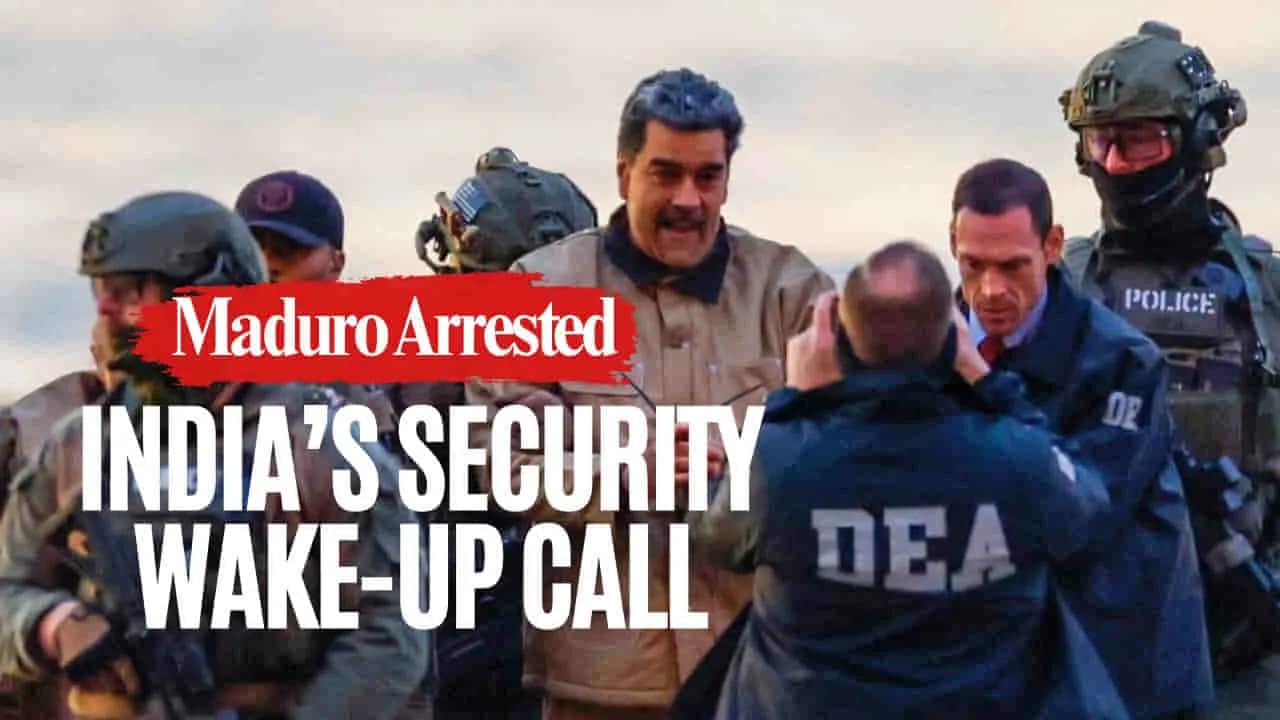
On January 3, 2026, US special forces conducted a covert military operation in Caracas, capturing Venezuelan President Nicolás Maduro and his wife, Cilia Flores, from the presidential palace, Miraflores. This action, authorized by President Donald Trump, mirrored a domestic police arrest of a criminal, involving extraction from sovereign territory without Venezuelan consent. Maduro and Flores were flown to New York, where they pleaded not guilty to charges of drug trafficking, narco-terrorism, and offences related to weapons in a US federal court on January 5.
The operation has been criticised as a blatant violation of Venezuela’s national sovereignty, infringing on international norms under the UN Charter, which prohibits interference in domestic affairs. After all, Venezuela is a sovereign country, and the act of violating/destroying its sovereignty was done by a nation that always advocates for ethics regarding international matters.
This intervention represents an extreme, uncivil, and inhuman exercise of extraterritorial power by the US, treating a sitting head of state as a common fugitive. Despite the gravity—effectively an act of state-sponsored abduction-it has elicited muted global condemnation. Major powers, including those in the UN Security Council, have issued restrained statements, prioritising geopolitical alliances over principles of sovereignty.
This silence underscores a double standard in international relations, where powerful nations like the US can act with impunity, framing such operations as justice against “narco-terrorism” while ignoring humanitarian implications, such as potential destabilisation in Venezuela.
For India, this event serves as a stark lesson in assertive foreign policy. Adversaries in neighbouring Pakistan and Bangladesh, including state-backed terrorist leaders or politicians harboring anti-India elements, pose ongoing threats to national security. If charges such as drug trafficking, narco-terrorism, producing and distributing fake Indian currency, and offenses related to weapons are concerned, Pakistan has been committing all these crimes with us and is doing so for the last seven decades.
But what is more disturbing, which has damaged India a lot, is exporting terror to our country as part of its ‘1000 cuts’ theory developed by earlier dictators after they realised that they won’t be able to counter us on the war front.
India has used similar tactics against terror camps based in Pakistan-occupied Jammu & Kashmir (POJK) in response to attacks on Uri and Pahalgam. By Op Sindoor, India has shown its prowess not only to Pakistan but to the whole world. Similar prowess was shown when we crossed over to Myanmar to destroy terror camps. Drawing from the US precedent, India could consider similar targeted operations to neutralise such figures, bypassing diplomatic hurdles.
For instance, extracting key operatives from Pakistani soil, akin to past surgical strikes but escalated, or intervening in Bangladesh to address border incursions and radical elements. This approach, while risking escalation, could deter aggression and project strength, much like the US operation has reshaped Latin American dynamics. However, it demands robust intelligence, legal framing (e.g., under anti-terrorism laws), and international alliances to mitigate backlash.
The Maduro capture highlights the erosion of sovereignty in pursuit of national interests, a wrong unaddressed by the global community. India should internalise this as empowerment for decisive action against regional foes, ensuring preparedness through enhanced Special Forces and diplomatic maneuvering. Ultimately, such precedents redefine power balances, urging nations like India to adapt or risk vulnerability
(Writer is a senior journalist & Defence Expert)