📍New Delhi | 15 Dec, 2025, 9:15 AM
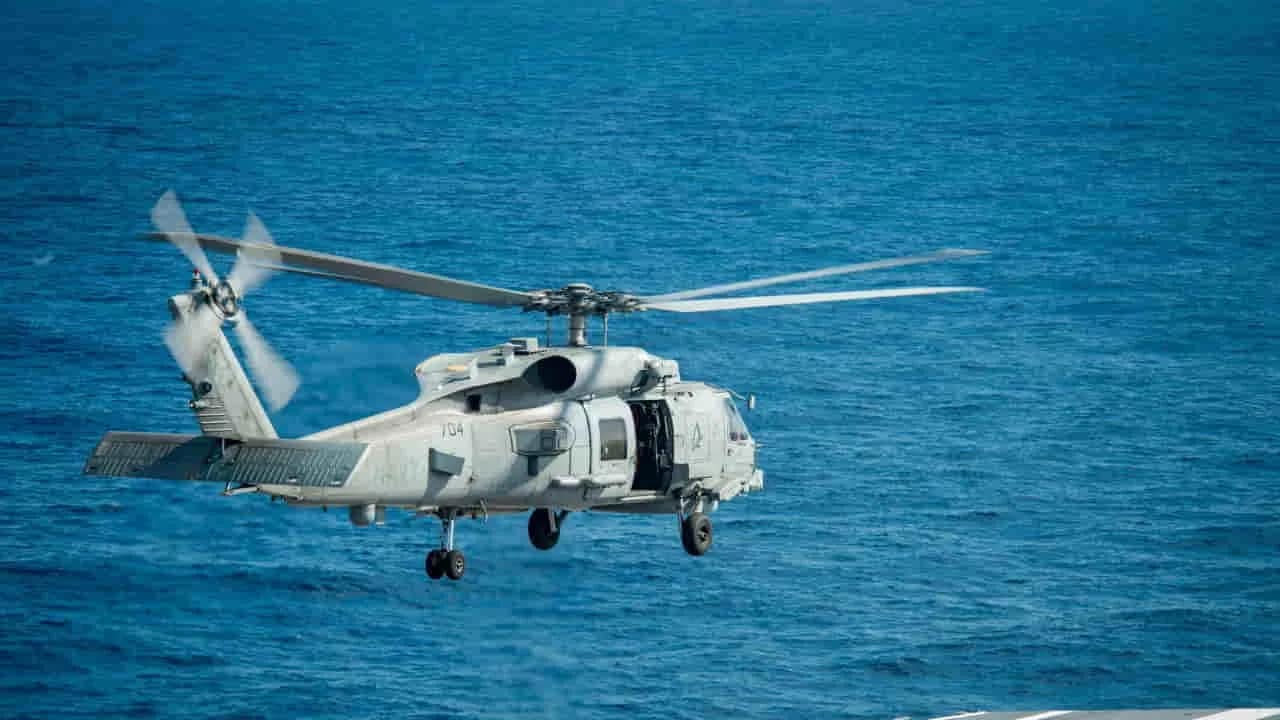
MH-60R Seahawks: The commissioning of the second MH-60R squadron and integration of the helicopter into fleet operation marks a decisive leap in the Indian Navy’s ability to control the underwater battlespace and safeguard India’s vital maritime interests within the Indian Ocean Region. More than a mere platform upgrade, it represents a coherent enhancement of technology, strategy and human skill that will shape undersea vigilance and deterrence on the high seas for years to come.
MH-60R Seahawks: A New Era in ASW
The MH-60R has been designed from the outset as a dedicated maritime combat helicopter, integrating advanced sensors, weapons, networks, anti-ship capabilities and mission systems into a single, highly capable ASW platform. In an era when submarines are quieter, more networked and able to remain at sea for extended periods, this capability restores balance in the underwater domain by enabling quiet, persistent and confident operations far from the coastline.
At the heart of this transformation is the helicopter’s ability to search sub-surface contacts with precision and speed. It’s state-of-the-art dipping sonar allows aircrew to probe the depths for subtle acoustic signatures that may be missed by surface ships, while patterns of deployed sonobuoys can create a temporary underwater listening grid across wide swathes of ocean. Supported by maritime surveillance radar, anti-shipping capabilities and electronic support measures, the MH-60R gives commanders at sea a unified picture of surface and subsurface activity enhancing the MDA.
MH-60R Seahawks: Sensor Fusion and Rapid Decisions
What truly differentiates the MH-60R is not just the sophistication of individual sensors, but the way these inputs are fused onboard to generate a coherent, real-time tactical picture. This integrated processing drastically reduces uncertainty, shrinks the time between detection, classification and engagement decisions, and helps ensure that fleeting contacts do not slip back into the obscurity of the deep.
The Indian Navy is set to commission INAS 335 (Ospreys), its second MH-60R helicopter squadron, on 17 Dec 2025 at INS Hansa, Goa, in the presence of CNS Adm Dinesh K Tripathi.
Packed with advanced sensors, avionics and weapons, the MH-60R brings a major boost to the Navy’s… pic.twitter.com/IFiqGLMOF7— Raksha Samachar | रक्षा समाचार 🇮🇳 (@RakshaSamachar) December 14, 2025
Such rapid decision cycles are crucial in anti-submarine warfare, where the advantage often lies with the platform that can act fastest on incomplete information. By providing the ship and force commander with timely, high-quality data, the MH-60R becomes a central node in the fleet’s wider combat system, rather than a standalone sensor operating in isolation.
MH-60R Seahawks: From detection to decisive response
The MH-60R’s value is further amplified by its ability not only to locate contacts but to engage them with precision weapons. Armed with lightweight torpedoes, the helicopter can prosecute contacts swiftly once they are positively classified, translating underwater/ surface awareness into credible and immediate combat power.
Operating from frontline units, the helicopter pushes the ASW battlespace outward, away from high-value ships, thereby increasing the protective cordon around task groups. This keeps hostile submarines on the defensive, complicates their approach to critical units and imposes continuous psychological and operational pressure on any adversary attempting to operate in contested waters.
MH-60R Seahawks: Strengthening the Western Fleet
The deployment of MH-60R helicopters on the western seaboard particularly enables the Western Fleet, which must safeguard some of the busiest and most strategically important waters for the nation. The Arabian Sea hosts dense commercial shipping, vital energy lifelines and growing naval presence, all within an acoustically complex environment that makes persistent, high-quality undersea surveillance indispensable.
From their host ships, MH-60Rs extend the Western Fleet’s reach well beyond the radar horizon, enabling rapid investigation of contacts and the maintenance of a broad protective envelope to the desired area of interest. The helicopter’s real-time data links feed directly into combat systems, sharpening maritime domain awareness not only during crises, but also through routine patrols that gradually build a detailed picture of regional surface/ sub-surface activity.
MH-60R Seahawks: Geopolitical impact in the Indian Ocean Region
The western Indian Ocean has seen a steady rise in submarine deployments, including those by extra-regional navies whose presence adds complexity and uncertainty to maritime planning. Submarines, by their very nature, thrive on ambiguity and the ability to remain undetected; the MH-60R counters this by raising the probability of detection, tracking and, if required, engagement.
This persistent surveillance and credible deterrence have a stabilising effect on the broader security environment. By signalling the Western Naval Command’s readiness to detect and respond to variety of threats, the MH-60R underpins India’s commitment to keeping sea lanes of communication safe and maintaining predictability in a theatre that is central to national and regional prosperity.
MH-60R Seahawks: Human skill behind advanced technology
Behind the MH-60R’s advanced systems stand highly trained aircrew, technicians and support personnel whose professionalism translates technology into operational effect. Operating often in demanding conditions, far from shore support, they undergo rigorous training to master complex avionics, weapons and maintenance routines, ensuring that the platform remains mission-ready at short notice to deliver decisive punch when called upon for action.
The training imparted has ensured building up on experience level of personnel in interpreting sensor data, executing precise tactics and sustaining high sortie rates during extended deployments. The MH-60R thus becomes a force multiplier not only because of its design, but because of the human expertise that exploits its full potential when deployed on the high seas.
Enduring vigilance beneath the waves
The commissioning of the second MH-60R squadron is therefore far more than the arrival of a new aircraft type; it is a quiet but consequential reinforcement of India’s vigilance on the Western seaboard. By combining cutting-edge sensors, integrated weapons, networked operations and skilled personnel, the platform ensures that India’s maritime approaches remain secure, monitored and well defended against evolving threats in the Indian Ocean Region.
In a domain where most activity remains hidden from view, the MH-60R brings clarity, reach and reassurance, enabling the Indian Navy to operate with confidence in an increasingly contested maritime environment. Commissioning the MH squadron underscores an enduring responsibility to remain watchful beneath the waves, protect national interests and uphold stability across the wider Indian Ocean Region.