Home Blog Page 4

Now the delay in the delivery caused by this "Fassley" of the engine, but also HAL, why not a single sharpness reached Mk-1A in squadron?

Tejas Mk-1A Delivery Delay
Copyright © 2018, All Rights Reserved. Ministry of Federal Affairs and Local Development (MoFALD).

Tejas Mk-1A Delivery Delay: Delay in the delivery of Tejas Mark-1 Alphafighter jets being prepared for Indian Air Force has been seen from the supply of the F-404 engine of the American company GE Aerospace for the last two years. But the new chairman of Hindustan Aeronautics Limited (HAL) and the Managing Director Ravi K.’s statements assume that the delivery is no longer due to the delay engine, but also the challenges associated with radar and missile integration remain a great barrier in delivery.

Near HAL 27 Tejas MK-1A Airframes are ready and 10 engines have also been found. Despite this, Indian Air Force has not been assigned a single MK-1A aircraft. Sources say that if the HAL Indigenous Exquisite AESA radar in 2025 does not place the Israeli Ella EL/M-2052 AESA radar for the first batch, the delivery has started so far.

Tejas Mk-1A Delivery Delay: Starting from March 2024 Delivery

Indian Air Force ordered 83 Tejas Mark One Alpha fighter jets at a cost of approximately Rs 48,000 crore in February 2021. The first aircraft under this agreement was to be delivered in March 2024.

At that time, Indian Air Force command was near Air Chief Marshal VR Choudhury. His tenure stood from October 2021 to September 2024. ACM VR Choudhury had described the Tejas programme several times during his tenure as important for Indian Air Force. The first delivery of Tejas MK-1A was to start from March 2024 in their tenure, but it could not happen.

In October 2024, Air Chief Marshal AP Singh took the position of Indian Air Force chief. His engagement from the Tejas program has been quite old. He himself has been a test pilot and knows the Tejas project closely. The second order of 97 additional Tejas MK-1A aircraft was given in September 2025 during their tenure. In this way, the total order of 180 fighter jets is near HAL.

Air Chief Marshal AP Singh This year is scheduled to be retired in October. In such a situation, it has become that the tenure of the second consecutive air force is also ending without the delivery of a single sharpness MK-1A. While the whole order was to be over close to 2028-29.

What did HAL Chairman say on delivery?

Chairman of HAL Sun's. The recent interview to many media institutes said that the main challenge is now connected with radar and missile integration.

He said that most trials have been completed, but some radar related issues and weapon integration tests have to be finalized. According to them the aircraft is prepared about 90 to 95 percent, but it is yet to meet the last 5 percent technical needs.

Ravi K. pointed out that 27 airframes are already ready and HAL has got 10 F404-IN20 engines from GE Aerospace and the company is in the event of delivering 10 aircraft based on these engines. He also pointed out that GE has relied on delivering 12 additional engines until December 2026.

He said that the company plans to start the delivery of aircraft until the end of this year. However they did not clarify what the exact date of delivery will be and how many aircraft will be assigned to the air force at the initial stage. Ravi K. said he cannot promise a certain timeline right now. (Tejas Mk-1A Delivery Delay)

2025 HAL’s Decision Making Heavy

The most discussed in the Tejas MK-1A program took that decision in June 2025, when the HAL resigned the Israeli company for the first batch planes Ella Systems EL/M-2052 AESA Radar and Scorpius decided to choose the electronic warfare system.

At that time HAL released the Letter of Intent to Israel’s Ella Systems. Under this EL/M-2052 AESA Radar and Scorpius Electronic Warfare system was selected for first batch aircraft.

The first scheme was that the indigenous best AESA radar will be imposed from the 41st aircraft. But HAL argued that the exquisite radar and self defense armor electronic warfare system has not found full production certification right now.

HAL said that if the indigenous system was awaited, the program may have an additional delay of 12 to 18 months. (Tejas Mk-1A Delivery Delay)

DRDO protested

Sources pointed out that DRDO had opposed this plea of HAL. DRDO said the exquisite AESA radar was ready for production since 2023. According to DRDO, the four important flight trial phases were completed by April 2025 and the Centre for Military Airworthiness and Certification (CEMILAC) also approved several essential trials and DRDO was advised to start the production of subsystems.

DRDO said that the hybrid model of the foreign electronic warfare system could be adopted with indigenous radar in the early stages if needed. But HAL chose the way of foreign radar by prioritizing timeline.

बता दें कि एईएसए यानी एक्टिव इलेक्ट्रॉनिकली स्कैन्ड एरे राडार आधुनिक लड़ाकू विमानों की सबसे महत्वपूर्ण तकनीकों में से एक माना जाता है। पारंपरिक रडार में एंटीना को मैकेनिकली घुमाना पड़ता है, जबकि एईएसए राडार में हजारों छोटे ट्रांसमिट-रिसीव मॉड्यूल इलेक्ट्रॉनिक तरीके से बीम को कंट्रोल करते हैं।

इससे रडार एक साथ कई टारगेट्स को ट्रैक कर सकता है, जामिंग का मुकाबला कर सकता है और हवा से हवा तथा हवा से जमीन दोनों प्रकार के मिशन में बेहतर प्रदर्शन करता है।

So, उत्तम एईएसए रडार को डीआरडीओ की इलेक्ट्रॉनिक्स एंड रडार डेवलपमेंट एस्टैब्लिशमेंट (LRDE) ने डेवलप किया है। यह भारत का पहला स्वदेशी एक्टिव इलेक्ट्रॉनिकली स्कैन्ड एरे रडार है। इसमें गैलियम आर्सेनाइड आधारित ट्रांसमिट-रिसीव मॉड्यूल का इस्तेमाल किया गया है।

अप्रैल 2026 तक तेजस LSP-2 और LSP-3 प्रोटोटाइप पर इसके व्यापक परीक्षण पूरे किए जा चुके थे। परीक्षणों के दौरान इसने फाइटर साइज के टारगेट को लगभग 140 किलोमीटर दूरी तक ट्रैक करने की क्षमता दिखाई। साथ ही इसकी 150 से अधिक टेस्ट सॉर्टी पूरी की जा चुकी थीं।

उत्तम रडार एक साथ कई टारगेट्स को ट्रैक कर सकता है और अस्त्र जैसी भारतीय मिसाइलों के साथ काम करने के लिए डिजाइन किया गया है। (Tejas Mk-1A Delivery Delay)

इजरायली रडार क्यों बना चुनौती?

हालांकि इजरायल का एल्टा EL/M-2052 रडार दुनिया के एडवांस एईएसए रडारों में गिना जाता है। यह 60 से अधिक टारगेट्स को ट्रैक कर सकता है और एयर-टू-एयर, एयर-टू-ग्राउंड तथा मैरीटाइम मिशन में इस्तेमाल किया जा सकता है।

लेकिन समस्या हार्डवेयर नहीं, बल्कि इंटीग्रेशन में सामने आई। तेजस एमके-1ए में केवल रडार लगाना काफी नहीं है। रडार को मिशन कंप्यूटर, इलेक्ट्रॉनिक वॉरफेयर सिस्टम, डेटा लिंक और अस्त्र जैसी भारतीय मिसाइलों के साथ भी जोड़ना पड़ता है।

मार्च 2025 में तेजस एमके-1ए से अस्त्र एमके-1 मिसाइल का परीक्षण पूरी तरह सफल नहीं रहा। बाद में एचएएल के तत्कालीन चेयरमैन डी.के. सुनील ने स्वीकार किया कि सॉफ्टवेयर ग्लिच भी चुनौतियों में शामिल था। उन्होंने बताया कि सॉफ्टवेयर से जुड़ी दिक्कतों ने रडार और मिसाइल के बीच डेटा एक्सचेंज को प्रभावित किया। इसके बाद अतिरिक्त फ्लाइट टेस्ट और सॉफ्टवेयर सुधार शुरू किए गए।

अब फिर उत्तम रडार की ओर वापसी

दिलचस्प रूप से जुलाई 2026 में एचएएल ने अस्त्रा माइक्रोवेव को लगभग 2205 करोड़ रुपये का ऑर्डर दिया। यह ऑर्डर दूसरे बैच के 97 तेजस एमके-1ए विमानों के लिए उत्तम एईएसए रडार एंटीना यूनिट्स का है। हालांकि एचएएल एचएएल ने पहले भी कहा था कि 41वें विमान के बाद उत्तम रडार लगाया जाएगा। अब दूसरे बैच के अधिकांश विमानों में यही रडार इस्तेमाल होने की योजना है। (Tejas Mk-1A Delivery Delay)

वायुसेना ने एचएएल को दी थी छूट

फरवरी 2026 में वायुसेना और रक्षा मंत्रालय ने एचएएल को तेजस एमके-1ए की डिलीवरी तेज करने के लिए कुछ सीमित छूट दी थी। यह छूट नॉन-क्रिटिकल प्रोसेस को लेकर थी, जो विमान की तत्काल युद्धक क्षमता को प्रभावित नहीं करती हैं।

हालांकि आईएएफ ने स्पष्ट कर दिया था कि तीन अनिवार्य क्षमताओं पर कोई समझौता नहीं होगा। इनमें मिसाइल फायरिंग परीक्षण का पूरा होना, एईएसए राडार का इलेक्ट्रॉनिक वारफेयर (ईडब्ल्यू) सिस्टम के साथ इंटीग्रेशन और पूर्ण हथियार पैकेज का एकीकरण शामिल है। आईएएफ का कहना था कि इन जरूरी क्षमताओं के बिना विमान स्वीकार नहीं किया जाएगा। बाकी कुछ तकनीकी काम डिलीवरी के बाद भी पूरे किए जा सकते हैं। (Tejas Mk-1A Delivery Delay)

एचएएच पर जुर्माने को लेकर है चुप्पी

जून 2026 में रक्षा मंत्री राजनाथ सिंह की अध्यक्षता में हुई एक समीक्षा बैठक में एचएएल पर लिक्विडेटेड डैमेज (LD) यानी वित्तीय जुर्माना लगाने की संभावना पर चर्चा हुई थी। उस समय यह माना गया था कि विमानों के लिए जरूरी इंजन उपलब्ध होने लगे हैं और कई एयरफ्रेम भी तैयार हैं, फिर भी तय समय पर डिलीवरी नहीं हो पाई है।

हालांकि, सितंबर 2026 तक न तो रक्षा मंत्रालय ने किसी जुर्माने की आधिकारिक घोषणा की है और न ही एचएएल द्वारा कोई जुर्माना चुकाने की जानकारी सामने आई है। रक्षा मंत्रालय ने भी यह पुष्टि नहीं की है कि देरी को लेकर एचएएल से कोई पेनल्टी वसूली गई है।

हालांकि दूसरी तरफ, एचएएल ने अमेरिकी कंपनी जीई एयरोस्पेस पर इंजन सप्लाई में देरी के चलते पेनल्टी क्लॉज लागू किया है। अप्रैल 2026 में एचएएल ने कॉन्ट्रैक्ट की शर्तों के तहत जीई के खिलाफ यह कार्रवाई की थी। (Tejas Mk-1A Delivery Delay)

भारतीय वायुसेना के लिए यह देरी क्यों है सिरदर्द?

वायुसेना के पास इस समय लगभग 29 स्क्वाड्रन हैं, जबकि उसकी स्वीकृत जरूरत 42 स्क्वाड्रन की है। पुराने मिग-21 विमान सेवा से बाहर हो चुके हैं और नए लड़ाकू विमान तय समय पर नहीं मिल रहे हैं। इससे वायुसेना की क्षमता पर दबाव बढ़ रहा है। आने वाले सालों में जगुआर, मिग-29 और मिराज-2000 जैसे पुराने विमानों की संख्या भी कम होगी।

जून 2026 में रिटायर हुए पूर्व वाइस चीफ ऑफ एयर स्टाफ एयर मार्शल नागेश कपूर ने अगस्त 2026 में एक इंटरव्यू में कहा था कि तेजस 2030 के दशक के मध्य तक पूरी तरह फ्रंटलाइन जरूरतों को पूरा नहीं कर पाएगा। उनके अनुसार तब तक चीन के पास पांचवीं और संभवतः छठी पीढ़ी के लड़ाकू विमान होंगे, जबकि पाकिस्तान भी नई पीढ़ी के फाइटर जेट हासिल करने की दिशा में आगे बढ़ रहा है।

एचएएल की देरी पर उन्होंने सवाल उठाते हुए कहा था कि जिन क्षमताओं वाले विमान कई साल पहले मिलने चाहिए थे, वे अब तक नहीं मिले हैं। उन्होंने यह भी कहा था कि किसी दूसरे संगठन की देरी का असर वायुसेना की युद्धक क्षमता पर नहीं पड़ना चाहिए। कपूर का मानना था कि एचएएल के लिए यह प्रोजेक्ट जितना महत्वपूर्ण है, उससे कहीं ज्यादा जरूरी यह वायुसेना के लिए है, क्योंकि उसे अपनी ऑपरेशनल जरूरतें पूरी करनी हैं। (Tejas Mk-1A Delivery Delay)

उत्पादन बढ़ाने की तैयारी

एचएएल के चेयरमैन और मैनेजिंग डायरेक्टर रवि के. ने बताया कि कंपनी तेजस एमके-1ए लड़ाकू विमान का उत्पादन तेजी से बढ़ा रही है। फिलहाल लक्ष्य हर साल 24 विमान बनाने का है, जिसके लिए बेंगलुरु की दो प्रोडक्शन लाइनों के साथ नासिक में तीसरी लाइन भी शुरू की गई है। कंपनी 2027-28 तक उत्पादन बढ़ाकर 30 विमान प्रति वर्ष करने की तैयारी कर रही है।

रवि के. के अनुसार, उत्पादन बढ़ाने के लिए कई गैर-जरूरी निर्माण कार्य निजी कंपनियों को दिए जा रहे हैं। निजी वेंडर्स एयरफ्रेम, विंग और अन्य महत्वपूर्ण पार्ट्स तैयार कर रहे हैं। सप्लाई चेन को भी मजबूत किया जा रहा है ताकि किसी पुर्जे की कमी न हो। (Tejas Mk-1A Delivery Delay)

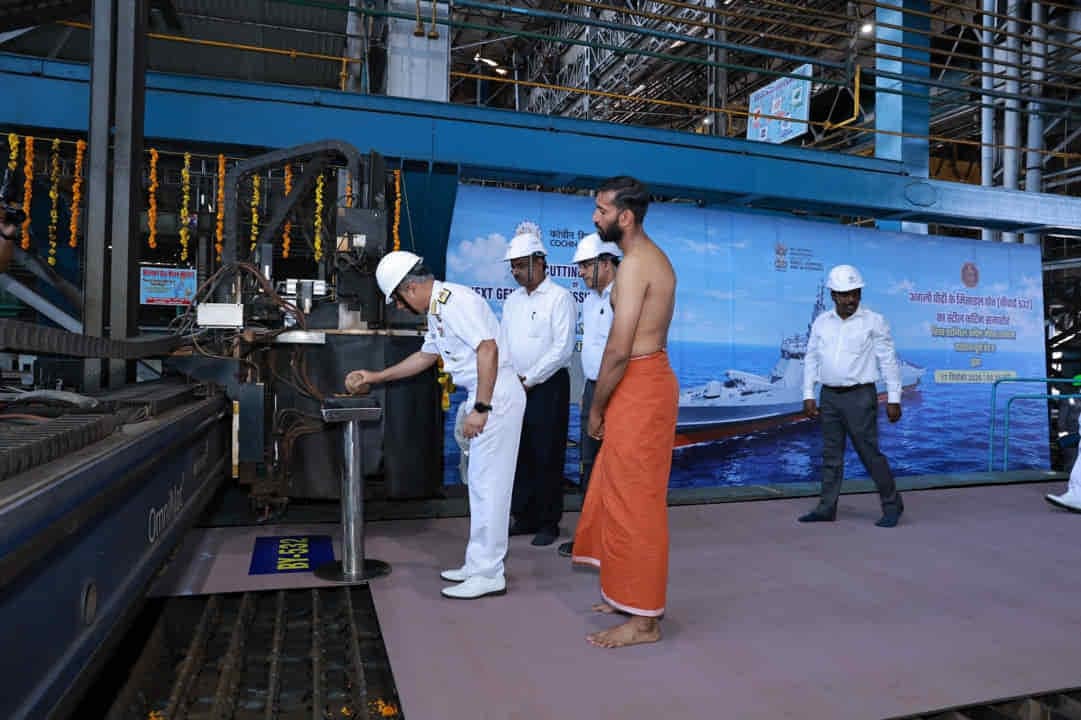
Nevy will get the first Next Generation Missile Vessel in 2027, the second ship’s steel cuttings start by 2030.

Indian Navy NGMV
Indian Navy’s Next Generation Missile Vessel Program Gains Momentum as Second Stealth Warship Enters Construction.

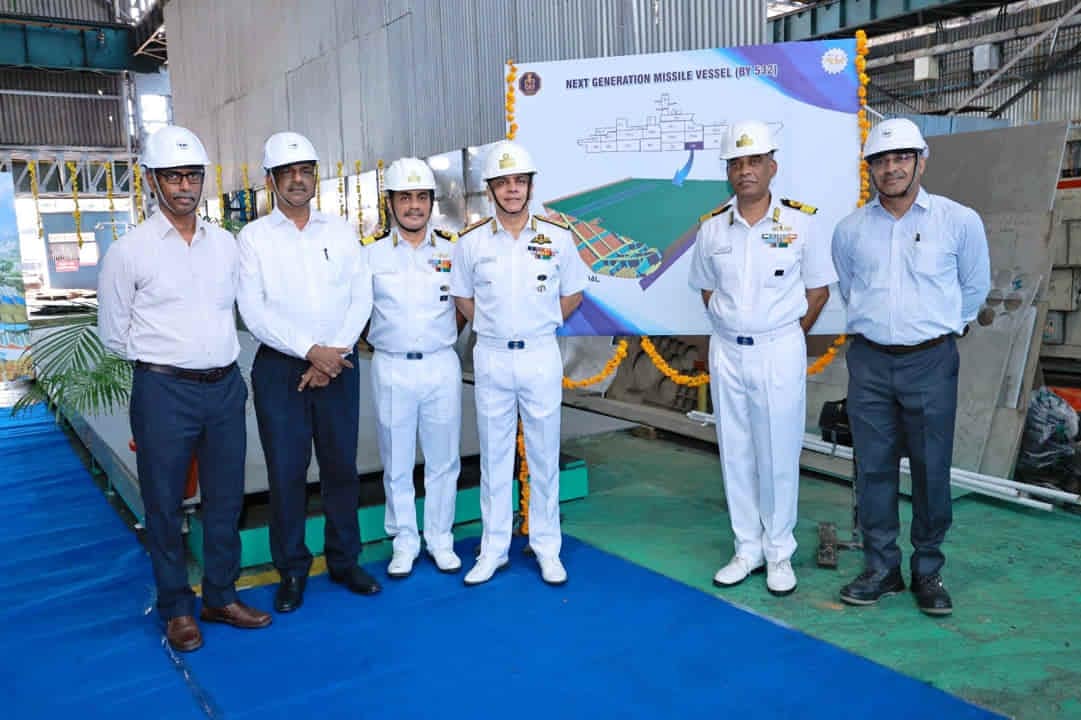
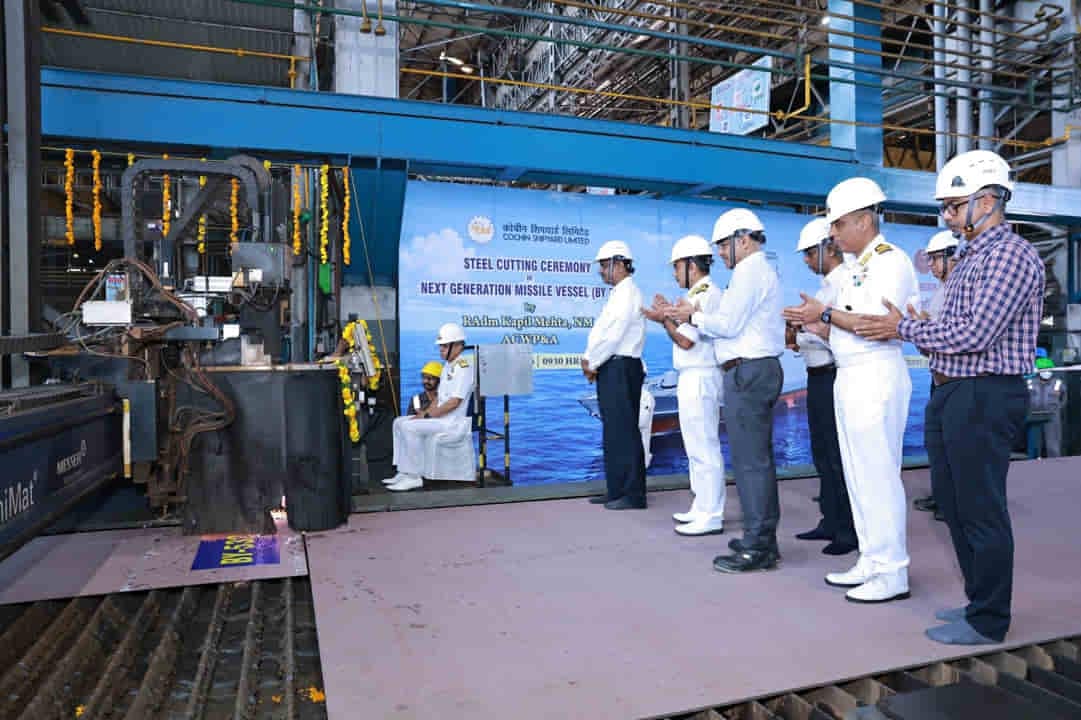
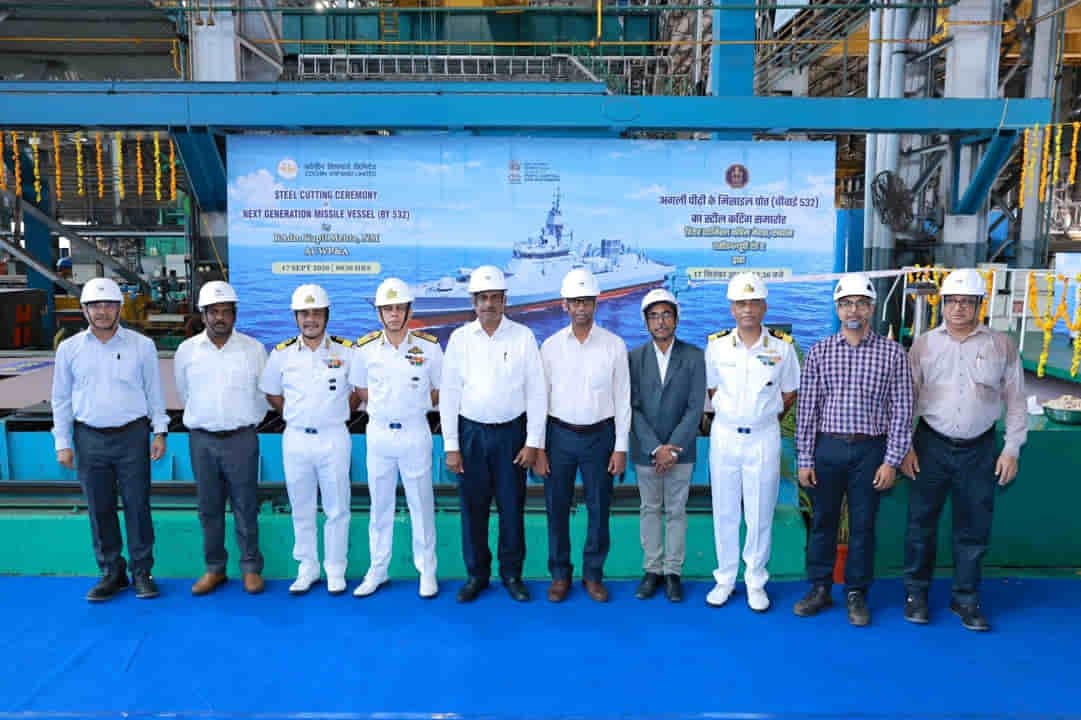
Indian Navy NGMV: The NCST Generation Missile Vessel (NGMV) program being prepared for the Indian Navy is rapidly holding. On September 17, the Steel Cutting Ceremony of the second NGMV was organized at Cochin Shipyard Limited (CSL). The programme is being considered to be a major step in the construction process of six state-of-the-art stapleth missile warships being created for the Indian Navy.

Indian Navy NGMV: First delivery delivery up to the end of 2027

The sources pointed out the defence news, the navy plans to first ship to the end of 2027. The delivery of the rest of the vessels will be carried out to the Indian Navy at intervals of about every six months.

The sources pointed out that the construction of the first ship of any new class usually takes much time. It is because it is a time-consuming process to actualize the design, raise the necessary tools and materials, and prepare the production arrangement in the shipyard. But the rest of the vessels can be constructed faster and more systematically, depending on the experience met with the same after the first ship is ready. He hoped that the delivery of all ships will be completed by 2030.

Indian Navy NGMV
The Steel-cutting ceremony for the Indian Navy’s Next Generation Missile Vessel (NGMV) was held at Cochin Shipyard Limited (CSL) today. (Image: CSL)

Veer-class missile bots will replace NGMV

Next Generation Missile Vessel An important surface of the Indian Navy is the Combat platform. These ships are designed to replace old semen-class missile bots.

The Old Veer-Class Missile Vessel of the Navy, based on the consolidation design of the Soviet Union, has now grown old and is also limited to their marching distance. The new Next Generation Missile Vessel (NGMV) will play the same role with modern technology. It has advanced sensors, low visible stalth design on the radar and long distance supersonic missiles, making its war capacity stronger than ever.

The Ministry of Defence had contracted about Rs 9,805 crore with Cochin Shipyard Limited on 30 March 2023. A total of six NGMVs are being created under this contract.

The main work of these vessels will be to attack sharp and accurate on the enemy warships, marine bases and critical military targets. These are being specially designed to maintain maritime safety and maritime dominance in the Indian Ocean region.

Indian Navy NGMV
Dr. Harikrishnan S, Director (Operations), along with Indian Navy and CSL officials, attended the event.

Why is the second ship's steel cutting important?

Steel cuttings are considered formal beginnings in the construction of any warship. The steel cutting of the first ship took place on 16 December 2024. The second ship’s steel cutting on September 17 Cochin Shipyard Limited (CSL). The process of manufacturing of various sections and modules begins by cutting special grade steel used for the ship at the same stage.

On this occasion, the Indian Navy’s Rear Admiral Kapell Mehta, NM, ACWP and A formally introduced the steel cutting and construction work. Under this project, a total of six ships (hales) have to be constructed from the yard number 531 to 536. The Indian Navy and Shipyard officials also reviewed the progress of the project during the event held at CSL. Indian Navy NGMV

How big will it be warship?

The larger the frigate or distroire in the NGMV size, but its marching capacity will be significantly higher.
Ship resolution will be about 1,400 tons. The length of it will be about 89 m and about 80 navals can be deployed.

This ship will run at a speed of more than 35 knots. This can prove the challenging goal for the enemy due to the fast speed and low radar signature.

The main task of this vessel is to intensify the warships of the enemy, trade ships and important coastal bases. After attacking it can quickly leave Ilaka, making it difficult to catch.

The Indian Navy will use it for anti-surface warfare and maritime strike missions. Also it will also protect coastal areas and protect important energy and economic assets present in the sea.

Its biggest role is C Daniel. That is, preventing the movement of enemy ships in such marine routes and waterfields, through which important marine traffic passes. Indian Navy NGMV

Indian Navy NGMV

Equipped with Brahmaos missile

The biggest strength of NGMV will be its missile capacity. Eight Anti Ship Brahmaos Supersonic Cruise Missiles will be deployed in each ship according to sources. The Brahmos missile is involved in the Indian Navy’s most fatal anti-ship and land attack missiles.

The missile can fly at a speed of about three times faster at the speed of the sound and the target can be differentiated both on the sea and the ground. The deployment of eight Brahmaos missiles on a small size warship gives him a considerable killing capacity. Many such ships operate together so they can also create serious challenge for large naval fleets.

The missile can fly at a speed of about three times faster at the speed of the sound and the target can be differentiated both on the sea and the ground.

In January 2023 the Defence Acquisition Council had approved the Brahmaos missile launcher and fire control system for Next Generation Missile Vessel. Following this, India Electronics Limited had received an order of about Rs 2,118 crore for supplying sensors, vanity systems, fire control systems and communication systems from Cochin Shipyard Limited. Indian Navy NGMV

Modern systems will also be for air defense

24 Vertical Launch System Cells will be installed in the ship as per the formulas, including Vertical Launch Short Range Surface to Air Missiles (VL-SRSAM).

Also 30mm AK-630 gun system will be applied to protect the nearest danger. Advanced Weapons and Equipment India Limited (AWEIL) has supplied 12 indigenous AK-630 Naval Gun to CSL.

Sources pointed out that 12 AK-630 guns will be installed on six new warships.

This system can target incoming anti-ship missiles, drones and low altitude flying targets. Modern radar, fire control system, electronic warfare equipment and communication systems will also be installed in the ship. Indian Navy NGMV

Indian Navy NGMV

Equipped with GE LM2500 gas turbine engine

Gas turbine-based propelation system is being applied to give rise to NGMV. In March 2024, CSL had compromised the supply of six GE LM2500 gas turbine engine with Hindustan Aeronautics Limited. The price of this contract was about Rs 1,173 crore.

Also April 2026 Norway’s company from Kongsburg 18 Kameva Waterjet System खरीदे गए हैं। प्रत्येक जहाज में तीन वाटरजेट लगाए जाएंगे। वाटरजेट तकनीक से जहाज को तेज गति, बेहतर संचालन क्षमता और उथले समुद्री इलाकों में ऑपरेशन करने में फायदा मिलता है।

स्टेल्थ डिजाइन पर विशेष ध्यान

एनजीएमवी को स्टेल्थ तकनीक के साथ डिजाइन किया गया है। जहाज का रडार क्रॉस सेक्शन कम रखा जाएगा ताकि दुश्मन के रडार पर इसकी पहचान मुश्किल हो। इसके अलावा इंफ्रारेड और ध्वनिक सिग्नेचर कम करने के उपाय भी किए जा रहे हैं। इससे जहाज को समुद्री अभियानों के दौरान अतिरिक्त सुरक्षा मिलती है। (Indian Navy NGMV)

बना चुका है विक्रांत और माहे-क्लास ASW

कोचिन शिपयार्ड भारतीय नौसेना के लिए पहले भी कई महत्वपूर्ण परियोजनाएं पूरी कर चुका है। सीएसएल ने भारत का पहला स्वदेशी विमानवाहक पोत आईएनएस विक्रांत बनाया था, जिसे 2 सितंबर 2022 को भारतीय नौसेना में शामिल किया गया था। लगभग 45,000 टन वजनी आईएनएस विक्रांत भारत का सबसे बड़ा स्वदेशी युद्धपोत है।

इसके अलावा सीएसएल ने आईएनएस अन्वेष नामक मिसाइल रेंज इंस्ट्रूमेंटेशन शिप भी बनाया है, जिसका इस्तेमाल बैलिस्टिक मिसाइल परीक्षणों के दौरान किया जाता है।

शिपयार्ड माहे-क्लास एंटी-सबमरीन वॉरफेयर शैलो वॉटर क्राफ्ट प्रोजेक्ट पर भी काम कर रहा है। इस कार्यक्रम के तहत आठ जहाज बनाए जा रहे हैं, जिनमें आईएनएस माहे और आईएनएस मालवन पहले ही नौसेना को सौंपे जा चुके हैं। वहीं, आईएनएस मांगरोल अगस्त 2026 में भारतीय नौसेना को सौंप दिया गया है।

जबकि इस प्रोजेक्ट के तहत बनने वाले बाकी पांच जहाज आईएनएस मंगला, आईएनएस मलपे, आईएनएस मन्नापाद और अन्य जहाज अभी निर्माण या लॉन्चिंग के विभिन्न चरणों में हैं। इनमें से कुछ जहाजों का स्ट्रक्टर तैयार हो चुका है, जबकि कुछ निर्माण के आखिरी चरण में हैं। (Indian Navy NGMV)

दो स्तर की समुद्री सुरक्षा जरूरी

रणनीतिक रूप से महत्वपूर्ण हिंद महासागर क्षेत्र में चीन की बढ़ती समुद्री गतिविधियों और पाकिस्तान की हरकतों को देखते हुए भारत को दो स्तर की समुद्री सुरक्षा व्यवस्था की जरूरत है। एक तरफ गहरे समुद्र में ऑपरेशन करने वाले बड़े युद्धपोत होने चाहिए, जबकि दूसरी तरफ तटीय क्षेत्रों में तेजी से प्रतिक्रिया देने वाले युद्धपोत भी जरूरी हैं।

भारत के प्रोजेक्ट-15बी डेस्ट्रॉयर और प्रोजेक्ट-17ए फ्रिगेट लंबी दूरी तक निगरानी और हमला करने में सक्षम हैं। हालांकि, इतने बड़े युद्धपोतों को हर महत्वपूर्ण समुद्री मार्ग या चोकपॉइंट पर लगातार तैनात करना संभव नहीं है।

ऐसी स्थिति में छह नेक्स्ट जेनरेशन मिसाइल वेसल (NGMV) महत्वपूर्ण भूमिका निभा सकते हैं। इन्हें पश्चिमी तट, लक्षद्वीप के आसपास के समुद्री मार्गों और अन्य संवेदनशील क्षेत्रों में तैनात किया जा सकता है। तटीय क्षेत्रों में तैनात ब्रह्मोस मिसाइल बैटरियों के साथ मिलकर ये युद्धपोत समुद्र और तट दोनों पर एक मजबूत रक्षा नेटवर्क तैयार करते हैं, जिससे भारत की समुद्री सुरक्षा और निगरानी क्षमता और मजबूत होती है। (Indian Navy NGMV)

The air of the "Elephant-Dragon" friendship took place in China’s Fire Bricks! What does the first meeting of the Customs Commission became 63 years ago with Pakistan mean?

Shaksgam Valley
Why is India Opposing the China-Pakistan Boundary Commission?

Shaksgam Valley Dispute: During the 18th BRICS Summit held in New Delhi on September 12-13, some softness appeared in India and China’s relationships. Prime Minister Narendra Modi and China President Xi Jinping met the indication that both countries are trying to reduce the tensions made after the Gallwan conflict. But China and Pakistan held the first meeting of China-Pakistan Boundary Joint Commission in Islamabad a few days after the meeting. India responded hardly and said that the Commission has no legal basis.

Shaksgam Valley Dispute: What is China-Pakistan Boundary Joint Commission?

China and Pakistan officials in Islamabad on September 16 China-Pakistan The first meeting of the Boundary Joint Commission. Pakistan told it the "critical milestone" in relations with both countries. According to Pakistan, the Commission will work to increase the border management, joint border survey, business activities and contact between people.

"The two countries have formally activated the Pakistan-China Border Joint Commission (Boundary Joint Commission) under an important achievement in Pakistan-China relations," said the Foreign Ministry of Pakistan. This will lead to new speeds of cooperation in limit management, joint limit surveys, business activities and increasing contact between people.

The first meeting of the Commission was held in the Ministry of External Affairs of Pakistan in Islamabad. The co-chairs of the meeting took the Deputy Director General of the Boundary and Ocean Affairs Department of the Ministry of External Affairs of China or by the Director General of China Affairs at the Ministry of External Affairs of Pakistan. ""

Interestingly, the first formal meeting of the Commission that has been mentioned for years has now been visited.

Why did India protest?

India immediately dismissed this meeting. Spokesperson of Ministry of External Affairs Reinforce Jaiswal There is no legitimate base of the border between Pakistan and China that it is linked to the Indian territory.

India says that the entire area of Jammu and Kashmir and Ladakh is an integral part of India. There is no right to make any agreement with a third country about the country that is captured by Pakistan.

India also said that any cooperation between China and Pakistan does not affect India’s sovereignty. (Shaksgam Valley Dispute)

The 2013 agreement is linked to its beginning

The foundation of this Commission was laid in the year 2013. The two countries had signed the Boundary Management System Agreement during the visit of China’s then Prime Minister Lee Khachiang to Pakistan.

Article 45 of this Agreement had the provision of creating a Joint Commission, aimed at monitoring the implementation of limit management arrangements. Though the agreement took place in 2013, the Commission has now been formally activated.

It will work on several important cases involving the Joint Commission limit.

It will include a range of care and inspections, joint surveys, monitoring the status of border marks, management of border cross features and solutions of cases associated with events occurring on the range.

If it is not possible to re-establish a border mark in its original place, the Commission will decide the new place for it. However, there will be no changes in the actual boundary line. (Shaksgam Valley Dispute)

What was the agreement of 1963?

The root of this dispute is in 1963. Pakistan and China signed a border agreement in March 1963. Under this agreement, Pakistan had handed over about 5,180 square kilometres of trans-carakorum tract or Shaxgam Valley to China.

It is located in the north of Ilaka Sichen Glacier and is considered part of the Karakorum range. India had also opposed this agreement at that time and still considers it illegal today.

India argues that the region where Pakistan was entrusted to China was not of Pakistan himself. He was the Indian region on which Pakistan was captured. So Pakistan did not have the right to land a third country.

Why So Important Shaxgam Valley

Shaxgam Valley is one of the world’s most difficult mountain regions. This area is located in the north of the Karakoram range and close to the Xinjiang region of China. Its geographical location makes it strategically extremely important.

This Islaka Karakoram Highway, China-Pakistan Economic Corridor i.e. CPEC and is connected to military equations around the siachin sector.

India’s concern has also been that China has extended road, survey and other infrastructure activities in the region. (Shaksgam Valley Dispute)

Why was the first meeting of the Commission held after 63 years?

This is the most discussed question. After the 1963 agreement, the Commission continued, but there was no formal meeting. Its first meeting was now held in September 2026.

While Pakistan says this new Joint Commission is different from the Joint Boundary DeMarcation Commission made in 1963. The Commission of 1963 was created only for border fixation and demarcation. Surveying its work range, setting up the boundary mark, preparing detailed maps and deciding the boundary line. (Shaksgam Valley Dispute)

The Commission’s work limitation was terminated after completion.

The 1963’s border agreement was signed between Pakistan’s then Foreign Minister Jolfikar Ali Bhutto in Beijing and China’s Foreign Minister Chen Yi.

The particular thing that in the 1963 agreement was also mentioned that if the future resolves Kashmir dispute between India and Pakistan, the concerned sovereign authority may re-consider border issues with China.

Article 6 of the China-Pakistan Border Agreement of 1963 is very important. This means directly in terms: Both China and Pakistan consider themselves that this agreement is not final. Under this, when the Kashmir dispute between India and Pakistan will be resolved, whichever party will be considered the real owner of the region (Sovereign Authority), will re-consider the border with China and create a new formal treaty.

At the same time, India considers the whole agreement illegal as Pakistan had no legal right to entrust the region. The region is part of India, which Pakistan has been illegally captured.

Analysts believe that this relationship is more institutionalized to China-Pakistan relations. Both countries want to operate in a better way of limit management and limit-connected economic routes.

Khungerba Pass, which connects China and Pakistan, is the major gateway to China-Pakistan Economic Corridor (Cepec). Due to this limit management has become significant for both China and Pakistan. (Shaksgam Valley Dispute)

Why did BRICS Summit immediately after Meeting?

12-13 September 2026 in New Delhi BRICS The summit took place. Meanwhile, Prime Minister Narendra Modi and President Xi Jinping had a bilateral meeting. The two leaders negotiated many issues and talked about continuing dialogue between the two countries. (Shaksgam Valley Dispute)

But after a few days the China-Pakistan Border Commission’s meeting took several questions.

Many strategic experts believe that China can try to improve relations with India, but at the same time he wants to maintain his special relations with Pakistan.

चीन लंबे समय से पाकिस्तान को दक्षिण एशिया में अपना महत्वपूर्ण रणनीतिक साझेदार मानता है। दूसरी ओर पाकिस्तान भी चीन को अपना सबसे बड़ा आर्थिक और रक्षा सहयोगी मानता है।

चीन और पाकिस्तान के संबंधों को अक्सर “ऑल वेदर फ्रेंडशिप” कहा जाता है। रक्षा, अर्थव्यवस्था, बुनियादी ढांचे और कूटनीति के क्षेत्र में दोनों देशों के बीच गहरा सहयोग है।

चीन-पाकिस्तान आर्थिक गलियारा, जिसे सीपीईसी कहा जाता है, दोनों देशों की साझेदारी का सबसे बड़ा उदाहरण है। यह परियोजना चीन के बेल्ट एंड रोड इनिशिएटिव का हिस्सा है। इसके तहत सड़कें, ऊर्जा परियोजनाएं, रेल नेटवर्क और बंदरगाह विकसित किए गए हैं।

भारत लगातार सीपीईसी का विरोध करता रहा है क्योंकि इसका एक हिस्सा पाकिस्तान अधिकृत कश्मीर से होकर गुजरता है। (Shaksgam Valley Dispute)

भारत की नीति क्या कहती है

भारत का आधिकारिक रुख पिछले छह दशकों में लगभग समान रहा है। 1963 के समझौते के समय भी भारत ने इसका विरोध किया था। उसके बाद आने वाली सभी सरकारों ने इसी नीति को जारी रखा।

2019 में जम्मू-कश्मीर के पुनर्गठन और लद्दाख को अलग केंद्र शासित प्रदेश बनाए जाने के बाद भारत ने अपने दावे को और स्पष्ट रूप से दोहराया।

भारत लगातार कहता रहा है कि पाकिस्तान अधिकृत कश्मीर, गिलगित-बाल्टिस्तान और शाक्सगाम घाटी भारतीय क्षेत्र हैं। इसी कारण भारत चीन और पाकिस्तान के बीच इन क्षेत्रों को लेकर होने वाले किसी भी समझौते को स्वीकार नहीं करता। (Shaksgam Valley Dispute)

How will DRDO replace these 9 techniques of personal companies, how is India changing its Defence Industrial Ecosystem?

DRDO Technology Transfer
Copyright © 2018 DRDO's Technology Transfer. All Rights Reserved.

DRDO Technology Transfer: The Defence Research and Development Organisation (DRDO) handed over 9 important defence technology transfer of technology (TOT) to 13 industry partners during the ‘Discussion-2026’ programme held in New Delhi on September 15. Also launched a new framework during this time. Under which private and government companies that manufacture DRDO’s built-in installation systems can now access the software source code of those systems.

DRDO Technology Transfer: What happens Transfer of Technology?

Transfer of Technology Develop Technology is assigned to the industry by any research institute in (TOT) to produce its business. DRDO delivers any system, equipment, sensors, missile component or other defense technology after several years of research and testing. When technology is ready and its performance is proven to be successful, the DRDO does the licensing agreement for transfer of technology (LATOT) with the industries.

Under this, companies are informed of design data, manufacturing documentation, technology support, production process and quality standards. After that the industry changes that technology into the production line.

Not only Research, Industry Ecosystem also making DRDO

For many years, India had problems that the laboratories didn’t have access to Development Technology Production. The country has to rely on imports from abroad.

Now DRDO’s strategy has changed. The organization does not want to remain only in the role of the Research Agency but is preparing a complete defense industrial ecosystem consisting of industries.

Defence Secretary and DRDO Chairperson Rajesh Kumar Singh During this programme, more than 2300 technology transfers have been made to more than 1100 industries. He also said that nearly 50 missile systems have been made available to technology industries. Technology Transfer

Industry will get source code

Now DRDO The source code of the created vendor systems will now be available to private and government companies. As of now, DRDO gave hardware design and drawing to companies in TOT, but did not get the right to change the software. Companies had to rely on DRDO Lab again for any updates, patches or new features.

The defence industry was long demanding that they were given access to source codes. He had to say that production, repair and mid-life upgrades are delayed due to this dependence.

Authorised engineers under the new framework will be able to change the software as needed, add new features and quickly integrate new systems in place of old electronic components. Technology Transfer

Most Important Technology: Naval Multi-Influence Ground Mine

DRDO-Industry Synergy Meet held in New DelhiInsertion 2026The transfer of Technology (TOT) of nine important indigenous techniques was also entrusted to 13 industry partners. One of the most important techniques in them is multi-influence ground mine (MigM).

It has been developed by the Naval Science and Technological Laboratory (NSTL) of DRDO. It is the state-of-the-art naval mine targeting modern warships and submarines. This technology is licensed to Apollo Micro Systems located in India Dynamics Limited (BDL) and Hyderabad. The particular thing of the project is that both companies have already been involved in the development of parts of it. Now they will become a partner in full production. Technology Transfer

Miscellaneous transfer of missile technology

DRDO Short Range Anti-ship Missile Develop propelent and Igniter technology have also been handed over to the industries. This technology is the key part of the booster and the sastner motor of the missile. It has its role in generating early thrusts at the time of launch and maintaining speed during flight.

Solar Defense and Aerospace, Premiere Explosives and Salvo Industries are licensed to it. Technology Transfer

Heavy Drop System for C-130 and C-17

DRDO’s ADRDE Laboratory was also made of 20 tonnes of Heavy Drop System.
This system is used in airdropping heavy military equipment from C-130 Hercules of Indian Air Force and C-17 Globemaster Transport Aircraft. This technology is given to JCBL Private Limited. Technology Transfer

Technology of laser guided arms

The Semi Active Homeing Laser System (SALHS) created of the Instruments Research and Development Assessment (IRDE) of DRDO was also transferred. This technology is used in Precision Guided Muniions like laser guided bombs, missiles and artillery shell.

This system delivers weapons to target highly accurately by tracking the same laser reflection when laser marking is carried out at a target.

Precision strike capacity is considered extremely important in today’s modern wars. This technology helps the laser guided bombs, missiles and artillery shell to deliver accuracy to the target. This technology was transferred to Infinite Technologies and Apollo Micro Systems.

This will enhance the production of indigenous precision guided arms in the future. Technology Transfer

Hydro Suit Escape From Submarine

DEBEL Laboratory of DRDO has developed a hydro suite. It is a special suit used in submersible during emergency. If you have to leave the submarine for some reason, the crew can secure access to the sea surface with the help of this suit. It provides protection from excessive cold seawater and high pressure to the body. This technology has been transferred to Billwin Industries Limited and Uflow Automation. Technology Transfer

Explosives and chemicals identifying techniques

The technology developed by Solid State Physics Laboratory (SSPL) is also assigned to the industry. This technique based on Zinc Telluride is useful in identifying hidden explosives and chemicals. This technology is used in Terahartz spectrum based equipments. It can be used in identifying hidden explosives, chemicals and other hazardous substances. Also it is important in the wireless communication sector.

This technology license has been found to Ants Innovations Private Limited. Technology Transfer

Smart Helmet: Digital Warfare System for Soldiers

The technology transferred to the exchange-2026 also includes smart helmets. It is no general helmet. It features lidar sensor, RGB camera and stereo camera. It is capable of mapping real time 3D in the urban battle area. This helmet is also equipped with Artificial Intelligence technology. The location of the soldiers can be tracked even in the event that the GPS is not available and the commanders get better spatial awareness.

The license of this technology is given to the progress defense systems.

DRDO’s Chandigarh-based Terminal Ballistics Research Laboratory (TBRL) has created two important electronic systems for safe operation of Ordinance and Explosive System. These include Electronic Activation Device (Tini) and Wireless Control Low Actuation System (Red).

TINY is a small but state-of-the-art electronic activation device, developed to activate the ammunition, warhead, and other explosive systems on a fixed time. This device features microcontroller based processing unit, safety electronics, three battery power source, safety plug, LED display and keypad.

When the main battery circuit is complete the system arrives in the Ready State. Then the operator sets the countdown or dill time via the keypad. The device releases signals through its triggering channels when the scheduled time is completed. Its four-channel version is also available. The operator can also program the Delay Time, Airburst Height or Target based detonation profile in it. It can make explosion time and space more accurate.

While the RED (Red) i.e. Wireless Control Low Actuation System is a remote controlled electronic system used to control explosive payloads or demolishing devices from safe distances. There are two parts of this system. The first user remote, and the second ground system. Communication between the two is through encrypted radio frequency (RF) signal.

The operator can configure and activate multiple ground systems from the same remote. This system operates up to line off site distance and has the ability to release two independent triggering signals.

Both of these technologies have been licensed to Bangalore’s Autotech Systems Private Limited and Mohali’s Acceler Microsystems. Technology Transfer

Why will MSMEs and startups benefit?

During 2026, DRDO has launched several new initiatives for MSMEs (Micro, Small and Medium Enterprises) and Deep-Tech Startups. The objective is to provide more opportunities in the defence sector to companies that develop small industries and new technology.

Now entering the Defence sector was not easy for small industries. The stringent technical standard for the development and construction of defence equipment, costly testing process, complications of certification and heavy investments on research were needed. Many startups and MSMEs were not involved in defence projects despite their technology.

Under the new policy, DRDO will provide direct funding support to such industries, enabling them financial assistance for beginner research and product development. Also, incubation support will be given, so that new companies can turn their Idea into prototypes and then finished products.

Access to advanced testing and validation facilities of DRDO is also being made easier. It doesn’t have to prepare a separate expensive infrastructure to test startups and small industries their products. They will also find technical advice and technology support of experts.

This initiative aims to increase the participation of more and more Indian companies in defence production. This will trigger indigenous technology development and strengthen the country’s defence industrial ecosystem. Also, new business opportunities will arise for small industries and startups. Technology Transfer

HAL's Mega Delivery Plan this week; IAF will meet 3 HTT-40 and 2 Tejas MK-1 Trainer

HAL Indigenous Aircraft Delivery
Dhruv NG and LCA Tejas MK1 Trainer to IAF and Pawan Hans.

HAL Indigenous Aircraft Delivery: Hindustan Aeronautics Limited (HAL) will assign three indigenous platforms to Indian Air Force and Pawan Hans Limited on 18th September. These include HTT-40 Basic Trainer Aircraft, Pole NG Civil Helicopter and LCA FOC Trainer. These platforms will be entrusted with the presence of Defence Minister Rajnath Singh, Minister of Civil Aviation. Rammohan Naidu and Air Force Chief Marshal A.P. Singh.

HAL Indigenous Aircraft Delivery: First batch of HTT-40 will get Indian Air Force

HAL to Indian Air Force HT-40 The basic trainer will assign the first batch of aircraft. This batch includes a total of three aircraft. These two aircraft have been prepared in Bengaluru and in a plane Nasik. The supply of HT-40 is part of the contract worth Rs 6,838 crore in March 2023. Under this agreement, HAL has to prepare a total of 70 HTT-40 aircraft for Indian Air Force.

This aircraft has been paved to meet the initial training needs of Air Force pilots. The purpose of this is to replace Switzerland-made Pilates PC-7 MK-II trainer planes in a phased manner.

Modern glass cockpit has been applied in HTT-40. Also it has a zero-zero ejection seat, which facilitates the pilot to exit at any height and speed. The maximum speed of the aircraft is about 450 kilometres per hour and is fully equipped with aerobic capabilities.

Delayed program in engine supply

The HTT-40 program was faced with the problem of engine availability. Production affected due to delay in supply of Honeywell TPE331-12B engine used in aircraft.

Honeywell entrusted the first batch engine HAL in June 2026. It was part of the contract worth more than 100 million US dollars. Total 88 engines are being provided under this Agreement. These 16 engines will be supplied directly, while the rest will be available under the engine technology transfer system.

HAL has increased its production efficiency after the engine supply starts. Now the company can prepare 20 HTT-40 aircraft every year through two production lines. HAL Indigenous Aircraft Delivery

Return to Civil Helicopter Market through Pole NG

2nd Large Platform of HAL Pole NG Helicopter. This advanced light helicopter pole has civil certified version. Recently it has got type certification from Directorate General of Civil Aviation i.e. DGCA.

The Pole NG will be included in Pawan Hans Limited. Along with this, HAL will enter its strong presence in the civil helicopter market several years later. The main focus of the company has been on military helicopters over the past years.

Pole NG is designed for a variety of missions. It can be used in VVIP transport, offshore operation, air ambulance service and heli-pigrimase missions.

The helicopter has mounted wheeled landing gear, new glass cockpit and better vibration control system. This gives passengers and pilots a more comfortable flight experience.

Under the Government’s Regional Contact Scheme flight, helicopter network is also being considered as a key role of Pole NG. HAL Indigenous Aircraft Delivery

तेजस ट्रेनर से मजबूत होगी फाइटर पायलट ट्रेनिंग

एचएएल का तीसरा प्लेटफॉर्म एलसीए एफओसी ट्रेनर है। यह तेजस एमके-1 एफओसी लड़ाकू विमान का दो सीटों वाला ट्रेनर वर्जन है।

इस विमान का इस्तेमाल फाइटर पायलटों की एडवांस ट्रेनिंग के लिए किया जाएगा। तेजस ट्रेनर भारतीय वायुसेना के पायलटों को आधुनिक लड़ाकू विमान संचालन की तैयारी में मदद करेगा।

इसके साथ ही साल 2006 और 2010 में दिए गए कुल 40 तेजस एमके-1 विमानों का ऑर्डर पूरा हो जाएगा।

इस ऑर्डर में 16 प्रारंभिक ऑपरेशनल क्लियरेंस कॉन्फिगरेशन वाले लड़ाकू विमान, 16 एफओसी कॉन्फिगरेशन वाले लड़ाकू विमान और 8 दो सीटों वाले ट्रेनर शामिल थे।

दिसंबर 2010 में एफओसी कॉन्ट्रैक्ट की कीमत उस समय 5,989 करोड़ रुपये थी। बाद में डिलीवरी कार्यक्रम में बदलाव के कारण मार्च 2025 में इसकी लागत बढ़कर 6,542 करोड़ रुपये हो गई।

पहला ट्रेनर विमान अक्टूबर 2023 में वायुसेना को सौंपा गया था। हालांकि सभी आठ ट्रेनर मार्च 2024 तक देने का लक्ष्य पूरा नहीं हो सका। (HAL Indigenous Aircraft Delivery)

तेजस एमके-1ए का इंतजार जारी

जहां एक ओर एचएएल पुराना तेजस ऑर्डर पूरा करने जा रहा है, वहीं भारतीय वायुसेना अभी भी तेजस एमके-1ए की पहली डिलीवरी का इंतजार कर रही है।

फरवरी 2021 में भारतीय वायुसेना ने 46,898 करोड़ रुपये के कॉन्ट्रैक्ट के तहत 83 तेजस एमके-1ए विमानों का ऑर्डर दिया था। इनमें 73 सिंगल सीट फाइटर और 10 ट्विन सीट ट्रेनर शामिल हैं।

इन विमानों की डिलीवरी मार्च 2024 से शुरू होनी थी, लेकिन अभी तक एक भी विमान वायुसेना को नहीं मिला है।

तेजस एमके-1ए में एईएसए रडार, एडवांस इलेक्ट्रॉनिक वारफेयर सिस्टम, बेहतर एवियोनिक्स, एयर-टू-एयर रिफ्यूलिंग क्षमता और आधुनिक हथियार इंटीग्रेशन जैसी नई क्षमताएं जोड़ी गई हैं। (HAL Indigenous Aircraft Delivery)

इंजन और रडार बने देरी की वजह

तेजस एमके-1ए कार्यक्रम में देरी का सबसे बड़ा कारण जीई एयरोस्पेस द्वारा एफ404-आईएन20 इंजन की सप्लाई में देरी माना जा रहा है।

एचएएल इस मामले में कॉन्ट्रैक्ट के तहत पैनल्टी के विकल्पों पर भी काम कर रहा है। इसके अलावा इजरायली एईएसए रडार और इलेक्ट्रॉनिक वारफेयर सूट के इंटीग्रेशन से जुड़े तकनीकी मुद्दों ने भी कार्यक्रम को प्रभावित किया है। इस महीने एचएएल और भारतीय वायुसेना के बीच तेजस एमके-1ए कार्यक्रम की प्रगति की समीक्षा के लिए महत्वपूर्ण बैठक होने की संभावना है। (HAL Indigenous Aircraft Delivery)

97 तेजस की डिलीवरी सितंबर 2027 से शुरू

Ministry of Defence ने सितंबर 2025 में एचएएल के साथ 97 तेजस एमके-1ए के लिए 62,370 करोड़ रुपये का नया कॉन्ट्रैक्ट किया था। इस समझौते के तहत 97 अतिरिक्त तेजस एमके-1ए विमान सौंपे जाने हैं। इनमें 68 लड़ाकू विमान और 29 ट्विन सीट ट्रेनर शामिल हैं।

रक्षा मंत्रालय की हाल ही में जारी सालाना रिपोर्ट के अनुसार इस नए ऑर्डर की डिलीवरी सितंबर 2027 से शुरू होगी और सितंबर 2033 तक पूरी की जाएगी। एचएएल वर्तमान में नासिक में तीसरी प्रोडक्शन लाइन भी संचालित कर रहा है, जिससे तेजस प्रोडक्शन क्षमता बढ़ाई जा रही है। (HAL Indigenous Aircraft Delivery)

After 6 years after General Rawat, Russia arrived at the Army Chief, Military Cooperation and New Technology will be negotiated

© 2019 NordFX.
Indian Army Chief Gen Dhiraj Seth Visits Russia, Talks Expected on Air Defence Systems, Tanks and Weapon Upgrades.

Gen Dhiraj Seth Russia Visit: Indian Army Chief General Endurance Seth is on the official visit of Russia from September 16 to 18. It is going to visit Russia of an existing Indian Army chief after about six years. Earlier, the then Army Chief General Bipin Rawat visited Russia in October 2018. In such a time, the Indian Army has a large number of Russian weapons and military platforms in service and is constantly facing problems with their upgrades, spare parts and maintenance. This is the second foreign journey of General Endurance Seth after the Army becomes dominant. Earlier, he visited Nepal from 16th to 19th August.

General Endurance Seth during this visit as per the formulas will take part in several Ahmad meetings with senior military officials of Russia. These include talks with the Russian Talsena chief Colonel General Andrei Nikolaevich Mordevichev. Both sides will discuss military cooperation, training, technical partnership and modern military systems.

Gen Dhiraj Seth Russia Visit: Guard of Honor in Moscow

Indian Army According to the information released on behalf of General Endurance Seth will be given the formal Guard of Honor in Moscow. He will also pay tribute to martyr soldiers by visiting the famous monument of Russia’s Tomb of the Annon Solzer.

The Army Chief will then visit senior officials of the Russian Ministry of Defence. He will also visit the National Defense Control Center of Russia, where modern military commands and control systems will receive information.

His meeting is also proposed with Deputy Defence Minister Vasily Sergeyevich Osmakov, connected with the defence industry and purchase in the Russian defence ministry.

Russian weapons still play a huge role in the Indian Army

The Indian Army has insisted on buying weapons from self-sustainability and diverse sources over the past few years, but today there are many key platforms of Russian origin. The large part of the Armored Core of the Indian Army and the Mechanized Infantry is based on the Russian technique. Several systems such as T-72 and T-90 tank, BMP-2 Infantry Combat Vehicle, Air Defense System, Multi Barrel Rocket Launcher and Assault Rifle have long been the backbone of the Indian Army.

That’s why spare parts, ammunition, upgrade packages and technical support have become a key issue for India. It is believed that the chief of the Army will take these subjects prominently in their meetings. (Gen Dhiraj Seth Russia Visit)

Pantesir-S1M may be on air defense system discussion

Russia is also offering several new military systems to the Indian Army. These are the most important pantshead-S1M short range being considered mobile air defense system. The Indian Army is working on planning to purchase at least 90 carrier air defense tracked (CADET) systems. At least 50 per cent of indigenous material is laid in this project.

The Army wants to deploy these systems in the plains, deserts, semi-registerial areas and mountainous areas with a height of up to 5,000 meters.

Panties-एस1एम का मुख्य काम महत्वपूर्ण सैन्य ठिकानों की सुरक्षा करना है। इसमें सरफेस-टू-एयर मिसाइलों के साथ दो 30 मिमी तोपें भी लगी होती हैं। यह लड़ाकू विमान, क्रूज मिसाइल, ड्रोन और प्रिसिजन गाइडेड हथियारों को निशाना बनाने में सक्षम माना जाता है। (Gen Dhiraj Seth Russia Visit)

पहले भी भारतीय सेना की दौड़ में शामिल था पैंटसिर

यह पहला मौका नहीं है जब भारतीय सेना को पैंटसिर जरूरत हो। साल 2013 में भी इस पर चर्चा हुई थी। उस समय दक्षिण कोरिया की हनव्हा डिफेंस का हाइब्रिड बायहो, रूस का अपग्रेडेड तुंगुस्का और केबीपी तुला का पैंटसिर अंतिम चरण में पहुंचे थे।

हालांकि बाद में दक्षिण कोरियाई सिस्टम को प्राथमिकता मिली, लेकिन स्वदेशी सामग्री से जुड़े मुद्दों के कारण सौदा आगे नहीं बढ़ सका। रूस ने भी उस समय भारतीय प्रक्रिया पर आपत्ति जताई थी। (Gen Dhiraj Seth Russia Visit)

बीएमपी-3 को लेकर भी सक्रिय है रूस

रूस भारतीय सेना को नई पीढ़ी के बीएमपी-3 इन्फैंट्री फाइटिंग व्हीकल की भी पेशकश कर रहा है। भारतीय सेना की मैकेनाइज्ड इन्फैंट्री में हजारों बीएमपी-2 वाहन मौजूद हैं, जिनका निर्माण भारत में लाइसेंस के तहत किया गया था। सेना फिलहाल इन वाहनों के आधुनिकीकरण पर काम कर रही है।

इसके समानांतर रूस बीएमपी-3 को एक संभावित विकल्प के रूप में पेश कर रहा है। यह प्रस्ताव ऐसे समय आया है जब भारतीय सेना फ्यूचर इन्फैंट्री कॉम्बैट व्हीकल (एफआईसीवी) कार्यक्रम पर भी काम कर रही है।

दिलचस्प बात यह है कि रूस कई साल पहले भी बीएमपी-3 का प्रस्ताव दे चुका था, लेकिन उस समय भारतीय सेना ने डिजाइन और क्षमताओं से जुड़ी चिंताओं के कारण इसे स्वीकार नहीं किया था। (Gen Dhiraj Seth Russia Visit)

नए टैंक प्रोग्राम में भी रूस की दिलचस्पी

रूस भारतीय सेना के फ्यूचर रेडी कॉम्बैट व्हीकल (एफआरसीवी) कार्यक्रम में भी रुचि दिखा रहा है। यह भारतीय सेना का अगली पीढ़ी का मुख्य युद्धक टैंक कार्यक्रम है। एफआरसीवी का उद्देश्य भविष्य में टी-72 और बाद में टी-90 बेड़े का स्थान लेना है। अभी यह स्पष्ट नहीं है कि रूस भारत को सीधे कोई तैयार टैंक प्लेटफॉर्म देना चाहता है या फिर संयुक्त विकास और निर्माण का प्रस्ताव लेकर आया है।

सूत्रों का कहना है कि रूस अपने लेटेस्ट टी-14 आर्माटा से जुड़ी तकनीक को इस कार्यक्रम से जोड़ने की कोशिश कर सकता है। (Gen Dhiraj Seth Russia Visit)

सेंट पीटर्सबर्ग का भी करेंगे दौरा

मॉस्को में बैठकों के अलावा General Endurance Seth सेंट पीटर्सबर्ग भी जाएंगे। वहां वह मिखाइलोव्स्काया मिलिट्री आर्टिलरी अकादमी का दौरा करेंगे। इस दौरान वह अकादमी के नेतृत्व और फैकल्टी के साथ बातचीत करेंगे। यह संस्थान रूस के प्रमुख सैन्य शिक्षण संस्थानों में गिना जाता है और आर्टिलरी तथा सैन्य विज्ञान के क्षेत्र में विशेष पहचान रखता है। (Gen Dhiraj Seth Russia Visit)

रक्षा संबंधों को नई गति देने की कोशिश

भारत और रूस के बीच रक्षा सहयोग कई दशकों पुराना है। भारतीय सेना, नौसेना और वायुसेना के कई प्रमुख प्लेटफॉर्म रूसी तकनीक पर आधारित हैं। हाल के सालों में भारत ने आत्मनिर्भरता पर जोर बढ़ाया है, लेकिन रूसी मूल के सिस्टमों के रखरखाव और अपग्रेड की आवश्यकता लगातार बनी हुई है।

मार्च 2026 में भारत ने सेना के लिए रूसी तुंगुस्का एयर डिफेंस मिसाइल सिस्टम के रखरखाव और अपग्रेड से जुड़ा 445 करोड़ रुपये का कॉन्ट्रैक्ट भी किया था।

जनरल धीरज सेठ का यह दौरा सैन्य प्रशिक्षण, रक्षा उद्योग सहयोग, स्पेयर सपोर्ट, आधुनिक हथियार प्रणालियों और सेना-सेना सहयोग को लेकर दोनों देशों के बीच जारी संवाद का हिस्सा माना जा रहा है। (Gen Dhiraj Seth Russia Visit)

The army is giving the ‘K-9 Warriors’ training to jump from the parachute, first time the dog handler and the Combat Dog tandem jump

Airborne Combat Dogs
Indian Army Trains Combat Dogs for Airborne Operations with Tandem Parachute Jumps.

Airborne Combat Dogs: Combat Dogs of the Indian Army are now designed to reach the operation area not only on the ground but also from the sky. The Army has first demonstrated an airborne training, with a paratrooper, dog handler, and combat dog jumped tandem parachute with full combat load. This exercise was done in the Beet Drop Zone of Central India and is being considered an important step in the Airborne capabilities of the Indian Army.

The Sun Command i.e. Central Command released the video of this exercise on 15 September 2026. The army named this achievement as "Poz in the Sky, Karage on the Ground". "This is a great example of a teamwork and unbreakable relationship, stuffing between the soldier and his canine partner. Both are ready for every mission. ""

Airborne Combat Dogs: Tandem Jump With First Time Dog Handler And Combat Dog

According to the army, there is a very low view when a dog handler and his Combat Dog Has decented Tandom Parachute. The dog handler and his military dog with a trained paratrooper were involved in the same jump profile. It was also a matter of practice that the three had full Combat load.

The Army reported that the Military Free Fall Jump had also been done with the corresponding Combat Dog before. Now Tandom Jump and Landing with Full Combat Load have been practiced.

Why Essential Airborne Combat Dog Capacity

आधुनिक युद्ध और आतंकवाद विरोधी अभियानों में कई बार सैनिकों को ऐसे इलाकों में उतरना पड़ता है, जहां रनवे, सड़क या हेलिपैड उपलब्ध नहीं होते। ऐसे हालात में स्पेशल फोर्सेज को पैराशूट के जरिए टारगेट एरिया के पास उतारा जाता है।

अब यदि कॉम्बैट डॉग्स भी उसी समय सैनिकों के साथ उतर सकें, तो ऑपरेशन शुरू होने के तुरंत बाद विस्फोटक खोजने, संदिग्धों का पीछा करने, इमारतों की तलाशी लेने और ट्रैकिंग जैसे कार्य शुरू किए जा सकते हैं। यही वजह है कि अमेरिका, फ्रांस और रूस जैसे देशों की स्पेशल फोर्सेज लंबे समय से Airborne कैनाइन टीमों का इस्तेमाल करती रही हैं। यहां तक कि पाकिस्तान के ऐब्टाबाद में छिपे बैठे आतंकी ओसामा बिन लादेन को मारने के लिए यूएस नेवी सील्स उस समय अपने साथ कॉम्बैट डॉग कायरो (मेलिनोइस) को लेकर गए थे। (Airborne Combat Dogs)

पैराशूट जंप से पहले होती है विशेष ट्रेनिंग

किसी सैन्य कुत्ते को सीधे विमान से कूदने के लिए तैयार नहीं किया जाता। इसके पीछे कई महीनों की विशेष ट्रेनिंग होती है। भारतीय सेना के कॉम्बैट डॉग्स की प्राइमरी ट्रेनिंग मेरठ स्थित रिमाउंट एंड वेटरिनरी कॉर्प्स (आरवीसी) सेंटर एंड कॉलेज में होती है। यहां उन्हें आज्ञापालन, ट्रैकिंग, विस्फोटक पहचान, हमला और सुरक्षा से जुड़ी ट्रेनिंग दी जाती है।

इसके बाद यूनिट स्तर पर बैटल इनोक्यूलेशन कराया जाता है। इस दौरान कुत्तों को गोलीबारी, विस्फोट, धुआं, तेज आवाज और युद्ध जैसी परिस्थितियों का सामना कराया जाता है ताकि वास्तविक ऑपरेशन के दौरान वे घबराएं नहीं। एयरबोर्न ट्रेनिंग के लिए उन्हें स्पेशल फोर्सेज और पैराट्रूपर्स के साथ अतिरिक्त अभ्यास कराया जाता है। (Airborne Combat Dogs)

पहले सिखाई गई हेलीकॉप्टर से रस्सी के जरिए उतरने की तकनीक

पैराशूट जंप से पहले सेना ने कॉम्बैट डॉग्स को हेलीकॉप्टर से स्लिदरिंग तकनीक भी सिखाई थी। स्लिदरिंग में सैनिक और कुत्ता हेलीकॉप्टर से रस्सी के सहारे जमीन पर उतरते हैं।

मई 2026 में मणिपुर के लेइमाखोंग क्षेत्र में स्पीयर कॉर्प्स की रेड शील्ड डिवीजन की पांच के-9 टीमों ने एडवांस हेली-स्लिदरिंग ट्रेनिंग पूरी की थी।

सदर्न कमांड की 25 आर्मी डॉग यूनिट ने पुणे में 12 मीटर ऊंचा स्लिदरिंग टावर भी बनाया है। इसका उद्देश्य कुत्तों को ऊंचाई के डर से मुक्त करना और हैंडलर के साथ संतुलन बनाए रखने की ट्रेनिंग देना है। (Airborne Combat Dogs)

कौन सी नस्लें निभा रही हैं सबसे बड़ी भूमिका

भारतीय सेना में कई नस्लों के सैन्य कुत्ते तैनात हैं। इनमें बेल्जियन मेलिनोइस, जर्मन शेफर्ड और लैब्राडोर प्रमुख हैं। बेल्जियन मेलिनोइस को स्पेशल फोर्सेज के अभियानों के लिए सबसे उपयुक्त माना जाता है क्योंकि यह तेज, फुर्तीला और अत्यधिक प्रशिक्षित होने वाला कुत्ता है।

सेना अब स्वदेशी नस्लों जैसे मुदहोल हाउंड और रामपुर हाउंड को भी बढ़ावा दे रही है। इन नस्लों को भारतीय मौसम और भौगोलिक परिस्थितियों के लिए बेहतर माना जाता है। (Airborne Combat Dogs)

सेना के लिए क्यों महत्वपूर्ण हैं कॉम्बैट डॉग्स

दशकों से सेना, केंद्रीय सशस्त्र पुलिस बलों और अन्य सुरक्षा एजेंसियों के लिए सैन्य कुत्ते महत्वपूर्ण भूमिका निभाते रहे हैं। इनका इस्तेमाल सीमा सुरक्षा, गश्त, आतंकवाद विरोधी अभियान, विस्फोटक और बारूदी सुरंगों की पहचान, वीआईपी सुरक्षा, तस्करी रोकने और सर्च एंड रेस्क्यू ऑपरेशन में किया जाता है।

कॉम्बैट डॉग्स को फोर्स मल्टीप्लायर माना जाता है क्योंकि वे ऐसे स्थानों तक पहुंच सकते हैं जहां इंसानों का पहुंचना मुश्किल होता है। कई कुत्तों को कैमरों और सेंसर से भी लैस किया जाता है, जिससे वे रियल टाइम टैक्टिकल जानकारी उपलब्ध करा सकते हैं। (Airborne Combat Dogs)

कई कैनाइन वॉरियर्स ने दिखाई है वीरता

भारतीय सेना के कई कॉम्बैट डॉग्स ने आतंकवाद विरोधी अभियानों में असाधारण साहस दिखाया है। बेल्जियन मेलिनोइस नस्ल का फैंटम, जो 9 पैरा स्पेशल फोर्सेज के साथ तैनात था, 2024 में अखनूर सेक्टर में अभियान के दौरान शहीद हो गया था। उसे 2025 में मेंशन-इन-डिस्पैचेज सम्मान दिया गया था।

फरवरी 2026 में किश्तवाड़ ऑपरेशन के दौरान 2 पैरा स्पेशल फोर्सेज के जर्मन शेफर्ड टायसन को गोली लगी थी। घायल होने के बावजूद उसने ऑपरेशन में सहयोग जारी रखा। राजौरी में 2023 के एक ऑपरेशन के दौरान लैब्राडोर केंट ने अपने हैंडलर को बचाते हुए चोटें झेली थीं। सेना में सेवा के दौरान शहीद होने वाले सैन्य कुत्तों को पूर्ण सैन्य सम्मान के साथ अंतिम विदाई दी जाती है। (Airborne Combat Dogs)

डॉग्स के लिए तैयार हो रहे स्मार्ट कॉलर और बुलेटप्रूफ वेस्ट

भारतीय सेना अपने कैनाइन वॉरियर्स के लिए नई सुरक्षा तकनीक भी डेवलप कर रही है। मॉड्यूलर बुलेटप्रूफ वेस्ट तैयार किए जा रहे हैं, जो आतंकवाद विरोधी अभियानों और नियंत्रण रेखा जैसे संवेदनशील इलाकों में कुत्तों को गोलियों और छर्रों से सुरक्षा प्रदान करेंगे।

इसके अलावा स्मार्ट कॉलर भी विकसित किए जा रहे हैं। ये कॉलर शरीर का तापमान, पल्स, सांस लेने की गति, हृदय गति में बदलाव और कैलोरी खर्च जैसी जानकारियां रिकॉर्ड करेंगे।

सेना का मानना है कि अत्यधिक गर्मी, ठंड, थकान, जहरीले वातावरण और लंबे अभियानों के दौरान इन जानकारियों से कुत्तों की सेहत पर नजर रखने में मदद मिलेगी। (Airborne Combat Dogs)

Soldiers awarded the Army Medal will now get lifetime free rail journey, starting at IRCTC from November 1 online booking

Free Railway Travel
Online IRCTC Booking from November 1, 2017

Sena Medallantry Free Railway Travel: The Ministry of Defence has implemented an important decision in honor of the hero soldiers of the Indian Armed Forces and their families. Now the troops awarded with Army Medal (Gallentry), Nine Army Medal (Gallentry) and Air Force Medal (Gallentry) will feature a lifetime free journey in Indian Railways. This facility will also get parents of their spouse, unmarried martyr awardees and the prescribed eligible dependents.

The facility as per Government Approval Letter issued on behalf of the Ministry of Defence Indian Railways The first class of AC and AC chair will be available in car categories. Under the new system, the entire process is made digital and paperless, allowing the eligible beneficiary to register online.

Sena Medallantry Free Railway Travel: Booking tickets on IRCTC from November 1

Ministry of Defence and Indian Railways have prepared online systems to implement this scheme. Eligible beneficiary will be able to register on Indian Railway Association Card Portal (IRCCP). They will be issued e-pass after the identity verification is completed.

The ticket booking will be started through the IRCTC web portal from 1st November 2026. This will not require the awardees to submit paper documents separately and the entire process will be completed online.

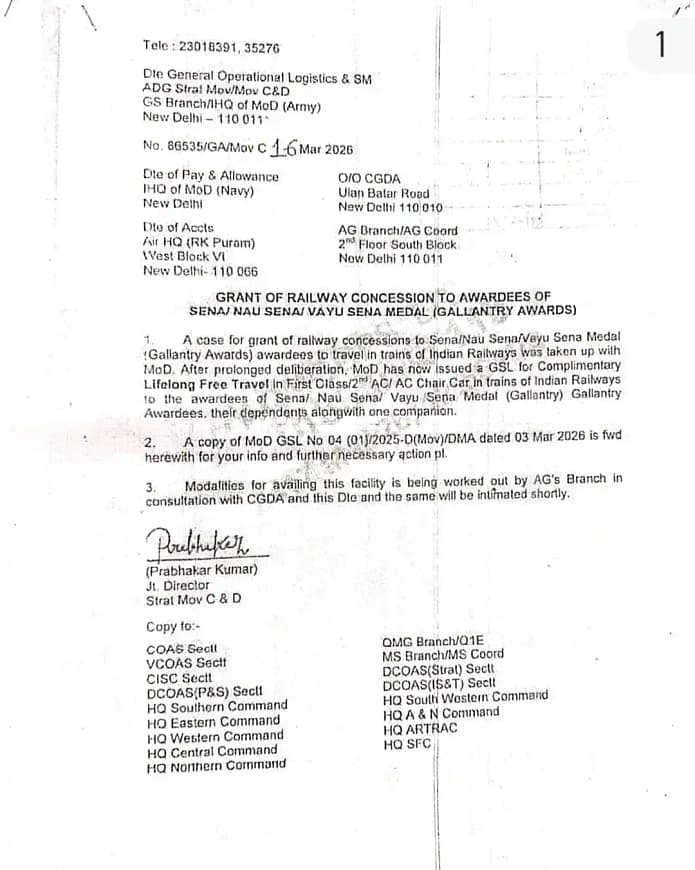
March 2026 was released in the Ministry of Defence Order

Ministry of Defence The facility was approved under GSL No. 04 (01)/2025-D (Move)/DMA dated 3 March 2026. It was then instructed to start the scheme by releasing the letter to the concerned branches on behalf of the Army Headquarters on 16 March 2026.

The letter said that after a long time discussion, the Army Medal (Gallentry), the nine Army Medal (Gallentry) and Air Force Medal (Gallentry) award winners have been decided to facilitate a lifetime free journey in Indian Railways.

The Ministry of Defence has been said in order: "Sena Medals, Nine Army Medals and Air Force Medals (Gallentry) awardees are provided a lifelong free travel facility in the First Class, Second AC and AC Chair car category of Indian Railways. "Sena Medal Gallantry Free Railway Travel"

Family members also get benefit

The Ministry of Defence has also included the eligible dependents by increasing the scope of this facility in the new system. This facility will also get the spouse of the awardees. If the award has been provided after the revocation and the award-winning was unmarried, his parents will also be eligible for this scheme. The widow or widhu will continue to remarriage this facility.

This will bring a direct benefit to a large number of soldier families, especially families whose members have received gallantry awards.

Fully digital built system

First a number of concessions and travel facilities require paper certificates and physical verification verification. Digital verification and e-pass systems have been applied in new systems.

The details of the person eligible after registration on the IRCCP portal will be verified. Thereafter digital e-pass will be released, which will be used when booking tickets through IRCTC. Free Railway Travel

Free Railway Travel

In the first few gallantry prize winners the facility

in the country The ultimate heroic cycleA variety of travel concessions were available for the Mahavir Chakra and other high-grade gallantry awards received troops. Now the Army Medal (Gallentry), nine Army Medal (Gallentry) and Air Force Medal (Gallentry) troops have also provided similar facilities.

This decision has been taken in honor of the soldiers who have performed exceptional courage and heroism during duty. Free Railway Travel

Important Steps for Soldiers and Former Soldiers

A number of soldiers serving in Indian Army, Navy and Air Force are awarded Army Medal (Gallentry), Nine Army Medals (Gallentry) and Air Force Medals (Gallentry). Now all these awardees and their eligible family members will be able to avail free travel facility on Indian Railway Network across the country.

UP gets comment card holders free travel facility

Uttar Pradesh Transport Corporation also offers free travel facility to individuals awarded with Chief of the Naval Staff Comment Card and Chief of the Air Staff Comment Card. Both of these categories have the same travel facilities, which are already available to other eligible award winners. Free Railway Travel

India-US largest war exercises begin! Training on the first two fronts, focus on IBG and counter-drone systems

Yudh Abhyas 2026
U.S. Yudh Abhyas 2026 Begins With Focus on Integrated Battle Groups, Drones and Multi-Domain Warfare

Yudh Abhyas 2026: The joint military exercise war exercises occurring between India and the U.S.-2026 has begun in the Auli of Uttarakhand and the Mahajan Field Firing Range of Rajasthan. It is the 22nd edition of the largest bilateral military practice held between the two countries. The main purpose of the exercise this time in mountain and semi-cavest areas Integrated Battle Group (IBG) is to strengthen the combined capacity of both forces for use. While simultaneously training in both the areas will give the troops experience of running joint military campaigns in different situations.

This exercise started from September 9th to September 28th. The inauguration ceremony was held at the Auli Foreign Training Node, where the General Officer Commanding Major General Amaresh Gunjan of 14 Infantry Division on behalf of the Indian Army and commander Col Benjamin Jackman of the 11th Airborne Division were present on behalf of the American Army.

Nearly 600-600 soldiers from the forces of both countries are participating in this exercise. The practice is being organized simultaneously in two separate terrains, to develop the ability of joint operation in different types of battlefields.

Yudh Abhyas 2026: Practice of different battle conditions in Auli and Mahajan

This exercise is especially because for the first time it is being conducted at two different locations simultaneously, between which there is a distance of more than 1,000 kilometres and both are completely different.

The hillside of Uttarakhand for this Oli Selected where the exercise is to be. Auli is located at a height of about 10,000 feet in Chamoli district. This location is close to the actual control line (LAC) and is strategically important for the Indian Army. The soldiers are being trained under Integrated Battle Groups.

This phase started from September 15 includes precise firing up to long distances, tactics dealing with drone threats and exercises associated with war operations in mountainous areas. At the end of the program, the forces of both countries will also take joint live fire demostration.

On the other hand of Rajasthan Mahajan Field Firing Range The desert and the semi-registani is Ilaka. Live firing, mechanized operation and artillery exercises are carried out at large. The two forces in the Mahajan are demonstrating the Latest Vapon Systems, Drones and Autonomous Systems.

These systems are being used to raise information in surveillance, tow and battlefield. In addition, experts from both countries are also discussing emerging military techniques and topics associated with multi-domain warfare.

Why two place exercises together?

This time, the purpose of conducting the exercise together in two different locations is to train the troops in a variety of terrains and operational conditions. In the Auli where the operation of the Infantry is being emphasized in the hill areas of height, the use of precise weapons, drones and counter-drone techniques is being taught in Rajasthan. This allows both forces to test more extensive abilities during the same exercise. (Yudh Abhyas 2026)

Special emphasis on IBG concept

The most important Integrated Battle Group (IBG) is concept in battle practice-2026. The main objective of this exercise is to further improve the ability of the use of IBG in mountain and semi-cavity areas, especially in campaigns where the role of the infantry is high.

During this exercise, Indian and American forces are trying to understand how American Brigade Combat team (BCT) and Indian IBG can make better synergy with each other. How IBG’s plan, movement and fire support will work in mountain areas. How to incorporate drones, counter-drone systems and precision fire into the framework of IBG. Whereas, how to implement the same War Concept in the desert terrain such as the Hill Area of Uttarakhand and the Mahajan Field Firing Range of Rajasthan.

Let the IBG is the new Battle Formation of the Indian Army. It has been developed as a quick deployed military formulation. The capabilities such as infantry, artillery, engineer, air defense, signal and logistics are included in the same formulation.

While IBG can be sent to the war in less than the regular division. The goal is to respond faster in the event of war and use military capacity in a short time. (Yudh Abhyas 2026)

Similarities of American BCT and Indian IBG

U.S. Army Brigade Combat Team (BCT) is also the Combined Arms Military Structure. That’s why war exercises-2026 are being considered important for both forces.

Both Indian IBG and U.S. BCT aims to act rapidly in the war by integrating infantry, fire support, engineering and logistic abilities. During the exercise both forces are exchanging commands and controls, operational planning and procedures associated with joint action.

The American army usually handles the command of the Col A Brigade, while Major General leads a division. But the Indian Army has given the IBG Command directly to the Major General Level Officer. This means that this formation has received more rights, faster decision-making ability and more firepower.

Integration of long-distance missile and rocket system

A special Khaubi of this year’s war exercises is a digital integration of systems with precise marching capacity of India and the long distance of the US. According to the American Army, the long-range precision fire and rocket system of both countries will be operated in the integrated manner. This will be displayed in the last live fire program that takes place in Auli. (Yudh Abhyas 2026)

Advance Counter-Drone System in India for the first time

War exercises-2026 The US Army’s Mobile Low, Slow, Small Unmanned Aircraft Integrated Default System (MLIDS) has also been included.

This is an advanced counter-drone system developed to identify and deactivate small drones flying at low altitudes.

This system consists of radar, electro-optical sensor, infrared sensor and electronic warfare equipment. It is considered important to deal with drone threats in the modern battlefield. (Yudh Abhyas 2026)

Training on Multi-Domain Operation

The American Army Third Multi-Domain Task Force (3MDTF) is also part of this exercise. This unit is not limited to the traditional war only, but also works on capabilities like cyber, space, information war and long-distance precision strike.

During the exercise both forces are practicing the process of sharing information through the digital network, identifying the target and running the joint fire mission. (Yudh Abhyas 2026)

War exercises released from 2004

The war exercises between India and America were started in 2004. The focus in the early years was on anti-terrorism campaigns and peacekeeping missions.

Changed the format of this exercise over time and included modern war techniques, digital command systems, drone operation, cyber capabilities and multi-domain operation. (Yudh Abhyas 2026)

Can Raphael and Scalp Missile be remotely controlled? Larger claim of Russian Experts- The fighter jet may have ‘Chill Switch’!

Rafale Kill Switch
Rafale ‘Kill Switch’ Debate: Russian Claims Raise Questions Over India’s 114 Fighter Jet Deals. (AI Generated Image)

Rafale Kill Switch: 114 new Rafale multi-roll fighter jets purchased for Indian Air Force have come up with a shocking revealing. Certain experts from the Centre for Analysis of World Arms Trade (CAWAT) of Russia have claimed that export versions may have such software and hardware features in Rafale fighter jets and Scalp-EG (SCALP-EG) cruise missiles, which can be activated through external electronic signals.

However, any public technical or forensic evidence has not been revealed with these claims. France has never confirmed any such potential. Despite this, the case is being considered to be Ahmad for India as Rafael F-4 is among the strongest contenders in the 114 fighter jet programme of Indian Air Force.

Rafale Kill Switch: What is said in the Russian report?

Russian Defense Analyst Riya Novosty has claimed that Russia’s Center for Analysis of World Arms Trade has released an Expert Study. Russian experts in the study claimed that Rafael aircraft created for exports may have such software and hardware "bug" that can be activated remotely.

"Near France ScalpEG missiles may have the ability to prevent use in the war and India should consider this aspect. ""

This claim directly challenges India’s strategic thinking under which it seeks freedom to add indigenous weapons, data links, sensors, and electronic systems to its fighter planes.

Operation shifter also used

The Russian report also mentioned the operation shifter in May 2025. According to the report, Indian Air Force used 10 Scalp-EG long distance cruise missiles for the first time in May 2025. 9 of these missiles successfully took place on their target, while the engine malfunction has been claimed in 1 missile. These attacks were targeted the terrorism, commands and control centers, hangers and infrastructure of airbase. During that Brahmaos, Hammer, Rampage, and Crystal Table Missiles were also used. At the same time, India plans to buy 100 to 150 extra Scalp-EG missiles after the operation shifter.

The report questioned whether during that Raphael The planes had some sort of software or system problems? While not in this regard, the Government of India has given any official information nor France has accepted some sort of technical data. So this claim is being considered a thorough estimate based. (Rafale Kill Switch)

No technical proof front

The Russian report itself also acknowledges that the final findings can only be taken out of Indian investigation agencies.
Experts say that if an aircraft actually exists a "kill switch" remotely, it will require secure communication systems, authentication protocols, command channels and special software architecture.

There is no public proof available so far that any such system exists in Rafael.

France does not give software control

The most important aspect of Raphael dispute "Kill Switch"Not but software control. Rafael’s most sensitive systems such as Theels RBE-2 AESA Radar, Spectra Electronic Warfare Suit, Source Code of Mission Computer and Sensor Fusion Software France does not give any of its customers to the country.

This means that the country buying aircraft can use Rafael, but its original software cannot make changes on its behalf.

All Raphael Operators such as India, Egypt, Qatar, Greece, Indonesia and UAE are running aircraft under the same system. (Rafale Kill Switch)

India Wants Access to ICDs

India demands that it has access to at least interface control documents (ICD). ICD is a technical document with the help of which a country can add to its arms and electronic system aircraft. On Rafael in the Future of India Astra MK-1Astra MK-2, Rudram Anti-Radiation Missile, Smart Anti Airfield Wayne and Brahmaos-NG are planned to connect with National Datalink with indigenous weapons. For this, it is not completely dependent on the approval of French companies.

While, the Rafael-M fighter plane had plans to plant India’s indigenous "Great" AESA radar, but it was torn off, as it would have to make big changes in the aircraft’s mission system. This increases the cost greatly and could lead to a delay of about eight years in the project. (Rafale Kill Switch)

Tata Group Can Make 94 Rafael

India had approved the need to buy 114 new fighter jets in February 2026. These include 88 single seater and 26 twin seater. French company in August 2026 Tenth Aviation He also submitted his formal proposal. According to the proposal, about 20 aircraft will come directly from France while around 94 aircraft can be made from Tata Group’s participation in India.

While the final price of this deal is not fixed right now, its total cost can reach about 30 billion dollars when adding aircraft, weapons, basic infrastructure, training, maintenance, technology transfer and whole service life support. That is why the issue of digital sovereignty and software control is being considered extremely important. (Rafale Kill Switch)

How does the scalp missile work?

SCALP-EG is a long-distance cruise missile weighing about 1,300 kg. The length of it is about 5.1 m and has a brooch warhead of about 450 kg. It reaches its target with the help of Inerial Navigation, Satellite Positioning, Terrain Referance System, and Imaging Infrared Seeker after the missile is launched.

On the basis of different version of the missile and its flight profile, its marching capacity is considered from about 250 to 560 km. The Rafael fighter jets can be broken away from the strong air defense area of the enemy.

Military experts say that preventing him from afar after the missile is launched will be technically quite complex work as he flies on the previously programmed route. Scalp and its British version have been used in many war zones such as Storm Shadow Iraq, Libya, Syria, Yemen, Ukraine and India-Pakistan conflict. But so far, no public and certified matter has been revealed, in which France or the UK have already given a customer country and disabled the missile launched. (Rafale Kill Switch)

Three layers of software in Rafael

Rafael’s first layer is his main combat software that includes radar, sensor, electronic warfare and weapon management. The second layer is of interface control documents, which helps to connect external weapons and systems to aircraft. The third layer is of the application programming interface, through which the customer countries can add some additional systems, but do not get access to the main French software. That’s why the big part of the interaction between India and France is the focus on Software Rights and Wayne Integration. (Rafale Kill Switch)

36 Rafael's not found code

India had dealt with 36 Rafael aircraft in 2016. India had not found source codes or full ICD access at that time. Due to the technical help of French companies to connect Indian weapons and systems to Rafael. Teno-Theles were helped in the Astra missile integration. For which trials and certifications are still released, which is expected to be completed by 2028.

Adding a missile to a fighter jet does not only fill it under the plane. The engineers have to ensure that the missile got the right power, its cooling system works properly, the electronic system of aircraft and missiles does not interfere with each other, the exchange of data between the two is correct, the information of the target arrived correctly, what circumstances the missile can be safely stained, at the time of the launch he is separated from the aircraft safely, it can be quickly dropped into the emergency and the store management system of the aircraft can control him correctly. (Rafale Kill Switch)