Home Blog Page 23

Sukhoi-30 will deal with the GPS jamming of China-Pakistan! The special anti-jam antenna being applied in this fighter jet

Su-30MKI Antenna Upgrade
Image Gallery

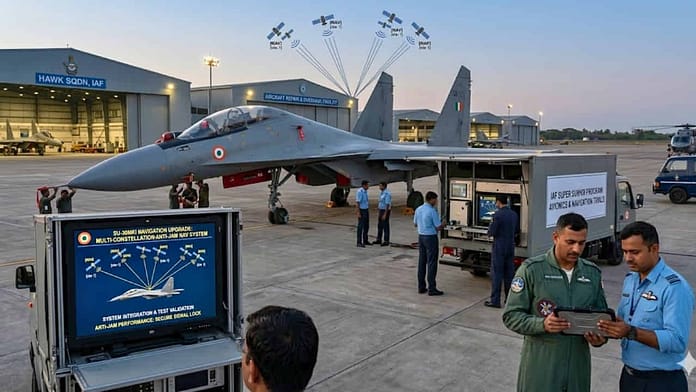
Su-30MKI Antenna Upgrade: The Indian Air Force has grown into its most trusted fighter jets preparing to make Sukhoi-30MKI more modern. Under this, the air force has started the process of applying new multi-constellation GNSS antenna by changing the old navigation system. This upgrade is being done to deal with threats like electronic warfare and GPS jamming.

The Indian Air Force has released the Request for Proposal (RFP). The project’s motive is to replace the old navigation antenna used in Su-30 planes with a new multi-configuration antenna. This will increase the strength of the aircraft’s navigation capability, accuracy, universal in electronic warfare and long distance operation. (Su-30MKI Upgrade)

Su-30MKI Antenna Upgrade: Indian Air Force Spine is Sukhoi-30

Sukhoi-30 The most important multiroll fighter aircraft of the Indian Air Force is considered. India has more than 260 aircraft. These were developed in collaboration with Russia and Hindustan Aeronautics Limited (HAL) manufactures these under the license in India.

This aircraft is used for long-distance flying, air superiority mission, ground attack and precision strike. This platform is also equipped with supersonic missiles like Brahmaos.

Though only the powerful engine and weapons in the modern war are not considered quite. Now navigation, data links and electronic security have become as important. This is why the Indian Air Force now wants to move the navigation system of Sukhoi-30 to the new level. (Su-30MKI Antenna Upgrade)

Why this upgrade is essential

Now Sukhoi-30 uses GPS and GLONASS-based navigation system. But the enemy countries in the modern war are using techniques such as gps jamming, spoofing and electronic attack.

If a fighter plane has a satellite signal block, it has an impact on its acuracy. Missile targeting, long-distance flight and arms guidings can be affected.

The existing system works on a limited frequency band, according to the defence formulas. Satellite coverage in some areas can be decomposed in navigation due to reduced and electronic jamming.

That’s why the Indian Air Force now wants a system that can connect with multiple satellite networks simultaneously.

Let’s say Operation Shifter During Pakistan tried to use GPS jamming and spoofing technology to influence the navigation potential of Indian aircraft, missiles and drones. Its motive was to show incorrect location to Indian systems or disrupt their satellite signal.

Earlier there were several cases of GPS spoofing in the border areas like Amritsar and Jammu. More hike was observed in such activities during operation.

Some of the Indian Air Force platforms, such as C-130J Transport Aircraft and Su-30MKI and Rafael, have also suffered GPS spoofing. While the Indian Air Force used the Indian Navik (NavIC) and the Essential Navigation System (INS) as a backup system which did not affect the mission.

After the same experience, the Indian Air Force now insists on adding multi-constellation antenna and anti-jam navigation systems to platforms like Sukhoi-30MKI, so that the aircraft can be safely and accurately operation even in the GPS denied environment in the future.

What’s New Antenna’s USP

The new multi-configuration GNSS antenna will support multiple satellite systems simultaneously. It will include US GPS, Russia’s Glonass, Europe’s Galileo, China’s Bidou (BeiDou) and India’s sailor system. More than 100 satellites will be available, which will increase the continuity and accuracy of the signal.

Also, India’s own Satellite-Based Assessment System (SBAS) will also include GAGAN (GPS Aided GEO Augmented Navigation). GAGAN mainly works on two frequency. The first is L1 frequency, which works at 1575.42 MHz. It is compatible with the traditional GPS signal and is the most used right now. The second is L5 frequency, which works at 1176.45 MHz. It is considered more advanced and offers dual-frequency support.

Dual-frequency antenna that supports both L1 and L5 frequency for fast speed and high-manuver fighter jets, according to sources, is considered very essential.

Such fighter planes fly in a very fast speed and hard movement, where the normal GPS signal can come much error. Dual-Frequency system reduces in error and gives aircraft much precise positioning.

Subsequently, the jet will not rely only on one or two satellite networks. If the signal of a system is interrupted, the second network will continue to work. This will make the aircraft more satellite available and its positioning will be more accurate. (Su-30MKI Antenna Upgrade)

Will Also Work Between Jamming

The new antenna being designed in such a way that he Electronic Jamming Work between. The enemy countries in the modern war try to interrupt the satellite signal through the electronic warfare system.

The new system according to RFP will include anti-jam and anti-spoofing technology. This means that the aircraft will continue to fly in the right direction even if the enemy tries to send a fake signal or stop a real signal.

Defense experts say that countries like China and Pakistan already have advanced electronic warfare systems. So the Indian Air Force now seeks to protect its fighter jets in the same level.

More accurate attacks

The navigation accuracy of Sukhoi-30 will be greatly improved after the new antenna is taken. The system will give accuracy from 1 to 2 meters as per RFP. It will have a direct impact on missile and precision guided arms. Brahmos, Spices, and other smart Mmunition will get more accurate target data.

Sources say that the Precision Strike will play the most important role in future wars. The accuracy of navigation in such a is considered very important. (Su-30MKI Antenna Upgrade)

The long mission will also benefit

नया मल्टी-कॉन्स्टेलेशन एंटीना लंबी दूरी के मिशन में भी मदद करेगा। बेहतर नेविगेशन और रूट प्लानिंग से ईंधन की बचत होगी। अगर विमान को ज्यादा भरोसेमंद पोजिशनिंग डेटा मिलता रहेगा, तो वह कठिन इलाकों और खराब मौसम में भी ज्यादा सुरक्षित तरीके से ऑपरेशन कर सकेगा।

वहीं, यह अपग्रेड समुद्री इलाकों, पहाड़ी क्षेत्रों और इलेक्ट्रॉनिक वॉरफेयर वाले वातावरण में काफी उपयोगी साबित होगा।

पुराने सिस्टम की जगह नई टेक्नोलॉजी

सुखोई-30 में अभी इस्तेमाल हो रहे नेविगेशन सिस्टम में इनर्शियल नेविगेशन सिस्टम, लेजर जायरो और सैटेलाइट रिसीवर शामिल हैं। लेकिन यह तकनीक अब पुरानी मानी जा रही है।

नई प्रणाली में मल्टी-बैंड और मल्टी-फ्रीक्वेंसी सपोर्ट दिया जाएगा। इससे आयनोस्फेरिक एरर और मल्टीपाथ जैसी समस्याएं कम होंगी।

नई एंटीना में राइट हैंड सर्कुलर पोलराइजेशन और हाई गेन तकनीक भी शामिल होगी। इसे बेहद छोटे और हल्के डिजाइन में तैयार किया जाएगा ताकि विमान के वजन और एरोडायनामिक्स पर असर न पड़े।

‘सुपर सुखोई’ प्रोग्राम का हिस्सा

यह अपग्रेड भारतीय वायु सेना के बड़े “सुपर सुखोई” प्रोग्राम का हिस्सा माना जा रहा है। इस कार्यक्रम के तहत सुखोई-30 विमानों में नए रडार, आधुनिक एवियोनिक्स, इलेक्ट्रॉनिक वॉरफेयर सिस्टम और नए हथियार जोड़ने की योजना है।

नया एंटीना सिस्टम उसी आधुनिकीकरण कार्यक्रम का हिस्सा है, इससे विमान की सर्विस लाइफ भी बढ़ेगी।

रक्षा सूत्रों के मुताबिक भारतीय वायु सेना चाहती है कि सुखोई-30 आने वाले कई दशकों तक आधुनिक युद्ध के लिए तैयार रहे। (Su-30MKI Antenna Upgrade)

भारतीय कंपनियों को मिलेगा मौका

आरएफपी में भारतीय कंपनियों, रक्षा सार्वजनिक उपक्रमों और विदेशी साझेदारों के साथ काम करने वाले कंसोर्टियम को भाग लेने की अनुमति दी गई है।

एचएएल, बीईएल और कई निजी रक्षा कंपनियां इस प्रोजेक्ट में हिस्सा ले सकती हैं। सरकार ने इसमें “मेक इन इंडिया” और “आत्मनिर्भर भारत” पर खास जोर दिया है।

आरएफपी के अनुसार जिन कंपनियों का लोकल कंटेंट ज्यादा होगा, उन्हें प्राथमिकता दी जाएगी। वहीं, यह प्रोजेक्ट अलग-अलग चरणों में पूरा किया जाएगा। पहले चरण में डिजाइन और प्रोटोटाइप तैयार होंगे। इसके बाद कुछ विमानों पर ग्राउंड और फ्लाइट ट्रायल किए जाएंगे।

सर्टिफिकेशन पूरा होने के बाद बड़े पैमाने पर इंस्टॉलेशन शुरू होगा। शुरुआती चरण में 50 से ज्यादा विमानों पर यह सिस्टम लगाया जा सकता है। इसके बाद पूरे बेड़े में अपग्रेड किया जाएगा। (Su-30MKI Antenna Upgrade)

पायलट और तकनीकी स्टाफ को मिलेगी ट्रेनिंग

नए सिस्टम के साथ भारतीय वायु सेना और एचएएल के तकनीकी स्टाफ को भी ट्रेनिंग दी जाएगी। इसके अलावा स्पेयर पार्ट्स, ग्राउंड सपोर्ट इक्विपमेंट और वारंटी सपोर्ट भी दिया जाएगा।

आरएफपी में कहा गया है कि सिस्टम को पुराने विमान सिस्टम के साथ बिना बड़ी स्ट्रक्चरल बदलाव के जोड़ना होगा।

इलेक्ट्रॉनिक युद्ध में बढ़ेगी ताकत

आधुनिक युद्ध तेजी से नेटवर्क-सेंट्रिक और इलेक्ट्रॉनिक आधारित हो चुका है। केवल मिसाइल और लड़ाकू विमान ही काफी नहीं हैं। अब डेटा, नेविगेशन और इलेक्ट्रॉनिक सुरक्षा युद्ध जीतने में अहम भूमिका निभाते हैं।

अगर कोई विमान जीपीएस डिनाइड यानी सिग्नल बाधित माहौल में भी सटीक हमला कर सके, तो उसकी ऑपरेशनल क्षमता कई गुना बढ़ जाती है। भारतीय वायु सेना का यह अपग्रेड उसी दिशा में एक महत्वपूर्ण कदम माना जा रहा है।

चीन और पाकिस्तान दोनों तेजी से इलेक्ट्रॉनिक वॉरफेयर और सैटेलाइट बेस्ड सैन्य क्षमताएं बढ़ा रहे हैं। चीन पहले ही एडवांस जैमिंग सिस्टम और एंटी-सैटेलाइट तकनीक विकसित कर चुका है। ऐसे में भारतीय वायु सेना अपने सबसे अहम लड़ाकू विमान को आधुनिक नेविगेशन और एंटी-जैम तकनीक से लैस करना चाहती है। (Su-30MKI Antenna Upgrade)
Digital command platform making Indian Navy will track from AI. Missile and Torpedo

Indian Navy INAMS 2.0
Image Gallery

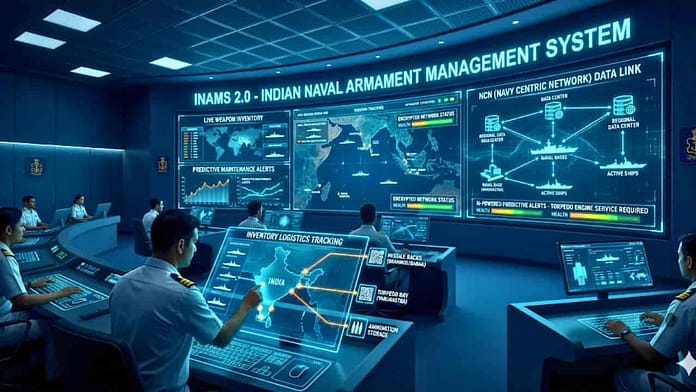
Indian Navy INAMS 2.0: Indian Navy is preparing to make its arms, ammunitions and explosives content management completely digital and modern. Naval has launched the Indian Naval Armament Management System Version 2.0 (INAMS Ver 2.0) project. This will be an advanced digital platform, with the help of which the Navy will manage its weapons, missiles, mines, torpedo, ammunition, storage, repair and supply systems in an integrated manner.

This system Indian Navy The Directorate General of Naval Armament (DGoNA) will work under. The objective is to connect several different processes running in Naval Armament Depot and Naval Headquarters into a digital network.

INAMS Ver 2.0 is the upgraded version of the old INAMS-I system as per Indian Navy officials. It is being built to be more secure, fast and data-based decision-making platform.

Indian Navy INAMS 2.0: Digital Network of Naval Weapons Management

The Naval Armament Organization of the Indian Navy handles the work of procurement, storage, repair and supply of weapons, ammunition and explosive materials for the Navy and Indian Coast Guard.

The Directorate General of Naval Armament works closely with different defence institutions, DRDO Labs, Defence Public Undertakings and other Navy branches. It includes missiles, torpedo, mines, small weapons and other explosive equipment.

So far the larger part of these processes was dependent on different systems and manual entry. Through the new INAMS-II system, they will be converted into a fully web-based and integrated platform.

Many big work will handle new system

Ministry of Defence The INAMS 2.0 will not only be the store management system as per the request for information released on behalf of. Rather it will cover almost every part of the Navy’s Venetian management.

It will include modules of arms supply, ammunition preparation, repair and maintenance, purchase process, transport, fire safety, training, audit and production.

Divisions present in different armament depots of the Navy will also be linked to the corresponding system. These include Departments like Guided Weapons Division, Emission Workshop, Material Management, Transport, HRD & Training, Security & Medical.

Missile and Torpedo will keep records

Naval missiles through new systems, TorpedoTo maintain full digital record of decoy, mine and other weapons.

What number of weapons exist, which system is in the repair, which equipment is sent to the ship and the life extension of which ammunition will be available in real time.

The system will also support bar code and QR code based tracking. This will make it easier to monitor store movement and supply. Indian Navy INAMS 2.0

AI and machine learning will also include

INAMS 2.0’s largest USP comprises of Artificial Intelligence and Machine Learning is based analytics.

The system is being created Artificial Intelligence and Machine Learning Ready as per RFI. In the future this system will help to identify, estimate and take decisions.

उदाहरण के तौर पर अगर किसी मिसाइल सिस्टम में बार-बार खराबी आ रही हो या किसी गोला-बारूद की स्टोरेज लाइफ खत्म होने वाली हो, तो सिस्टम पहले से अलर्ट दे सकेगा। इससे नौसेना का प्रेडिक्टिव मेंटेनेंस और इन्वेंट्री मैनेजमेंट बेहतर होगा। (Indian Navy INAMS 2.0)

साइबर सुरक्षा पर खास फोकस

क्योंकि यह सिस्टम संवेदनशील मिलिट्री डेटा संभालेगा, इसलिए इसमें साइबर सिक्योरिटी को सबसे बड़ी प्राथमिकता दी गई है। सिस्टम मल्टी-फैक्टर ऑथेंटिकेशन, एईएस एन्क्रिप्शन, ऑडिट ट्रेल, रोल बेस्ड एक्सेस कंट्रोल और वल्नरेबिलिटी असेसमेंट जैसी सुरक्षा तकनीकों से लैस होगा।

हर साल वल्नरेबिलिटी असेसमेंट एंड पेनिट्रेशन टेस्टिंग (VAPT) भी अनिवार्य होगी। नौसेना के साइबर ग्रुप की मंजूरी के बिना सिस्टम में कोई बड़ा बदलाव नहीं किया जा सकेगा। एआई सिस्टम को डेटा पॉयजनिंग, सिस्टम मैनिपुलेशन और प्राइवेसी ब्रीच जैसे खतरों से बचाने के लिए भी अलग सुरक्षा प्रोटोकॉल बनाए जाएंगे।

भारतीय नौसेना का अपना नेटवर्क बनेगा रीढ़

INAMS-II सॉफ्टवेयर को इस तरह बनाया जा रहा है कि इसे पूरे भारत में एक समय पर करीब 1200 लोग इस्तेमाल कर सकें। यह सिस्टम भारतीय नौसेना के सेंट्रल डेटा सेंटर (CDC), रीजनल डेटा सेंटर (RDC) और नेवल हेडक्वार्टर में लगाया जाएगा, ताकि अलग-अलग जगहों से जुड़े अधिकारी और यूनिट एक ही नेटवर्क पर काम कर सकें।

INAMS-II भारतीय नौसेना के इंडियन नेवी सेंट्रिक नेटवर्क (NCN) पर चलेगा। यही नेटवर्क नौसेना के डेटा सेंटर, कमांड मुख्यालय और अलग-अलग डिपो को जोड़ता है। रडार, लॉजिस्टिक्स सिस्टम और दूसरे ऑपरेशनल प्लेटफॉर्म से मिलने वाली जानकारी भी इसी नेटवर्क के जरिए शेयर की जाएगी।

अगर किसी जगह इंटरनेट या नेटवर्क कनेक्शन सीमित हो, तब भी सिस्टम ऑफलाइन मोड में काम कर सकेगा। बाद में नेटवर्क मिलने पर डेटा सिंक्रोनाइज हो जाएगा। (Indian Navy INAMS 2.0)

डिजिटल पेन और टैबलेट से होगी एंट्री

सिस्टम के लिए नौसेना नए हार्डवेयर भी खरीदेगी। इसमें डेस्कटॉप कंप्यूटर, डिजिटल पेन, टैबलेट, क्यूआर कोड स्कैनर, प्रिंटर और नेटवर्क उपकरण शामिल होंगे। फील्ड यूनिट और डिपो में मौजूद कर्मचारी सीधे टैबलेट या डिजिटल डिवाइस से डेटा दर्ज कर सकेंगे।

इससे मैनुअल पेपरवर्क कम होगा और डेटा एंट्री में होने वाली गलतियां घटेंगी। साथ ही सिस्टम अलग-अलग ऑपरेटिंग सिस्टम जैसे विंडोज, लिनक्स और एंड्रॉयड को भी सपोर्ट करेगा। (Indian Navy INAMS 2.0)

सोर्स कोड भारतीय नौसेना के पास

इस सॉफ्टवेयर का पूरा सोर्स कोड हर चरण के बाद भारतीय नौसेना को दिया जाएगा। फाइनल वर्जन के साथ पूरी डॉक्यूमेंटेशन भी दी जाएगी, जिसमें हर मॉड्यूल और फीचर के काम करने का तरीका विस्तार से समझाया जाएगा।
अगर भविष्य में सॉफ्टवेयर में कोई बदलाव या नया फीचर जोड़ना हो, तो उसके निर्देश भी डॉक्यूमेंट में साफ तौर पर दिए जाएंगे, ताकि सिस्टम को आसानी से अपडेट किया जा सके।

नौसेना ने साफ किया है कि इस सॉफ्टवेयर का पूरा मालिकाना हक भारतीय नौसेना के पास रहेगा। यह प्रोजेक्ट खास तौर पर भारतीय नौसेना के लिए बनाया जा रहा है। इसलिए इसका सोर्स कोड, डिजाइन और दूसरी तकनीकी जानकारी किसी दूसरी संस्था या प्रोजेक्ट में बिना नौसेना की अनुमति के इस्तेमाल नहीं की जा सकेगी।

कई चरणों में लागू होगा प्रोजेक्ट

INAMS 2.0 को कई चरणों में लागू किया जाएगा। पहले पुराने वर्जन की स्टडी की जाएगी। इसके बाद डिजाइन, डेवलपमेंट और टेस्टिंग होगी। फिर डेटा माइग्रेशन, यूजर ट्रेनिंग और सिस्टम इंटीग्रेशन का काम होगा।

नौसेना के मुताबिक इंटरमीडिएट गो-लाइव और फाइनल गो-लाइव जैसे चरण भी रखे गए हैं। फाइनल लॉन्च के बाद तीन साल तक ऑपरेशन और मेंटेनेंस सपोर्ट भी दिया जाएगा।

मेक इन इंडिया और आत्मनिर्भरता पर जोर

नौसेना ने इस सिस्टम के इंडिजेनाइजेशन पर भी जोर दिया है। सिस्टम में अलग मॉड्यूल होंगे, जो यह ट्रैक करेंगे कि कौन सा उपकरण या स्पेयर पार्ट स्वदेशी है और कौन सा विदेशी। भारतीय नौसेना का उद्देश्य रक्षा सप्लाई चेन में घरेलू उद्योग की भागीदारी बढ़ाना है।

इसी वजह से इस प्रोजेक्ट में सोर्स कोड और इंटेलेक्चुअल प्रॉपर्टी राइट्स पूरी तरह भारतीय नौसेना के पास रहेंगे। रक्षा विशेषज्ञों का कहना है कि इससे विदेशी कंपनियों पर निर्भरता कम होगी और भविष्य में सिस्टम को भारत में ही अपग्रेड किया जा सकेगा। (Indian Navy INAMS 2.0)

नेवल आर्मामेंट डिपो का काम होगा आसान

भारतीय नौसेना के नेवल आर्मामेंट डिपो देश के अलग-अलग हिस्सों में मौजूद हैं। यही डिपो नौसेना के युद्धपोतों और तटरक्षक बल को हथियार और गोला-बारूद उपलब्ध कराते हैं। इन डिपो में स्टोरेज, ट्रांसपोर्ट, रिपेयर, टेस्टिंग और डिस्पोजल जैसे कई काम एक साथ चलते हैं।

INAMS-II आने के बाद हर डिपो का डेटा एक सेंट्रल सिस्टम से जुड़ जाएगा। अगर किसी जहाज को मिसाइल या गोला-बारूद की जरूरत होगी, तो उसकी जानकारी तुरंत नेटवर्क पर दिखाई देगी। इसी तरह ट्रांसपोर्ट, फायर सेफ्टी और मेंटेनेंस से जुड़ी गतिविधियां भी डिजिटल रूप से ट्रैक की जा सकेंगी।

ऑडिट और रिकॉर्ड मैनेजमेंट भी होगा मजबूत

नए सिस्टम में ऑडिट मॉड्यूल भी शामिल होगा। इससे हथियारों और विस्फोटक सामग्री का पूरा रिकॉर्ड डिजिटल तरीके से सुरक्षित रहेगा। किस अधिकारी ने कब डेटा एक्सेस किया, किसने बदलाव किया और कौन सी फाइल डाउनलोड की गई, इसका रिकॉर्ड भी सिस्टम में सेव होगा।

रक्षा विशेषज्ञों के मुताबिक इससे जवाबदेही और पारदर्शिता बढ़ेगी। साथ ही सुरक्षा जांच और जांच एजेंसियों के लिए डेटा ट्रैक करना आसान होगा। (Indian Navy INAMS 2.0)

नेचुरल लैंग्वेज सर्च भी मिलेगा

INAMS 2.0 में नेचुरल लैंग्वेज सर्च फीचर भी होगा। इसका मतलब है कि यूजर साधारण भाषा में जानकारी खोज सकेंगे। उदाहरण के तौर पर अगर कोई अधिकारी किसी खास मिसाइल बैच या गोला-बारूद की स्थिति जानना चाहता है, तो वह सीधे सिस्टम में सर्च कर सकेगा।

सिस्टम स्ट्रक्चर्ड और अनस्ट्रक्चर्ड दोनों तरह के डेटा को संभाल सकेगा। इसमें इमेज, वीडियो और स्कैन डॉक्यूमेंट भी जोड़े जा सकेंगे। (Indian Navy INAMS 2.0)

डेटा सेंटर और बैकअप सिस्टम भी होंगे मजबूत

नौसेना ने डेटा सेंटर इंफ्रास्ट्रक्चर तैयार करने की बात भी कही है। सिस्टम के लिए सेंट्रल डेटा सेंटर और डिजास्टर रिकवरी सेंटर बनाए जाएंगे। अगर किसी वजह से मुख्य सर्वर बंद हो जाए, तो बैकअप सिस्टम तुरंत काम संभाल सकेगा।

लोड बैलेंसिंग, क्लस्टरिंग और हाई अवेलेबिलिटी जैसी तकनीकों का इस्तेमाल किया जाएगा, ताकि सिस्टम लगातार चालू रहे। रक्षा मंत्रालय के अधिकारियों के मुताबिक यह प्रोजेक्ट भारतीय नौसेना के डिजिटल मॉडर्नाइजेशन का अहम हिस्सा माना जा रहा है।

नौसेना का मानना है कि हथियार, गोला-बारूद और लॉजिस्टिक्स से जुड़ा डेटा अब आधुनिक युद्ध में उतना ही महत्वपूर्ण है जितना खुद हथियार। इसी वजह से INAMS 2.0 को केवल एक सॉफ्टवेयर सिस्टम नहीं, बल्कि नौसेना के पूरे आर्मामेंट नेटवर्क का डिजिटल कमांड प्लेटफॉर्म माना जा रहा है। (Indian Navy INAMS 2.0)

The crisis of money on the UN Peace Mission, the world’s growing war but the lowest peace soldier in 25 years

SIPRI UN Peacekeeping Crisis

SIPRI UN Peacekeeping Crisis: The UN and other multinational peacekeeping missions around the world are now facing serious crisis. The number of soldiers are constantly decreasing, delaying giving large country funds and the future of many missions has become uncertain due to global politics. The new report of the Stockholm International Peace Research Institute (SIPRI) states that if the same situation continued, the role and weakening of institutions such as the United Nations in the coming time.

The number of international troops and employees deployed in peace missions around the world by the end of 2025, according to the report remained the constituent 78,633. It is being considered the lowest figure in the last 25 years. SIPRI reported that the number has decreased by about 49 per cent as against 2016. Only in 2025 it recorded a decline of 17 percent.

English Dr. Jair Van Der Line, Director of the Peace Operations and Conflict Management Program, said that if this has been a recent multilateral conflict management mechanism can be very vulnerable. According to the funding crisis, political pressure and geopolitical confrontation, together with the United Nations-like entities are edged. (SIPRI UN Peacekeeping Crisis)

The report stated that the total 58 multilateral peace missions were active in 34 countries and regions of the world in 2025. This number remained three less than 2024. The most missions were in Africa and Europe, where 18-18 missions were operating. In the Middle East and North Africa, 5 in the US region and 3 missions in Asia-Oshinia were active.

रिपोर्ट के अनुसार दुनिया के कुल शांति सैनिकों में से लगभग 70 फीसदी केवल सब-सहारन अफ्रीका में तैनात थे। हालांकि सबसे ज्यादा कटौती भी इसी क्षेत्र में हुई। अफ्रीका में तैनात सैनिकों की संख्या में 21 फीसदी की गिरावट दर्ज की गई।

SIPRI UN Peacekeeping Crisis: संयुक्त राष्ट्र पर बढ़ा फंडिंग संकट

सिपरी रिपोर्ट में सबसे बड़ी चिंता United Nations के फंडिंग संकट को बताया गया है। रिपोर्ट के मुताबिक कई बड़े देशों ने संयुक्त राष्ट्र को अपनी निर्धारित आर्थिक मदद समय पर नहीं दी। कुछ देशों ने पूरा पैसा भी जमा नहीं किया। इसी कारण जुलाई 2025 तक संयुक्त राष्ट्र शांति मिशनों के सामने करीब 2 अरब डॉलर की कमी आ गई थी। यह रकम पूरे 5.6 अरब डॉलर के बजट का लगभग 35 प्रतिशत हिस्सा थी।

इस संकट के कारण संयुक्त राष्ट्र को अपने खर्चों में भारी कटौती करनी पड़ी। रिपोर्ट में कहा गया कि खर्च कम करने के लिए कई मिशनों में सैनिकों और कर्मचारियों की संख्या घटाई गई। कुछ मिशनों में यूनिफॉर्म पहनने वाले कर्मियों की संख्या में करीब 25 फीसदी तक कटौती हुई। साथ ही सिविलियन स्टाफ भी कम किया गया।

संयुक्त राष्ट्र महासचिव एंटोनियो गुटेरेस ने भी 2026 की शुरुआत में चेतावनी दी थी कि अगर सदस्य देशों ने समय पर फंड नहीं दिया तो संगठन आर्थिक पतन की स्थिति में पहुंच सकता है।

लेबनान मिशन पर भी बढ़ा विवाद

रिपोर्ट में लेबनान में तैनात संयुक्त राष्ट्र अंतरिम बल (UNIFIL) का भी जिक्र किया गया है। अमेरिका चाहता था कि इस मिशन को पूरी तरह खत्म कर दिया जाए। हालांकि संयुक्त राष्ट्र सुरक्षा परिषद में कई देशों ने इसका विरोध किया। आखिरकार समझौते के तहत मिशन को दिसंबर 2026 तक आखिरी बार बढ़ाया गया।

रिपोर्ट में कहा गया कि यह मामला दिखाता है कि अब संयुक्त राष्ट्र सुरक्षा परिषद में सहमति बनाना कितना मुश्किल हो गया है। स्थायी सदस्य देशों के बीच टकराव और वीटो की राजनीति के कारण नए मिशन शुरू करना और पुराने मिशनों को जारी रखना कठिन हो रहा है। (SIPRI UN Peacekeeping Crisis)

अफ्रीका में लगातार घट रहे मिशन

सिपरी रिपोर्ट के मुताबिक अफ्रीकी क्षेत्रीय संगठनों को भी गंभीर आर्थिक और राजनीतिक चुनौतियों का सामना करना पड़ रहा है। अफ्रीकी यूनियन, इकॉनमिक कम्यूनिटी ऑफ वेस्ट अफ्रीकन स्टेट्स (ECOWAS) और दूसरे संगठनों के कई मिशन या तो बंद हो गए या उनमें कटौती की गई।

रिपोर्ट में बताया गया कि सोमालिया में अफ्रीकन यूनियन ट्रांजिशन मिशन (ATMIS) को बंद करके उसकी जगह अफ्रीकन यूनियन सपोर्ट एंड स्टेबलाइजेशन मिशन इन सोमालिया (AUSSOM) मिशन शुरू किया गया। हालांकि नए मिशन का उद्देश्य लगभग वही रखा गया है। इसका मकसद सोमालिया सरकार को अल-शबाब जैसे आतंकी संगठनों से लड़ने में मदद करना है।

वहीं डेमोक्रेटिक रिपब्लिक ऑफ कांगो में साउथर्न अफ्रीकन डेवलपमेंट कम्यूनिटी मिशन इन द डेमोक्रेटिक रिपब्लिक ऑफ द कांगो (SAMIDRC) को मार्च 2025 में बंद कर दिया गया। रिपोर्ट के अनुसार वहां सुरक्षा हालात लगातार बिगड़ रहे थे और मिशन के जवान भी हमलों का शिकार हुए थे।

भारत समेत ग्लोबल साउथ देशों की बड़ी भूमिका

सिपरी रिपोर्ट में कहा गया कि शांति मिशनों में सबसे ज्यादा सैनिक देने वाले सभी शीर्ष 10 देश ग्लोबल साउथ से थे। युगांडा सबसे बड़ा सैन्य योगदानकर्ता देश बना। इसके बाद नेपाल, बांग्लादेश और भारत का नाम शामिल रहा।

भारत लंबे समय से संयुक्त राष्ट्र शांति अभियानों में सक्रिय भूमिका निभाता रहा है। भारतीय सैनिक अफ्रीका, मध्य पूर्व और दूसरे संवेदनशील इलाकों में कई दशकों से तैनात रहे हैं। रिपोर्ट में भारत को दुनिया के प्रमुख सैन्य योगदानकर्ताओं में शामिल किया गया है। (SIPRI UN Peacekeeping Crisis)

हैती और गाजा में नए प्रयोग

रिपोर्ट के अनुसार 2025 में दो नए मिशन शुरू किए गए। पहला सोमालिया में AUSSOM और दूसरा हैती में गैंग सप्रेशन फोर्स (GSF)।

हैती में पहले मौजूद मल्टीनेशनल सिक्योरिटी सपोर्ट मिशन को बंद कर दिया गया था। उसकी जगह नई GSF फोर्स बनाई गई। हालांकि रिपोर्ट के मुताबिक यह मिशन अभी भी अपनी पूरी ताकत तक नहीं पहुंच पाया है।

इसी तरह संयुक्त राष्ट्र सुरक्षा परिषद ने गाजा में एक अंतरराष्ट्रीय स्टेबिलाइजेशन फोर्स को भी मंजूरी दी, लेकिन 2025 के अंत तक वहां कोई सैनिक तैनात नहीं किया गया था। मिशन केवल तैयारी के चरण में था। (SIPRI UN Peacekeeping Crisis)

यूक्रेन और सूडान जैसे संघर्षों में गतिरोध

रिपोर्ट में कहा गया कि यूक्रेन, सूडान, सीरिया और यमन जैसे संघर्षों में नए बहुपक्षीय मिशन शुरू नहीं हो पाए। इसका कारण राजनीतिक मतभेद और बड़े देशों के बीच टकराव बताया गया है।

सिपरी के शोधकर्ताओं ने कहा कि कई क्षेत्रीय संगठन भी अब संयुक्त राष्ट्र की तरह विभाजित हो चुके हैं। ऐसे में संघर्ष प्रबंधन की जिम्मेदारी धीरे-धीरे छोटे समूहों, द्विपक्षीय समझौतों और अस्थायी सैन्य गठबंधनों की तरफ जा रही है।

रिपोर्ट में यह भी कहा गया कि रवांडा, यूएई, तुर्किये, कतर और सऊदी अरब जैसे देश अब अलग-अलग क्षेत्रों में सीधे हस्तक्षेप कर रहे हैं। कई जगह ये देश अपने राष्ट्रीय हितों को ध्यान में रखकर सैन्य या राजनीतिक भूमिका निभा रहे हैं।

सिपरी ने अपनी रिपोर्ट में चेतावनी दी है कि अगर बहुपक्षीय शांति मिशनों की संख्या और संसाधन इसी तरह घटते रहे, तो संघर्ष प्रबंधन और कठिन हो सकता है। रिपोर्ट में कहा गया कि दुनिया के कई हिस्सों में युद्ध और हिंसा पहले से ही बढ़ रही है, जबकि शांति मिशनों की क्षमता लगातार कमजोर पड़ रही है। (SIPRI UN Peacekeeping Crisis)

The Indian Army’s new ‘Kautiliya’ app will keep a look at all from arms to ration, commanders will get real time intelligence

Indian Army Kautilya App

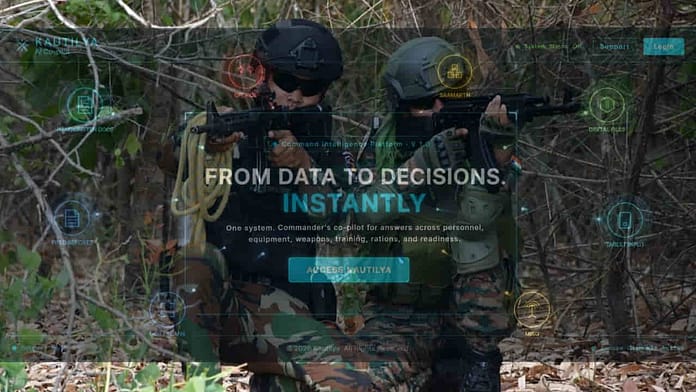
Indian Army Kautilya App: Indian Army has recently launched the new AI-based application "Cautilya" by stepping towards Digital Warfare and Modern Military Management. This app will work like an Advance Command Intelligence platform for Indian Army. The Army says that its motive is to rapidly mobilize, analyze, and provide correct information to the commanders immediately, so that the decisions can go quickly and better.

According to the information on X on behalf of the Indian Army, the Indian Army has launched the new application named ‘Kautilya’, aimed at strengthening the structured data generation and creating an AI-ready digital ecosystem.

This application supports tablet based data entry on source level and works with other data platforms of the Indian Army.

Equipped with AI enabled dashboards and NLP based interfaces, ‘Cautile’ will help in enhancing better analytics, real-time deciss making and administrative efficiency in Indian Army. ""

Indian Army Kautilya App: ‘Kautilya’ named as ‘Kautilya’

Name of this app Ancient Indian Strategist and Economist Home i. It is named after Kautilya. Chanakya is considered a great expert of strategy, administration and intelligence. The Indian Army has tried to add traditional strategic thinking and modern technology through this name.

The platform "Data to Decision" is designed to increase the ability to take decisions immediately from the data, according to the Army authorities. It will be used from operational planning to administrative work.

How to Work

The "Competitive" app can collect information from many different sources. It includes tablet inputs, field reports, scanned documents, handwriting reports and digital files.

The young and officials in the field will be able to enter the data directly through the tablet. This will reduce the paperwork and the information will immediately reach the system. The Army believes that it will reduce the delay in reporting and make better chordination between the units.

The app can also connect with several digital platforms already present in the Indian Army. It will include information of troops, records of weapons, training status, ration supplies, equipment status and data associated with operational radiins. Indian Army Kautilya App

Real time information from AI dashboard

The biggest feature of the "Cautile" is its ai Being an enabled dashboard. The commander through this dashboard will be able to view a variety of information in one place.

As an example, training status of a unit, availability of weapons, logistics arrangements, ammunition status and operational preparation information will be found immediately.

According to the army, it will improve the "Selectoral Awareness". i.e. ease of understanding the status of a terrain or unit and decisions will be able to go fast.

साधारण भाषा में सवाल पूछ सकेंगे अधिकारी

इस एप में नेचुरल लैंग्वेज प्रोसेसिंग यानी एनएलपी तकनीक भी जोड़ी गई है। इसकी मदद से अधिकारी सामान्य भाषा में सवाल पूछ सकेंगे।

अगर कोई अधिकारी पूछता है कि “यूनिट एक्स की रेडिनेस रिपोर्ट दिखाओ” या “गोला-बारूद की स्थिति क्या है”, तो सिस्टम बड़े डेटा को तुरंत समझकर आसान तरीके से जवाब देगा।

रक्षा विशेषज्ञों के मुताबिक यह सुविधा मैनुअल डेटा सर्च का समय कम करेगी और कमांडरों को तेजी से जरूरी जानकारी उपलब्ध कराएगी। (Indian Army Kautilya App)

फील्ड एरिया में भी करेगा काम

भारतीय सेना ने इस एप को फील्ड ऑपरेशंस को ध्यान में रखते हुए डिजाइन किया है। सिस्टम में “आउटपोस्ट मोड” और “सिक्योर चैनल” जैसी सुविधाएं दी गई हैं।

यह एप सीमित इंटरनेट या कठिन इलाकों में भी काम कर सकती है। स्कैन डॉक्यूमेंट और ओसीआर तकनीक की मदद से कागजों को डिजिटल डेटा में बदला जा सकेगा।

सेना का कहना है कि इससे सीमा क्षेत्रों और ऑपरेशनल इलाकों में डेटा मैनेजमेंट आसान होगा।

सेना के डिजिटल बदलाव का हिस्सा

भारतीय सेना पिछले कुछ वर्षों से डिजिटल Modernization पर तेजी से काम कर रही है। “कौटिल्य” उसी रणनीति का हिस्सा माना जा रहा है।

सेना ने 2026 को “ईयर ऑफ नेटवर्किंग एंड डेटा सेंट्रिसिटी” घोषित किया है। इसका मकसद सेना को नेटवर्क आधारित और डेटा-सेंट्रिक फोर्स में बदलना है।

इससे पहले सेना “ईयर ऑफ टेक्नोलॉजी एब्जॉर्प्शन” जैसे अभियान भी चला चुकी है। अब फोकस आर्टिफिशियल इंटेलिजेंस, बिग डेटा, ऑटोमेशन और स्मार्ट मिलिट्री सिस्टम्स पर बढ़ रहा है। (Indian Army Kautilya App)

ऑपरेशन और प्रशासन दोनों में मदद

सेना सूत्रों के मुताबिक “कौटिल्य” केवल बैटल फील्ड के लिए नहीं है। इसका इस्तेमाल प्रशासनिक कामों में भी किया जाएगा।

इससे सैनिकों का रिकॉर्ड, ट्रांसफर, लॉजिस्टिक्स, राशन, उपकरणों की मरम्मत और ट्रेनिंग मैनेजमेंट जैसे काम आसान हो सकते हैं।

अगर किसी यूनिट में किसी उपकरण की कमी हो या मरम्मत की जरूरत हो, तो सिस्टम तुरंत अलर्ट दे सकेगा। इससे समय पर कार्रवाई करना आसान होगा।

Focus on Data Security also

भारतीय सेना ने इस प्लेटफॉर्म में डेटा सिक्योरिटी पर भी खास ध्यान दिया है। सिस्टम सुरक्षित डिजिटल चैनल पर काम करेगा और संवेदनशील जानकारी को सुरक्षित रखने के लिए अलग-अलग सुरक्षा स्तर बनाए गए हैं।

रक्षा मामलों के जानकारों का कहना है कि आधुनिक युद्ध में डेटा और साइबर सुरक्षा बहुत महत्वपूर्ण हो गई है। इसलिए सेना ऐसे प्लेटफॉर्म तैयार कर रही है जो तेज भी हों और सुरक्षित भी। (Indian Army Kautilya App)

आधुनिक युद्ध में डेटा की बढ़ती भूमिका

रक्षा विशेषज्ञों के मुताबिक आज का युद्ध केवल हथियारों का नहीं, बल्कि डेटा और सूचना का भी है। जिस सेना के पास ज्यादा तेज और सही जानकारी होगी, वह फैसले भी तेजी से ले सकेगी।

इसी वजह से दुनिया की बड़ी सेनाएं एआई, मशीन लर्निंग और डेटा एनालिटिक्स जैसी तकनीकों पर तेजी से काम कर रही हैं। भारतीय सेना भी अब उसी दिशा में आगे बढ़ रही है।

“कौटिल्य” को भारतीय सेना के लिए एक ऐसे डिजिटल प्लेटफॉर्म के तौर पर देखा जा रहा है, जो अलग-अलग सोर्सेज से जानकारी लेकर उसे तुरंत उपयोगी फैसलों में बदलने में मदद करेगा। (Indian Army Kautilya App)

Hightech American radar imposed on Kirana Hills to protect Pakistan alerts, Sargodha Airbase after operation shifter

Pakistan TPS-77 Radar
Pic Source: @Mrcool63040811/X

Pakistan TPS-77 Radar: Pakistan Air Force has deployed modern TPS-77 radar at the top of Kirana Hills located near Sargodha. The presence of this new radar system has appeared in recent front satellite photos. Pakistan has taken this step to strengthen the security of Sargodha Airbase and quickly explore the threats that come to low altitude.

Kirana Hills A hill located in the Punjab province of Pakistan is Ilaka, which has long been known for military activities and radar stations. There are different types of air defense radar deployed from 1968. The first here were radars such as Placi AR-1 and AN/TPS-43 later. The radars of Chinese YLC Series were also used here. Now Pakistan has put the US company Lockheed Martin’s TPS-77 radar here.

Pakistan TPS-77 Radar: Surgudha Airbase being considered to be Ahmed Radar

According to defence experts, Kirana Hills has a height of about 320 meters, which gives Pakistan a strategic advantage. It is about 18 to 20 kilometres from Ilaka Sargodha Airbase. It becomes easier to quickly track the cruise missiles, drones and other "Terren Hagging" weapons flying at low altitude by applying the radar at altitude.

Sargodha Airbase Also called Pakistan Air Force Base Mushaf, Pakistan is counted in the most important bases of the Air Force. Sargodha Airbase is also considered as the "Crown Jewel" of Pakistan Air Force. Here are the fighter jets such as F-16 and JF-17. It is also considered the main centre of the Central Air Command of Pakistan Air Force.

At the same time, the main motive of deploying the TPS-77 radar on the Kirana Hills is to give this airbase a better "flying" so that any air hazard is already detected.

Pakistan TPS-77 Radar

What is TPS-77 Radar USP

TPS-77 is a Modern 3D Long Range Air Surveillance Radar, US Defense Company Lockheed Martin Developed. This radar can track air activities for long distances. Its range is from about 450 to 470 km. While its coverage height is up to 30 km.

This radar can track flying targets at low altitudes in particular. It includes drones, cruise missiles and combat aircraft.

While this radar can simultaneously track more than thousand aerial targets. Another great feature is that it can be quickly moved from one place to another. It can be shifted with the help of truck, train and military transport aircraft.

How TPS-77 Will Work

TPS-77 radar NATO compatable technology is considered, i.e. it can be easily combined with another air defense and command network.

Complete data from the radar reaches the Air Defense Command and Control (C2) Centre of Pakistan Air Force directly. A major C2 network of Pakistan is present in the Sargodha region, where information coming from different radar and air defense systems are combined together.

Data found from TPS-77 is shared with Pakistan’s Avox aircraft, such as Saab Eri and KJ-500, other ground radar systems such as YLC Series and TPS-43, as well as Surface to Air Missile Batteries.

Next C2 Centre analyzes the state of the entire airspace. Operators and network systems present there decide which danger will intercept the air defense system.

As for example if the flying cruise missile or drone appears at a low altitude, the C2 Centre sends instructions to the most appropriate missile system orfighter aircraft by analyzing its way, speed and height. The procedure is called "Engment".

Pakistan TPS-77 Radar
Copyright © 2018 Detresfa.com. All rights reserved.

Increased tension after 2025

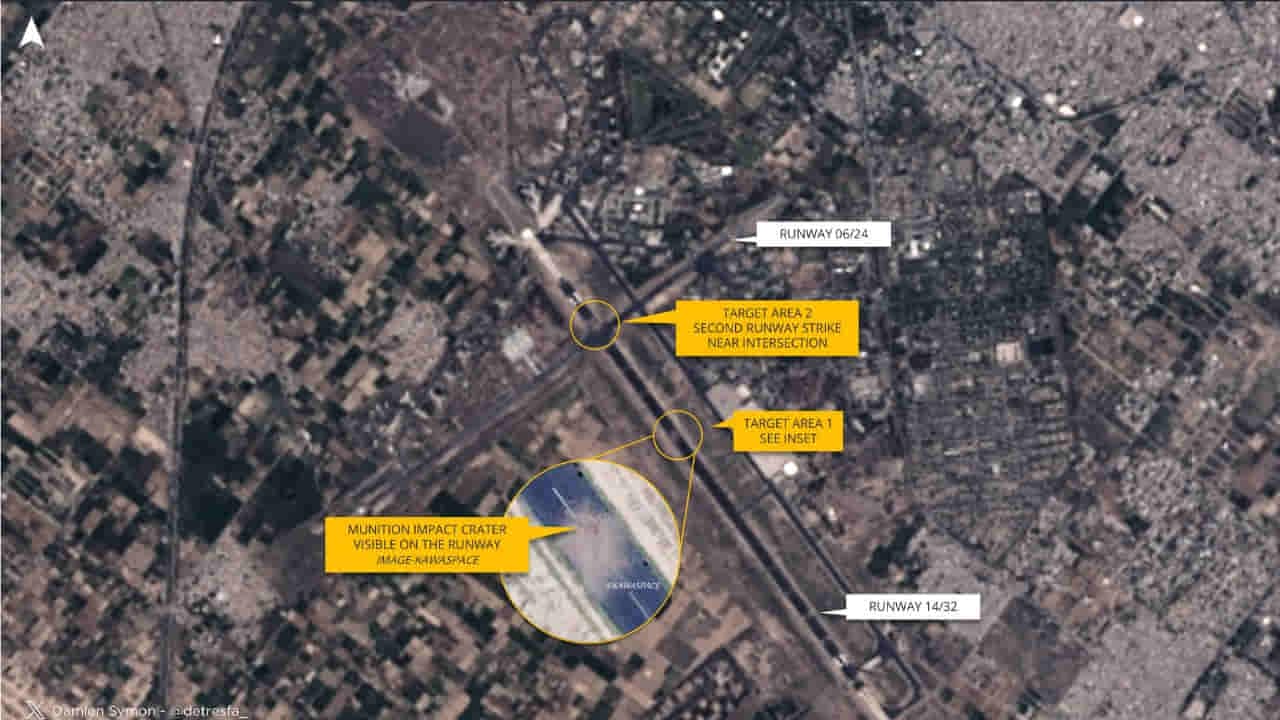
According to the defence sources, Pakistan has taken this step after the operation shift in 2025. in Indian attacks during that Sargodha Damaged to some air defense system and military structure of the area. On the runway of Sargodha Ayerbase in the Prison Strike from India. On the main runway of the airbase there was a large pit of about 15 feet radius, while the second pit was near the runway intersection. After these attacks the airbase had become useless for some time.

The attack also caused damage to some ground support equipment, transport vehicles and military structure. Pakistan had also confirmed the death of an airman in Sargodha and the injured of certain seals. After the attack, Pakistan had started the fast runway repair. And the repair work continued in parts even as of 2026.

Then Pakistan began deploying its leftover air defense resources in more secure and strategic locations. TPS-77 radar is also being deemed to have been imposed in the elevated terrain of Kirana Hills by removing the Sargodha Airbase under the same strategy.

Defence experts say that dealing with missiles and drones flying at low altitude has become a big challenge for any air force today. That’s why Pakistan is trying to strengthen its air defense network.

Grocery Hills has been sensitive even before

Kirana Hills The name has already been discussed several times. It is believed to be associated with the Atomic Program of Ilaka Pakistan. It has been reported a potential Nuclear Warhead Storage and Sub-Critical Testing Site. During the operation shift, Indian Air Force had hit the foot antennas area of Kirana Hills by Brahmaos missiles. After which Pakistan had tried to take care of the international community by telling him an attack on the Nuclear site, but India had refused this attack.

This is why Ilaka is considered strategically important for Pakistan for a long time. Now the modern TPS-77 radar has been imposed by its military importance and increased.

Pakistan’s Air Defense Network

Pakistan uses several levels of air defense systems to protect Sargodha Airbase. It includes long-distance to short-range missile systems.

According to reports, Pakistan has surface to air missile systems such as Chinese HQ-9 and HQ-16. Also the SPADA-2000 of Italy and the Crotal system of France are also part of its air defense system. Pakistan also uses manpads and anti-aircraft guns to protect short distances.

Ongoing conversations about the local production of Armenia in the School of Artillery, Is Pinaka MBRL?

India-Armenia Pinaka Deal
A three-member Armenian military delegation led by Col Aram Khachatryan, Combat Cross First Class, Deputy Chief of Artillery Department, visited the School of Artillery on 21-22 May 2026.

India-Armenia Pinaka Deal: India and Armenia are constantly growing in defence cooperation. A three-member delegation of the Army of Armenia recently reached the prestigious School of Artillery of Indian Army at Devalali, Maharashtra. This team was led by Armenia’s deputy Chief of Artillery Department Col Aram Khachaturian.

The Indian Army informed the officers of Armenia with modern artillery training systems, live firing exercises, and weapon maintenance procedures. During this time, the artillery sector was also discussed in enhancing cooperation between the two countries.

According to the officials of the Indian Army, the Foreign Delegation was told about all the procedures that the Indian Army maintains its arms and artillery system in a long operational state.

India-Armenia Pinaka Deal: Live Firing Exercise in School of Artillery

Devalali-based school of artillery is counted in the most important training institutions of the Indian Army. Here the artillery officers and seals are trained for modern artillery systems, fire control, surveillance and Battlefield Coordination.

Armenia The officers of state-of-the-art training facilities appeared here. They also appeared live firing exercise, demonstrating the Indian Army’s artillery potential.

The delegation was also reported how the Indian Army undertakes repairs, overhauls and technical investigations of weapons at different levels so that the system is constantly working in the event of war.

School of Artillery The Commandant Lt. Gen. NS Sarna also met the delegation. Meanwhile, the artillery cooperation between India and Armenia discussed further strengthening.

India-Armenia Pinaka Deal
A three-member Armenian military delegation led by Col Aram Khachatryan, Combat Cross First Class, Deputy Chief of Artillery Department, visited the School of Artillery on 21-22 May 2026.

Special Focus on Pinaca System

During this visit, the officials of Armenia were also shown the Indian Pinaca Multi Barrel Rocket Launcher System. Foreign authorities also saw the demo of the Fire Control/Servillas Equipment (Radar/Thermal System) of Pinaca Launcher and Artillery.

According to the sources, the visit was only formal, but also being linked to the Pinaca system given to Armenia by India.

Actually, Armenia is India’s first foreign customer who has purchased Pinaca Multi Barrel Rocket Launcher System. Nearly Rs 2,000 crore defence agreement between the two countries in the year 2022. This deal included four pinaca batteries, rockets, guided rockets and other military equipment.

Why is Pinaca rocket system special

Pinaca is India’s indigenous multi barrel rocket launcher system. It has been developed by DRDO and Indian Defence Industry. This system maintains the ability to stain a large amount of rocket in a short time.

It is also called "Indian Hemmers". It is considered to be the biggest USP "shoot and scoop" capacity. i. The launcher can change its place immediately after the rocket fire, making it easier to avoid the responsive attack of the enemy.

आर्मेनिया को पिनाका के अलग-अलग वेरिएंट दिए गए हैं, जिनमें स्टैंडर्ड, एक्सटेंडेड रेंज और गाइडेड वर्जन शामिल हैं। गाइडेड पिनाका रॉकेट लगभग 75 किलोमीटर तक सटीक हमला करने में सक्षम माना जाता है।

भारतीय रक्षा सूत्रों के मुताबिक इस साल जनवरी में भारत ने गाइडेड पिनाका रॉकेट्स का पहला बैच आर्मेनिया भेजा था। जिसे रक्षा मंत्री राजनाथ सिंह ने फ्लैगऑफ किया था। खास बात यह है कि गाइडेड पिनाका पाने वाला पहला विदेशी देश आर्मेनिया बना।

आर्मेनिया क्यों बढ़ा रहा भारत से रक्षा सहयोग

पिछले कुछ वर्षों में आर्मेनिया ने भारत के साथ रक्षा संबंध तेजी से मजबूत किए हैं। नागोर्नो-काराबाख संघर्ष के बाद आर्मेनिया अपनी सैन्य क्षमताओं को मजबूत करना चाहता है और रूस पर निर्भरता कम करने की कोशिश कर रहा है।

इसी वजह से उसने भारत से Pinaca, आर्टिलरी सिस्टम और दूसरे सैन्य उपकरण खरीदने शुरू किए।

रक्षा मामलों के जानकारों का कहना है कि आर्मेनिया भारतीय हथियारों को भरोसेमंद और लागत के हिसाब से प्रभावी मान रहा है। भारतीय सिस्टम की खासियत यह भी है कि उन्हें कठिन इलाकों और युद्ध जैसी परिस्थितियों में इस्तेमाल के हिसाब से डिजाइन किया गया है।

लोकल प्रोडक्शन पर भी चर्चा

वहीं, आर्मेनिया भारत के साथ मिलकर कुछ सैन्य उपकरणों का स्थानीय उत्पादन शुरू करना चाहता है।

सूत्रों के मुताबिक आर्मेनिया भारत के साथ मिलकर 155 एमएम आर्टिलरी गोले और पिनाका रॉकेट सिस्टम से जुड़े हथियारों का लोकल प्रोडक्शन शुरू करना चाहता है। इसके लिए दोनों देशों के बीच बातचीत चल रही है। हालांकि अभी यह साफ नहीं है कि यह चर्चा कितनी आगे बढ़ चुकी है और संभावित डील की लागत कितनी हो सकती है।

दरअसल आर्मेनिया भविष्य में किसी संघर्ष की स्थिति में सप्लाई चेन पर निर्भरता कम करना चाहता है। अगर युद्ध के दौरान दूसरे देशों से हथियारों की सप्लाई रुक जाए, तो स्थानीय स्तर पर उत्पादन उसके लिए मददगार साबित हो सकता है। इसी वजह से वह भारत के साथ टेक्नोलॉजी ट्रांसफर और लाइसेंस प्रोडक्शन जैसे विकल्पों पर विचार कर रहा है।

हालांकि अभी यह प्रक्रिया शुरुआती बातचीत के स्तर पर है। दोनों देशों के बीच टेक्नोलॉजी ट्रांसफर और जॉइंट मैन्युफैक्चरिंग जैसे मुद्दों पर चर्चा चल रही है।

800 air shows in 30 years of the Sunrayan team...Why is Gini in the world’s most dangerous Aromatic teams. Red-white-colored jet team

Suryakiran Aerobatic Team 30 Years

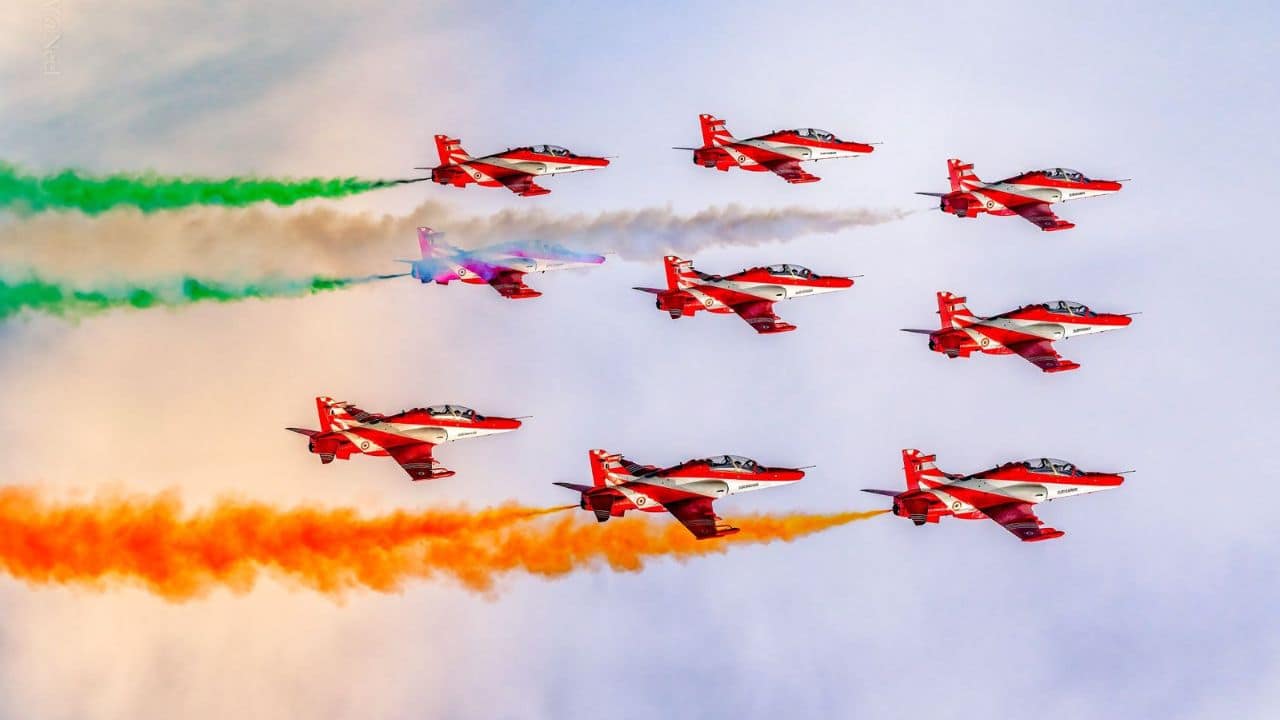
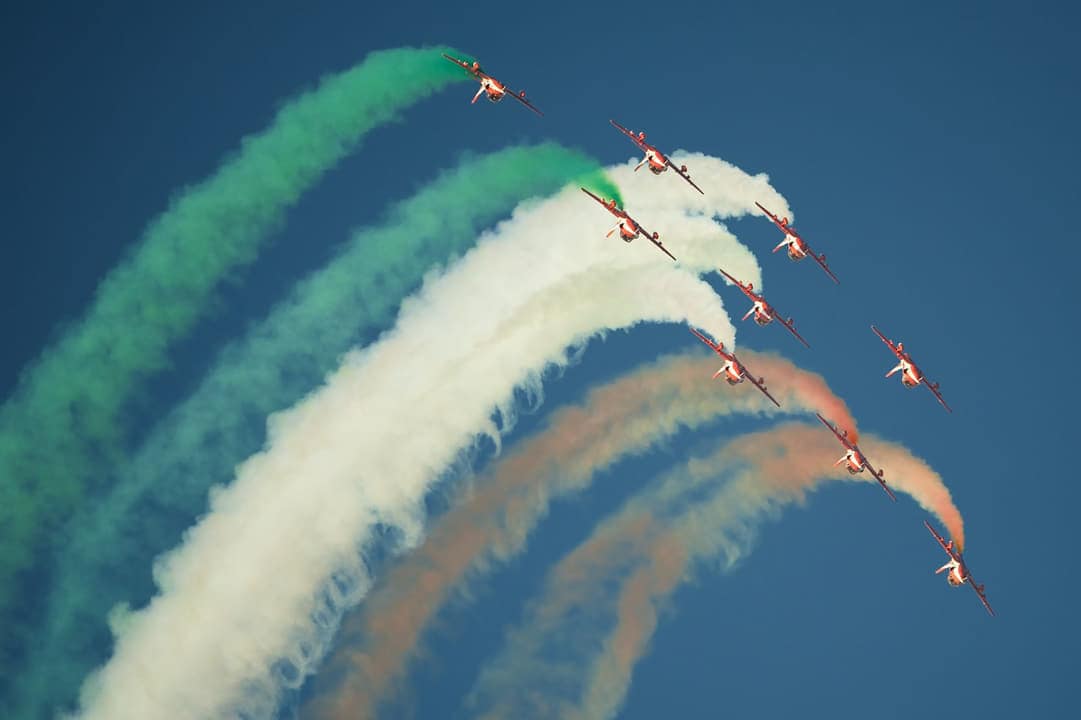
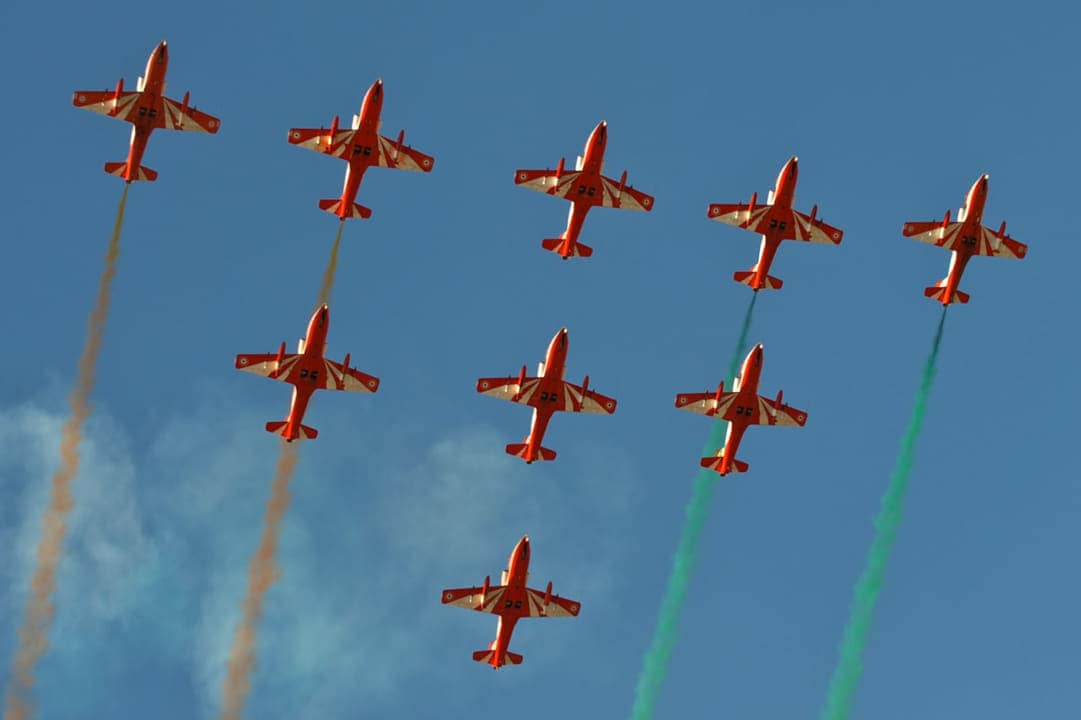
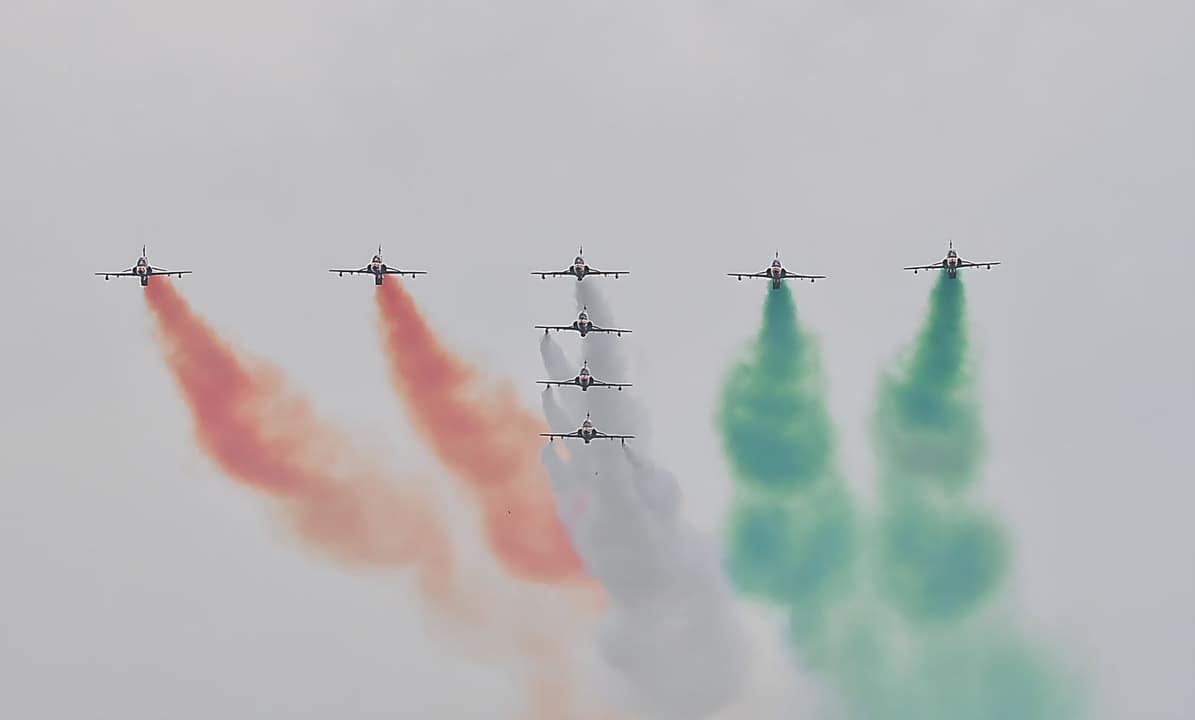
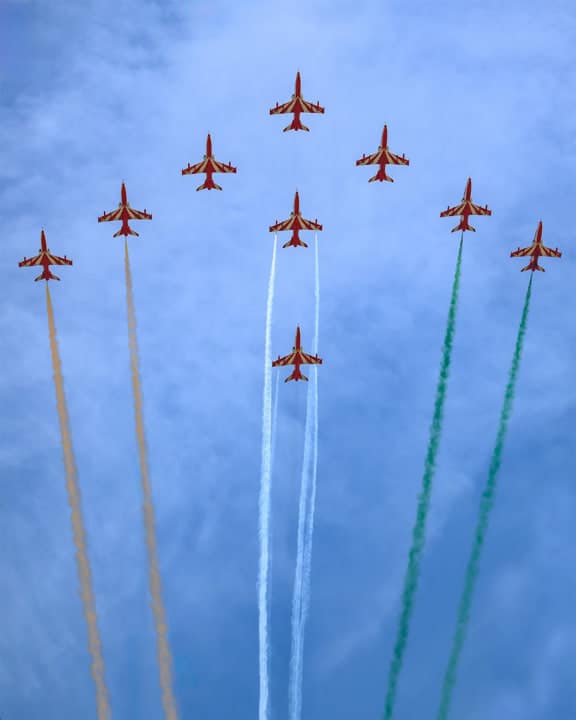
Suryakiran Aerobatic Team 30 Years: Indian Air Force’s famous Suniran Aerobatic team is going to complete its 30 years on May 26. This team started three decades ago today is guinea in the world’s leading arobinetic teams. The fighter jets of red and white color when flying together extremely close to the sky show Karthab, thousands of people swear to see them.

The Indian Air Force Sunrayan team also called the Ambassador of the Indian Air Force. The team does not only show air, but also shows the professional capacity, discipline and accuracy of the Indian Air Force in front of the world.

Suryakiran Aerobatic Team 30 Years: Beginning In 1996

Sunray The Aromatic team was established on 27th May 1996 at the Beir Air Force Station of Karnataka. The team at the beginning was blown Kiran MK-2 jet trainer aircraft built by Hindustan Aeronautics Limited i.e. HAL. The first wing commander was Kuldeep Malik, a member of the first Thunderbolts team.

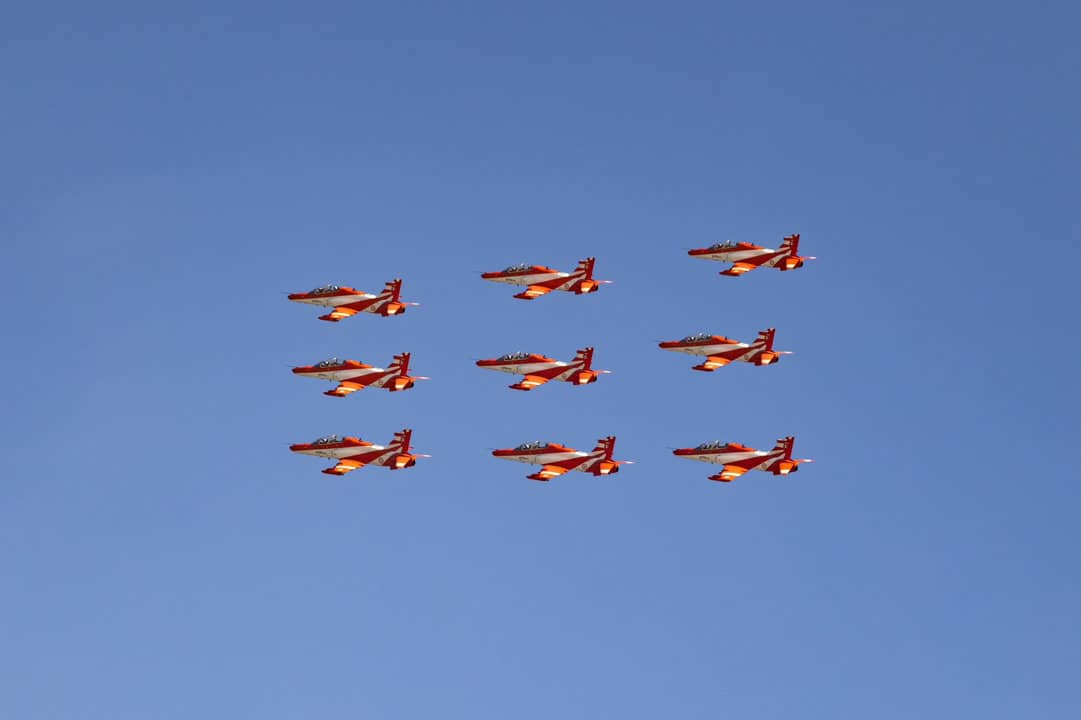
The team had its first public display in Coimbatore in September 15, 1996. Sunrayan team became increasingly popular after that air show. People first saw so close flying planes together. The team led by Wing Commander A.K. Murgai in 1998 converted into the formulation of 9 aircraft. While on 15th August 1998, the first public demonstration of 9 aircraft on the Independence Day on the Red Fort took place.

On October 8, 2004, the Sovereign team was awarded the Chief of the Air Staff Unit Station. It was the honour given to a unit for the first time in the Indian Air Force. From May 1, 2006, the Sunrayan team gave the status of separate squadron as No. 52. Earlier this number was working under 52 Squadron (Sharks), but now the whole team got the status of independent Squadron.

The Sunrayan team has over 800 air displays over the past 30 years. This team has been showcased in almost every big city in India. Also in countries like China, Sri Lanka, Myanmar, Thailand, Singapore, and UAE, the team represented the Indian Air Force.

2011 to 2015 suspended team

Year 2011 Sunraya Aromatic The team had a big blow. The team was temporarily grounded after the Aero India show in February 2011. Its biggest reason was the lack of HAL Kiran Make-II trainer planes. At that time the need for training of new pilots in the Indian Air Force was increasing rapidly, so the available ray aircraft were sent to the Training Units.

The situation became such that the Sunrayan team does not have enough aircraft to maintain the formulation of 9 aircraft. The team’s multiple pilots were then transferred to the second squadrons. There was no major public performance of the Sunraya between about four years i.e. 2011 to 2015.

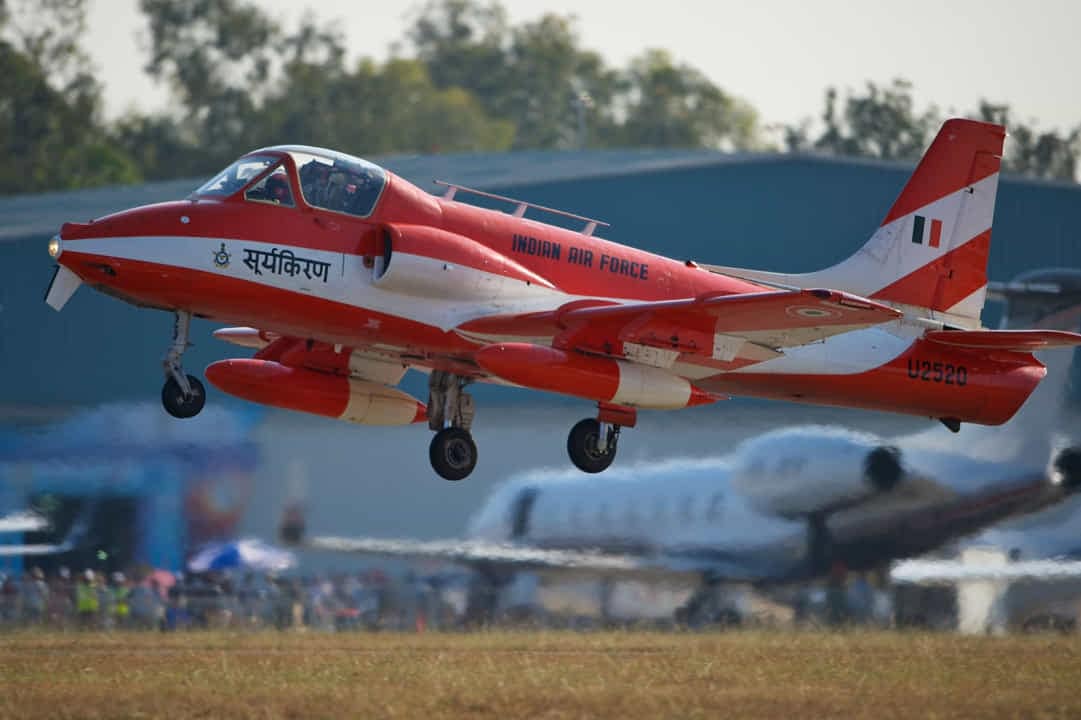
In February 2015, the Indian Air Force resumed the Sovereign Team. This time the team was given the modern Hawk MK-132 aircraft. At that time Wing Commander was the commanding officer of the Ajit Kulkarni team.

नई शुरुआत के बाद अक्टूबर 2015 में हिंडन एयरबेस पर एयर फोर्स डे समारोह में हॉक विमानों के साथ टीम ने पहला प्रदर्शन किया। शुरुआत में केवल चार विमान शामिल थे, लेकिन धीरे-धीरे यह संख्या बढ़ाकर फिर से नौ विमानों की फॉर्मेशन तक पहुंचाई गई।

किरण विमान से हॉक जेट तक का सफर

साल 2015 में सूर्यकिरण टीम ने एक बड़ा बदलाव किया। पुराने किरण एमके-2 विमानों की जगह टीम ने Hawk MK-132 एडवांस जेट ट्रेनर विमान शामिल किए।

यह विमान ज्यादा ताकतवर इंजन, आधुनिक एवियोनिक्स और बेहतर नियंत्रण क्षमता के साथ आते हैं। लाल और सफेद रंग वाले यही हॉक विमान अब सूर्यकिरण टीम की नई पहचान बन चुके हैं।

भारतीय वायु सेना के अधिकारियों के मुताबिक हॉक विमान जटिल एरोबेटिक मैन्यूवर्स के लिए ज्यादा बेहतर माने जाते हैं। इससे टीम के प्रदर्शन में और सुधार आया।

भारतीय वायु सेना में इस्तेमाल होने वाला बीएई सिस्टम्स हॉक एमके-132 एक एडवांस जेट ट्रेनर विमान है। इसे ब्रिटेन की कंपनी बीएई सिस्टम्स ने बनाया है, जबकि भारत में इसका निर्माण एचएएल करती है। यह विमान मुख्य रूप से नए फाइटर पायलटों को ट्रेनिंग देने के लिए इस्तेमाल किया जाता है, ताकि वे आगे चलकर सुखोई-30 एमकेआई, राफेल और तेजस जैसे आधुनिक लड़ाकू विमानों को आसानी से उड़ा सकें।

इस विमान में दो सीटें होती हैं। आगे की सीट पर ट्रेनिंग लेने वाला पायलट बैठता है और पीछे ट्रेनर बैठता है। हॉक एमके-132 पहली बार 2008 में भारतीय वायु सेना में शामिल हुआ था।

यह विमान लगभग 12.4 मीटर लंबा है और इसकी अधिकतम गति करीब 1,000 किलोमीटर प्रति घंटा तक पहुंच सकती है। जरूरत पड़ने पर यह डाइव के दौरान ध्वनि की गति के करीब भी उड़ सकता है। इसकी उड़ान क्षमता काफी मजबूत मानी जाती है और यह करीब 44 हजार फीट की ऊंचाई तक जा सकता है।

हॉक एमके-132 में रोल्स-रॉयस और टर्बोमेका का एडौर इंजन लगा है। यह इंजन विमान को तेज रफ्तार और बेहतर कंट्रोल देता है। इसमें आधुनिक डिजिटल इंजन कंट्रोल सिस्टम भी है, जिससे इंजन की परफॉर्मेंस बेहतर रहती है।

यह विमान सिर्फ ट्रेनिंग तक सीमित नहीं है। इसमें हल्के हथियार भी लगाए जा सकते हैं। इसके नीचे मिसाइल, रॉकेट और बम लगाने की क्षमता होती है। हालांकि सूर्यकिरण एरोबेटिक टीम में इस्तेमाल होने वाले हॉक विमानों में हथियार नहीं लगाए जाते। वहां इन विमानों का इस्तेमाल केवल एयर शो और एरोबेटिक प्रदर्शन के लिए होता है।

हॉक एमके-132 की सबसे बड़ी खासियत इसकी आधुनिक एवियोनिक्स प्रणाली है। इसमें ग्लास कॉकपिट, हेड-अप डिस्प्ले (HUD), मल्टी-फंक्शन डिस्प्ले और आधुनिक नेविगेशन सिस्टम लगे हैं। पायलट बिना नीचे देखे एचयूडी पर जरूरी जानकारी देख सकता है। इससे फॉर्मेशन फ्लाइट और एयर कॉम्बैट ट्रेनिंग आसान हो जाती है।

इस विमान में HOTAS सिस्टम भी दिया गया है। इसका मतलब है कि पायलट थ्रॉटल और कंट्रोल स्टिक से हाथ हटाए बिना कई जरूरी सिस्टम चला सकता है। इससे तेज प्रतिक्रिया और बेहतर कंट्रोल मिलता है।

नौ विमानों की फॉर्मेशन बनाती है खास

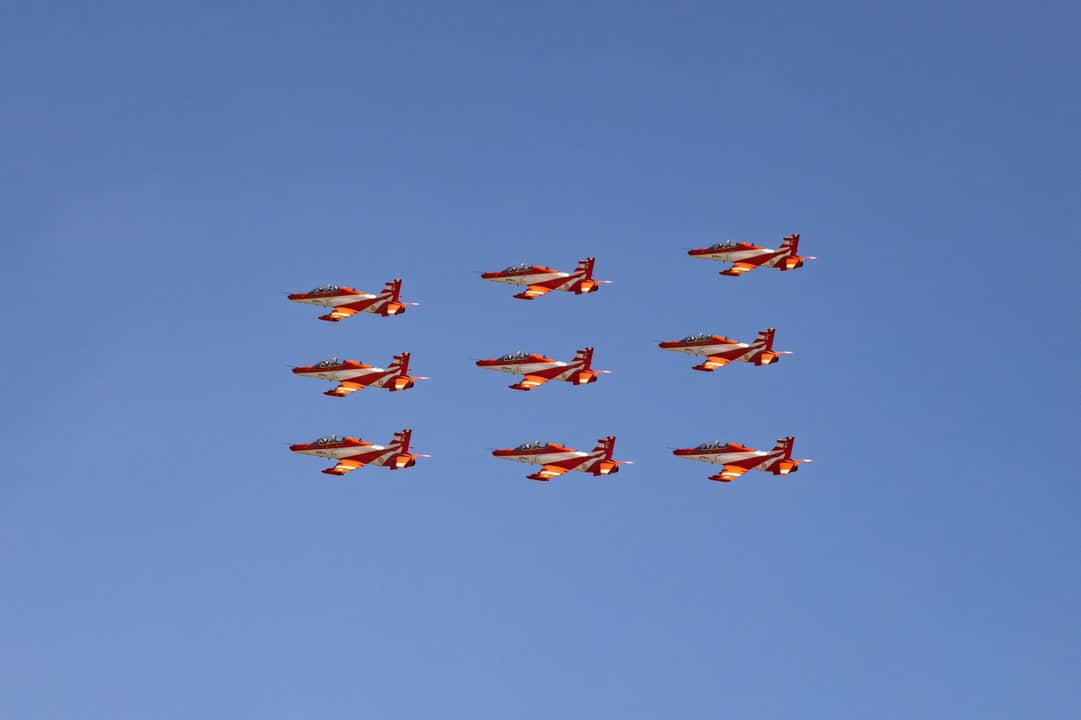
सूर्यकिरण टीम की सबसे बड़ी पहचान इसकी नौ विमानों वाली फॉर्मेशन है। दुनिया में बहुत कम एरोबेटिक टीमें इतनी बड़ी फॉर्मेशन में प्रदर्शन करती हैं।

टीम के विमान कुछ मीटर की दूरी पर उड़ते हैं। इतनी कम दूरी पर तेज गति से उड़ान भरना बेहद कठिन माना जाता है। पायलटों को एक-दूसरे की गति, दिशा और ऊंचाई का बिल्कुल सटीक अंदाजा रखना पड़ता है।

एयर शो के दौरान टीम डायमंड फॉर्मेशन, एरो फॉर्मेशन, लूप, रोल, स्प्लिट और क्रॉसओवर जैसे जटिल करतब दिखाती है। कई बार विमान 600 से 800 किलोमीटर प्रति घंटे की रफ्तार से बेहद कम ऊंचाई पर उड़ते हैं। कई बार उनके बीच की दूरी सिर्फ 5 से 10 मीटर होती है। इतनी नजदीकी में उड़ान भरना बेहद मुश्किल माना जाता है।

रक्षा विशेषज्ञों के मुताबिक इतने करीब उड़ान के दौरान एक छोटी गलती भी बड़ा हादसा बन सकती है। इसी वजह से सूर्यकिरण टीम (SKAT) को दुनिया की सबसे अनुशासित एरोबेटिक टीमों में गिना जाता है।

सिग्नेचर डिस्प्ले है DNA मैन्यूवर

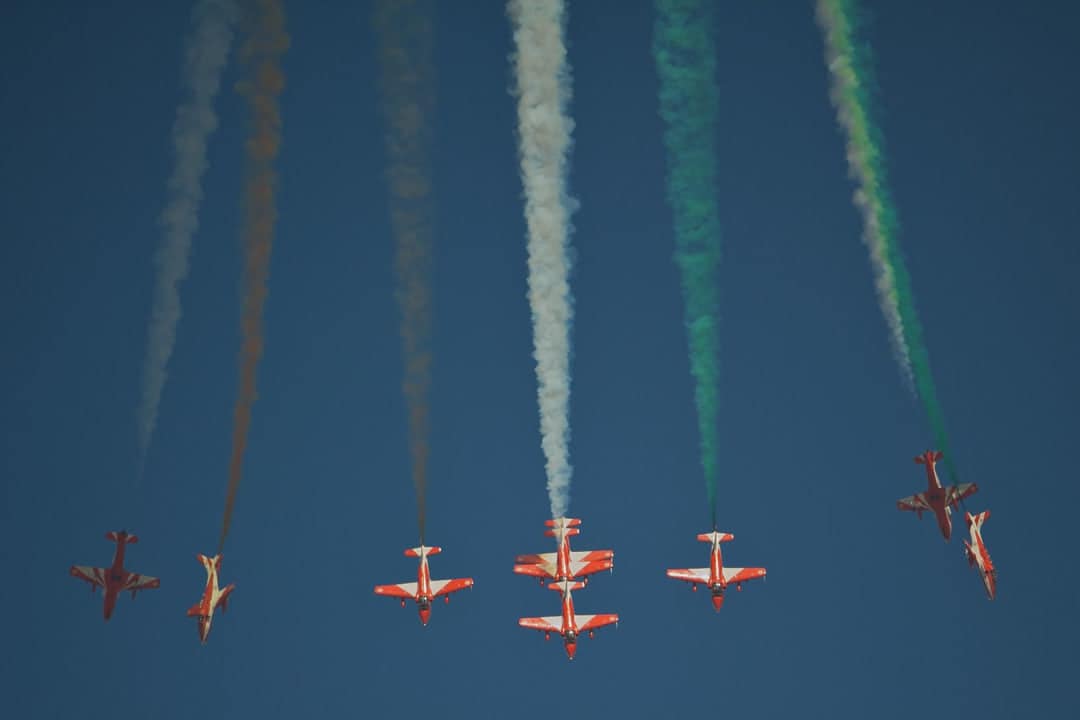
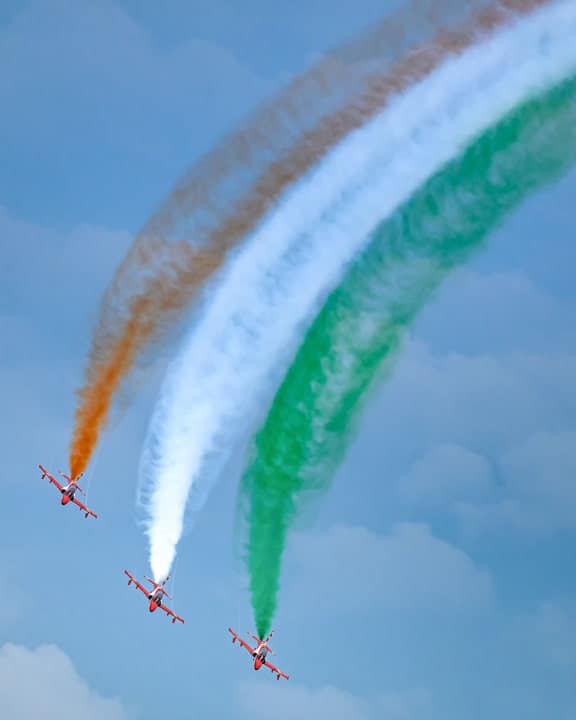
सूर्यकिरण टीम का सबसे मशहूर करतब DNA मैन्यूवर माना जाता है। इसे टीम का सिग्नेचर डिस्प्ले भी कहा जाता है। इस करतब में कुछ विमान सीधे उड़ते रहते हैं, जबकि बाकी विमान उनके चारों ओर स्पाइरल यानी कुंडली जैसी उड़ान भरते हैं। इससे आसमान में DNA की डबल हेलिक्स जैसी आकृति बनती है। जब विमान तिरंगे रंगों का धुआं छोड़ते हैं, तो यह दृश्य और भी शानदार दिखाई देता है।

इस मैन्यूवर में नंबर 1, 2 और 3 विमान सीधी लाइन में उड़ते हैं और केंद्रीय धुरी का काम करते हैं। वहीं नंबर 4 और 7 विमान उनके चारों ओर गोल-गोल घूमते हैं। दोनों पायलटों को बिल्कुल एक जैसी गति, दूरी और टाइमिंग बनाए रखनी पड़ती है। छोटी सी गलती भी पूरे फॉर्मेशन को प्रभावित कर सकती है। यही वजह है कि इस करतब के लिए महीनों तक अभ्यास किया जाता है।

सूर्यकिरण टीम का एक और बेहद लोकप्रिय करतब “बॉम्ब बर्स्ट” है। इसमें सभी विमान पहले एक साथ ऊपर की ओर उड़ते हैं और फिर अचानक अलग-अलग दिशाओं में फैल जाते हैं। यह दृश्य ऐसा लगता है जैसे आसमान में कोई विस्फोट हुआ हो। एयर शो देखने वाले लोग इस करतब पर सबसे ज्यादा तालियां बजाते हैं।

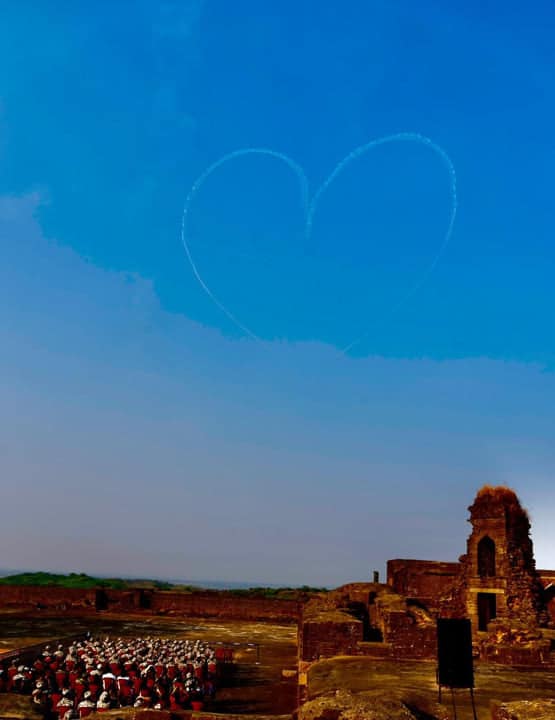
टीम “हार्ट इन द स्काई” यानी दिल की आकृति भी बनाती है। इसमें विमान आसमान में विशाल हार्ट शेप तैयार करते हैं। कई राष्ट्रीय कार्यक्रमों और खास मौकों पर यह प्रदर्शन किया जाता है। तिरंगे धुएं के साथ बना यह दिल दर्शकों को काफी आकर्षित करता है।

“डायमंड फॉर्मेशन” भी सूर्यकिरण की पहचान मानी जाती है। इसमें नौ विमान हीरे जैसी आकृति में उड़ते हैं। यह फॉर्मेशन टीम की सटीकता और अनुशासन दिखाती है। कई बार इसी फॉर्मेशन में लूप और रोल जैसे कठिन करतब भी किए जाते हैं।

“एरोहेड फॉर्मेशन” में विमान तीर की नोक जैसा आकार बनाते हैं। यह तेज गति और दिशा परिवर्तन का प्रदर्शन माना जाता है। वहीं “विक” या “एरो फॉर्मेशन” क्लासिक लड़ाकू विमान फॉर्मेशन जैसा दिखाई देता है।

सूर्यकिरण टीम “लूप” मैन्यूवर भी करती है। इसमें विमान पूरा 360 डिग्री का चक्कर लगाते हुए ऊपर की ओर घूमते हैं। कई बार पूरा फॉर्मेशन एक साथ लूप बनाता है, जो बेहद कठिन माना जाता है।

“बैरल रोल” में विमान अपनी लंबाई वाली धुरी पर घूमते हुए आगे बढ़ते हैं। जब कई विमान एक साथ यह करतब करते हैं, तो पूरा दृश्य बेहद रोमांचक दिखाई देता है।

टीम “इनवर्टेड फ्लाइंग” यानी उल्टी उड़ान भी दिखाती है। इसमें कुछ विमान उल्टे होकर उड़ते हैं। यह करतब पायलट की क्षमता और विमान के नियंत्रण को दर्शाता है।

पुराने किरण एमके-II विमानों के दौर में “टैंगो रोल” और “गोबलेट रोल” जैसे करतब भी काफी मशहूर थे। टैंगो रोल को भारतीय वायु सेना के सबसे कठिन एरोबेटिक करतबों में गिना जाता था।

इसके अलावा टीम “क्रॉसओवर”, “ट्रिपल मिरर”, “बॉक्स फॉर्मेशन”, “वाई फॉर्मेशन” और “हिडन स्प्लिट” जैसे कई जटिल मैन्यूवर्स भी दिखाती है। “हिडन स्प्लिट” में विमान अचानक अलग-अलग दिशाओं में बंट जाते हैं और फिर दोबारा एक साथ जुड़ जाते हैं।

विशेष G-सूट पहनते हैं पायलट

सूर्यकिरण एरोबेटिक टीम के पायलट जब आसमान में डीएनए, बॉम्ब बर्स्ट, हार्ट शेप, लूप या बैरल रोल जैसे कठिन करतब दिखाते हैं, तब उनके शरीर पर बहुत ज्यादा दबाव पड़ता है। तेज गति और अचानक मोड़ लेने की वजह से पायलटों को +6जी तक का फोर्स झेलना पड़ता है। कई बार नेगेटिव -1.5जी फोर्स भी लगता है, जिससे शरीर और दिमाग पर असर पड़ सकता है।

जी-फोर्स का मतलब होता है गुरुत्वाकर्षण से कई गुना ज्यादा दबाव। जब विमान बहुत तेज मोड़ लेता है या तेजी से ऊपर उठता है, तो शरीर का खून नीचे की तरफ खिंचने लगता है। इससे दिमाग तक खून कम पहुंचता है। ऐसी स्थिति में पायलट की आंखों के सामने धुंधलापन आ सकता है, जिसे “ग्रे-आउट” कहा जाता है। अगर दबाव और बढ़ जाए तो कुछ समय के लिए दिखाई देना बंद हो सकता है, जिसे “ब्लैक-आउट” कहते हैं। सबसे खतरनाक स्थिति तब होती है जब पायलट बेहोश हो जाए। इसे जी-लॉक यानी “G-Induced Loss of Consciousness” कहा जाता है।

सूर्यकिरण जैसी टीम में यह खतरा और ज्यादा गंभीर होता है, क्योंकि विमान एक-दूसरे से सिर्फ कुछ मीटर की दूरी पर उड़ते हैं। ऐसे में अगर एक पायलट भी नियंत्रण खो दे, तो पूरा फॉर्मेशन खतरे में पड़ सकता है।

इसी वजह से सूर्यकिरण टीम के पायलट विशेष “एंटी-G सूट” पहनते हैं। इसे आम भाषा में G-सूट कहा जाता है। यह सूट पायलट के शरीर को सुरक्षित रखने में मदद करता है।

G-सूट एक खास तरह का टाइट फ्लाइट सूट होता है। इसमें पेट, जांघों और पैरों के आसपास हवा भरने वाले हिस्से लगे होते हैं। जब विमान पर G-फोर्स बढ़ता है, तो विमान का सिस्टम अपने आप सूट में हवा भर देता है। इससे सूट शरीर को कसकर पकड़ता है और खून को नीचे जाने से रोकने में मदद करता है। इससे दिमाग तक खून की सप्लाई बनी रहती है और पायलट लंबे समय तक होश में रह सकता है।

हॉक एमके-132 विमान में यह सिस्टम विमान के एवियोनिक्स और सेंसर से जुड़ा होता है। जैसे ही विमान पर ज्यादा G-फोर्स आता है, सूट तुरंत प्रतिक्रिया देता है।

सिर्फ G-सूट ही नहीं, पायलट एक खास सांस लेने की तकनीक भी इस्तेमाल करते हैं। इसे “एंटी-G स्ट्रेनिंग मैन्यूवर” (AGSM) कहा जाता है। इसमें पायलट खास तरीके से सांस रोकते हैं और पेट व पैरों की मांसपेशियों को कसते हैं। इससे शरीर का ब्लड प्रेशर बना रहता है और दिमाग तक खून पहुंचता रहता है।

हर एयर शो से पहले लंबी ब्रीफिंग और प्रैक्टिस की जाती है। उड़ान के बाद वीडियो रिकॉर्डिंग देखकर हर छोटी गलती का विश्लेषण किया जाता है।

सूर्यकिरण टीम के विमानों में स्मोक सिस्टम लगाया गया है, जिससे वे केसरिया, सफेद और हरे रंग का धुआं छोड़ते हैं। यही तिरंगा धुआं एयर शो को और आकर्षक बनाता है।

कैसे चुने जाते हैं सूर्यकिरण के पायलट

सूर्यकिरण टीम में शामिल होना किसी भी फाइटर पायलट के लिए बड़ी उपलब्धि माना जाता है। भारतीय वायु सेना केवल चुनिंदा और अनुभवी पायलटों को ही इस टीम के लिए चुनती है।

चयन के बाद पायलटों को कई महीनों तक कड़ी ट्रेनिंग से गुजरना पड़ता है। इसमें फॉर्मेशन फ्लाइंग, सिमुलेटर ट्रेनिंग, इमरजेंसी हैंडलिंग और मानसिक मजबूती पर खास ध्यान दिया जाता है। इसके लिए सेंट्रीफ्यूज मशीन का इस्तेमाल किया जाता है। यह एक बड़ी घूमने वाली मशीन होती है, जिसमें पायलटों को 7 से 9G तक का दबाव झेलने का अभ्यास कराया जाता है।

पायलटों की फिटनेस पर भी खास ध्यान दिया जाता है। गर्दन की ताकत बढ़ाने वाली एक्सरसाइज, कार्डियो ट्रेनिंग और कोर स्ट्रेंथ वर्कआउट रोजाना का हिस्सा होते हैं। तेज मोड़ों के दौरान गर्दन और शरीर पर काफी दबाव पड़ता है, इसलिए शारीरिक फिटनेस बहुत जरूरी मानी जाती है।

सूर्यकिरण टीम की ट्रेनिंग कई चरणों में होती है। पहले ग्राउंड क्लास और सिमुलेटर ट्रेनिंग कराई जाती है। इसके बाद पायलट ढीली फॉर्मेशन में उड़ान भरते हैं और धीरे-धीरे बेहद करीबी फॉर्मेशन तक पहुंचते हैं। हर उड़ान के बाद पूरी वीडियो रिकॉर्डिंग देखी जाती है और छोटी से छोटी गलती पर चर्चा होती है।

टीम में भरोसा सबसे महत्वपूर्ण माना जाता है। हर पायलट को अपने साथी की क्षमता पर पूरा विश्वास रखना पड़ता है। उड़ान के दौरान लगातार रेडियो कम्युनिकेशन चलता रहता है। “स्मोक ऑन”, “इन पोजीशन” और “क्लियर” जैसे कॉल लगातार दिए जाते हैं।

पूरे प्रदर्शन का नियंत्रण नंबर-1 पायलट यानी टीम लीडर के हाथ में होता है। बाकी सभी विमान उसी के निर्देशों के अनुसार उड़ते हैं।

हर एयर शो से पहले टीम घंटों तक ब्रीफिंग करती है। पायलट हर मैन्यूवर का अभ्यास करते हैं। प्रदर्शन के बाद वीडियो रिकॉर्डिंग देखकर गलतियों और सुधार पर चर्चा की जाती है।

टीम के एक पूर्व अधिकारी के मुताबिक सूर्यकिरण में केवल अच्छा पायलट होना काफी नहीं है। यहां टीमवर्क और एक-दूसरे पर भरोसा सबसे महत्वपूर्ण होता है।

बीदर एयरबेस पर होगा बड़ा समारोह

30वीं वर्षगांठ के मौके पर बीदर एयर फोर्स स्टेशन में विशेष कार्यक्रम आयोजित किया जाएगा। इस दौरान सूर्यकिरण टीम विशेष एयर डिस्प्ले करेगी।

समारोह में वर्तमान और पूर्व पायलटों के साथ टेक्नीशियन, इंजीनियर और सपोर्ट स्टाफ भी शामिल होंगे। वायु सेना के अधिकारियों के मुताबिक यह कार्यक्रम उन सभी लोगों को सम्मान देने का अवसर होगा, जिन्होंने तीन दशकों में इस टीम को दुनिया की प्रमुख एरोबेटिक टीमों में शामिल करने में योगदान दिया।

दुनिया की बड़ी टीमों में गिनी जाती है सूर्यकिरण

सूर्यकिरण टीम की तुलना दुनिया की कई प्रसिद्ध एरोबेटिक टीमों से की जाती है। ब्रिटेन की रेड एरोज, अमेरिका की थंडरबर्ड्स और इटली की फ्रेचे ट्रिकोलोरी जैसी टीमें अंतरराष्ट्रीय स्तर पर काफी प्रसिद्ध हैं।

भारतीय वायु सेना के अधिकारी मानते हैं कि सूर्यकिरण टीम ने सीमित संसाधनों के बावजूद अपनी अलग पहचान बनाई है। टीम के विमानों का मेंटेनेंस और सपोर्ट भी भारत में ही किया जाता है।

When CDS is ‘Karnal’, its unit played with Gorkha Seals.

CDS Anil Chauhan Gorkha Rifles
CDS General Anil Chauhan

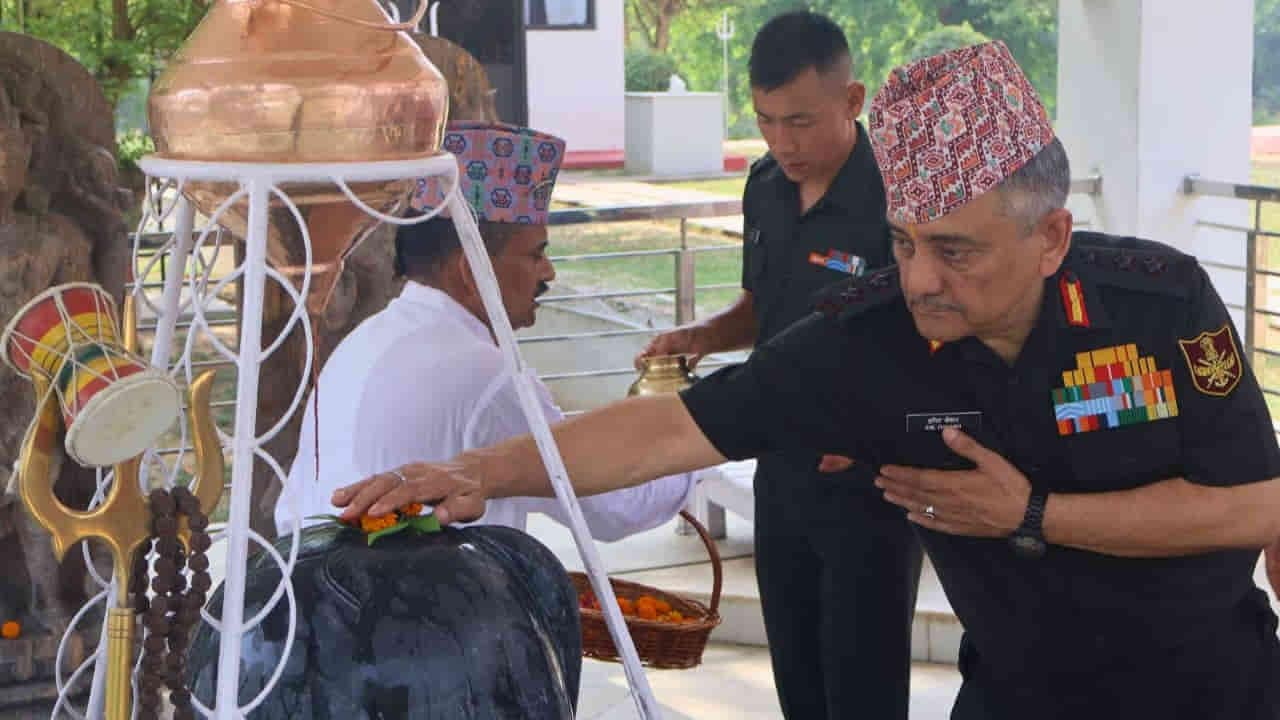
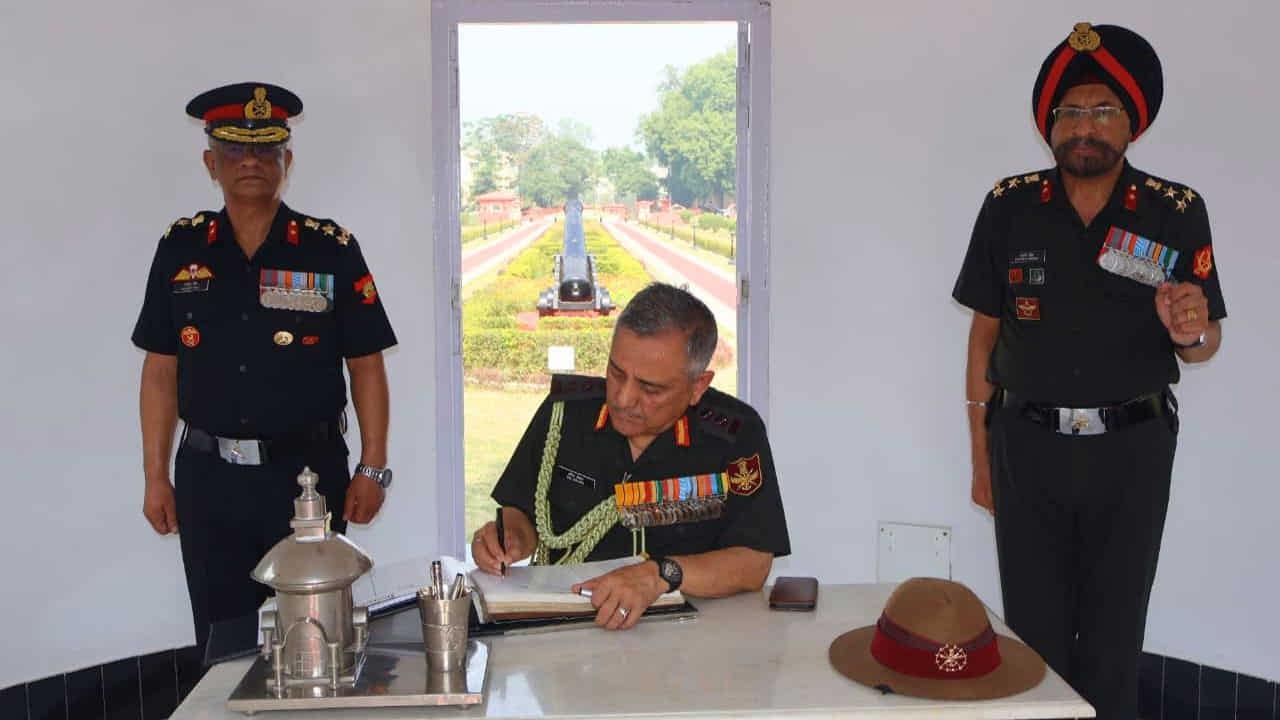
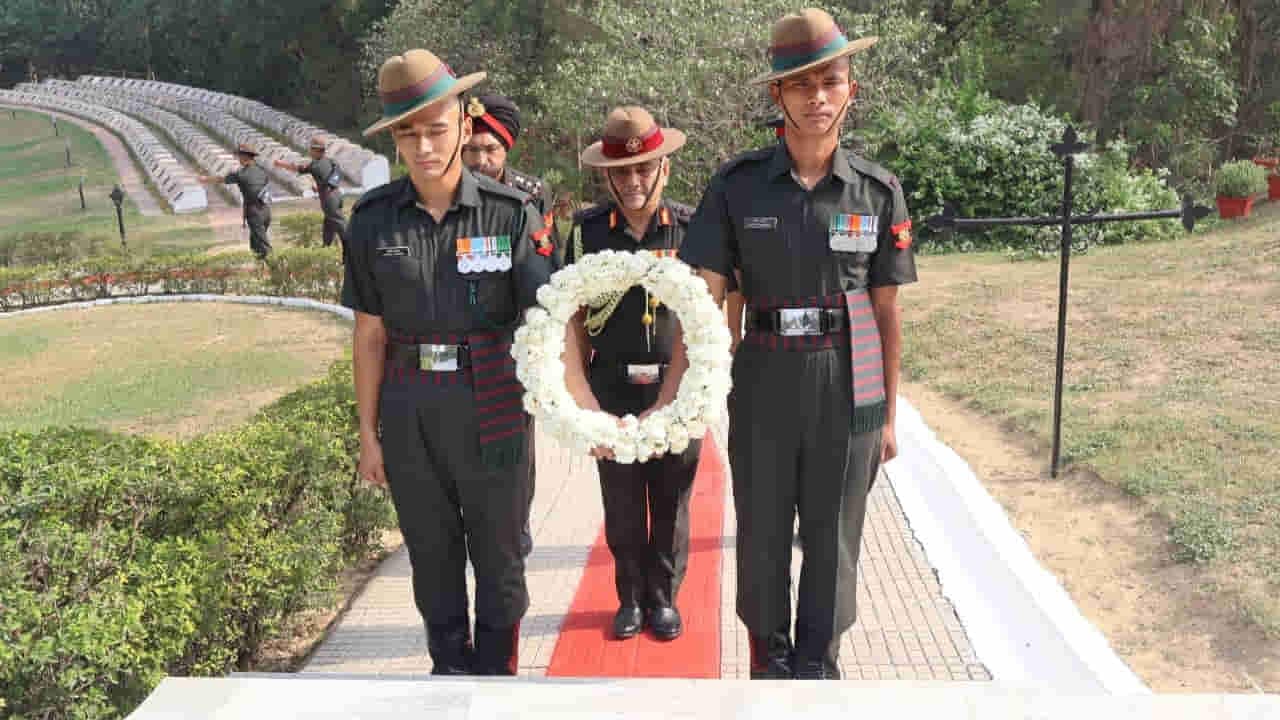
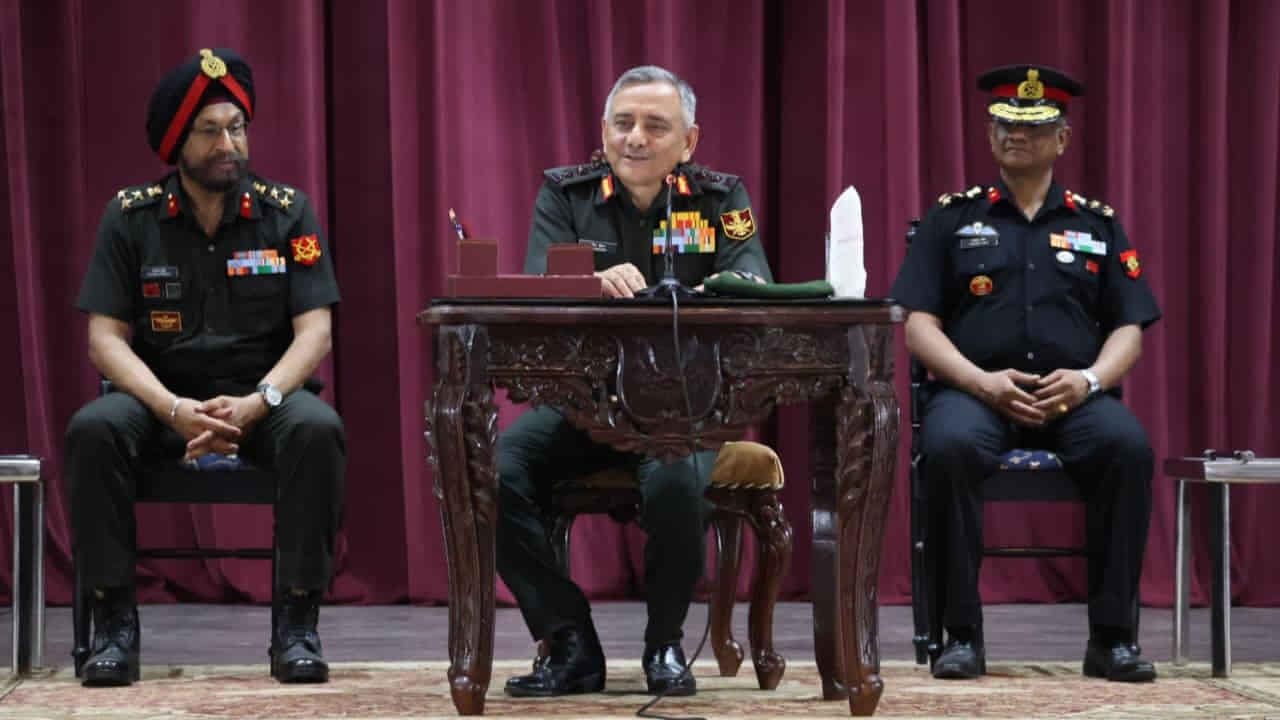
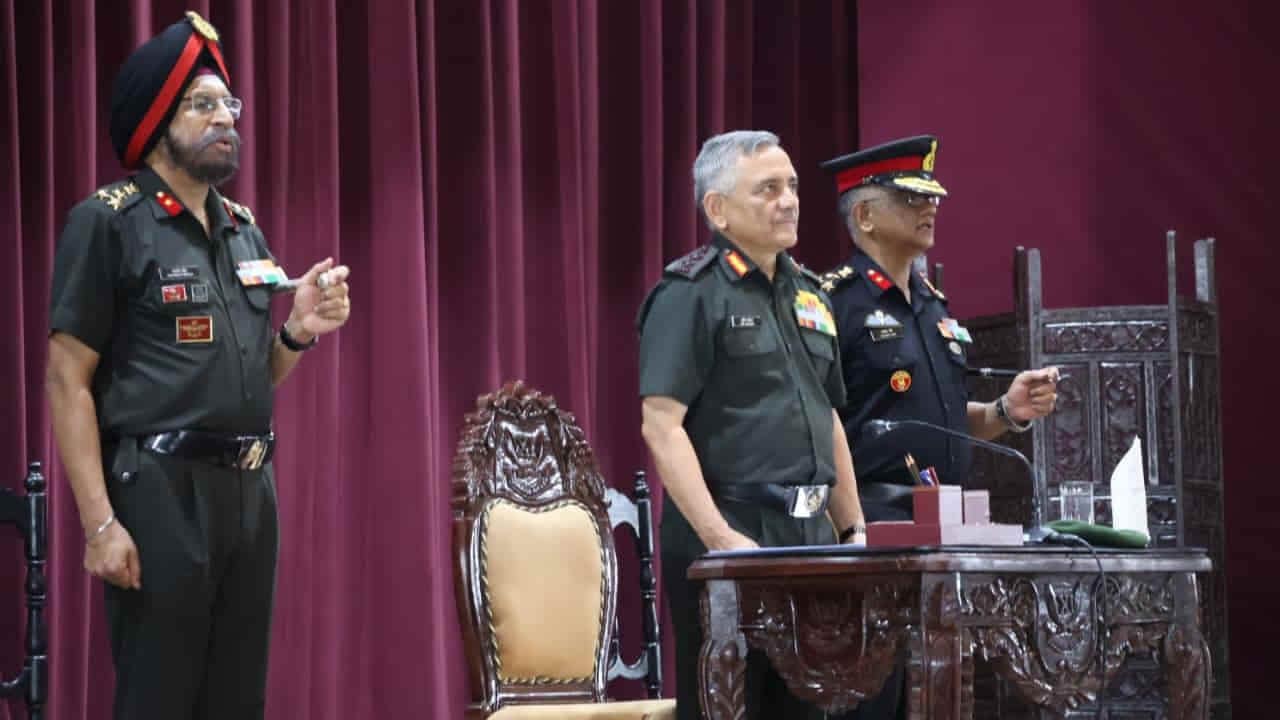
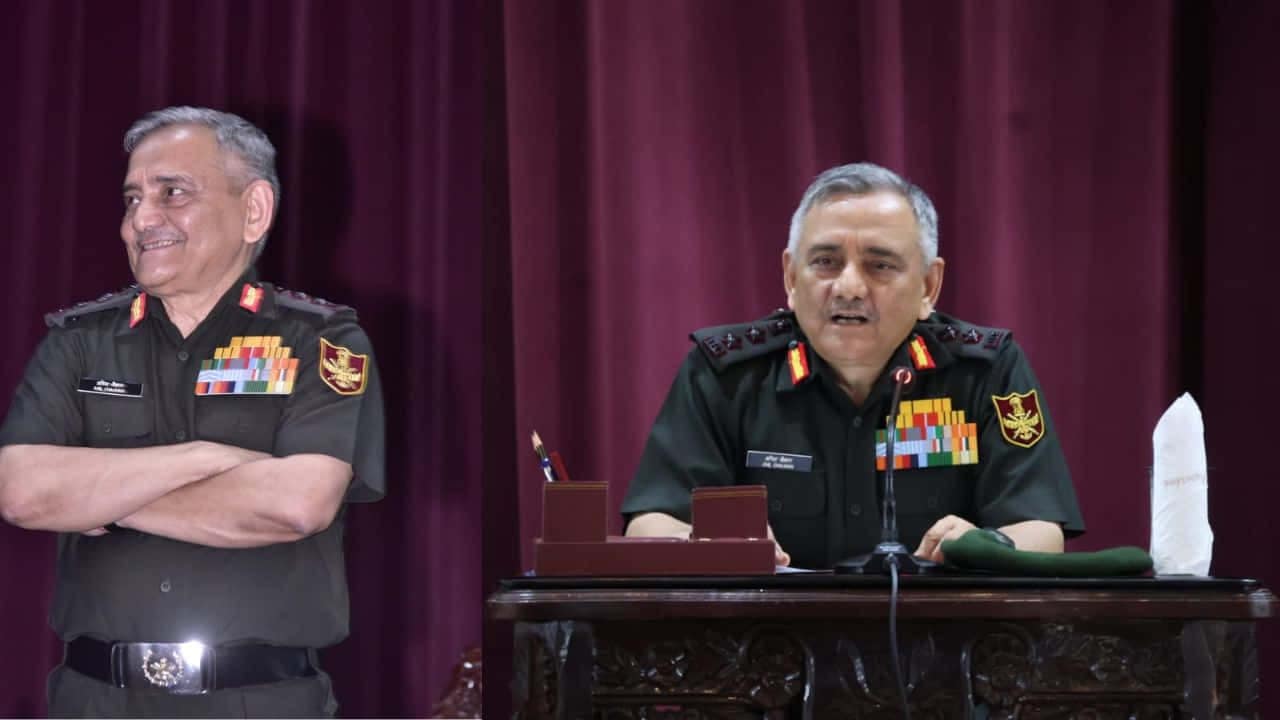
CDS Anil Chauhan Gorkha Rifles: Chief of Defence Staff i.e. CDS General Anil Chauhan recently arrived at Lucknow-based 11 Gorkha Rifles Regimental Centre. In spite of being the country’s most senior military officer, General Anil Chauhan had worn the rank of Col between its unit insignia. Many people began to be surprised, but the regimental tradition of the Indian Army is of great importance.

General Anil Chauhan had arrived at his footant unit on a tour of 6/11 Gorakh Rifles and Regimental Centre. Soldiers and former troops welcomed their warmth. It was not just a formal visit, but the moment as it returned to its own regimental family.

CDS Anil Chauhan Gorkha Rifles: Why Rank of Wearable Colonel

General Anil Chauhan The Indian Army has four-star ranked officers and is positioned as CDS. In spite of this, he weared the rank of Karnal, as he was appointed an Honorary Col of the regiment of 11 Gorakh Rifles and Sikkim Scouts.

Indian Army Col of the regiment The post is considered highly respected. This officer is considered to be the patron of the traditions of regiment, history, spirit of troops and the well-being of the former soldiers. When such an officer joins his regiment’s programs or unit visit, he wears the rank of the same regimental post.

The forces say that this tradition is coming from the time of the British Indian Army. Its motive is to reduce distance between senior officers and soldiers. The soldiers realize that their largest officers are also part of the same regimental family.

This moment was special for soldiers

11 The visit was extremely emotional for the young men of Gorakh Rifles. A former soldier said that General Chauhan for them is not only the CDs of the country, but the old companions of their unit.

According to the officers of the Army when a senior officer comes to the unit by wearing the rank of the colonel while performing the regimental tradition, the youngsters feel more comfortable than that. They can openly interact and share their experiences.

The regimental system is considered to be extremely important in the Indian Army. Different regiments in the army have their own identity, history and traditions. The soldiers consider themselves not just a part of the army, but a member of their regimental family.

11 Old Relationship from Gorakh Rifles

The complete military career of General Anil Chauhan is associated with 11 Gorakh Rifles. He was born in the Puldi Garhwal area of Uttarakhand. He had withdrawn from Indian Military Academy Dehradun in 1981 and commissioned at 6/11 Gorakh Rifles.

He then took several important responsibilities in the army. He took part in several operations in J&K, LOC, siachin and north-east. They have long experience in counter-insurance and high-altitude operations.

General Chauhan worked in many military campaigns, including Operation Megdoot, Operation Protector. In April 2026 he handled the command of the Western Command. Later they were appointed Chief of Defence Staff of the country.

11 History of the brave of Gorakh Rifles

11 Gorkha Rifles is Gini in the most respected Infantry regiments of the Indian Army. It was established on January 1, 1948. This is considered as the first Gorakh regiment made in independent India.

The soldiers of this regiment mainly come from Gorakh communities in Nepal and Indian Himalayan regions. The bravery of Gorkha soldiers is considered famous all over the world.

11 Gorkha Rifles has participated in the 1948 J-K operation, 1965 and 1971 war, Kargil conflict and several counter-insurance campaigns.

1/11 Gorakh Rifles during the Cargill War had received the honor of "Brewest of the Brave". Captain Manoj Kumar Pandey of the same regiment was awarded the ultimate heroic cycle.

Regiment has also received several Ashok Chakra, Mahavir Chakra and other gallantry awards. Today it is located at Regimental Centre Lucknow, where the youth is recruited and trained.

Why Regimental Tradition Is Considered

The regimental system in the Indian army is considered not only tradition, but part of the psychological strength of the troops. According to the historians of the Army, the soldier fights most of its units and peers during the war.

This is why the regimental pride in the army is given great importance. Senior officers are also stronger when they are connected with their roots.

Sources say that today the Indian army is increasingly moving towards modern techniques and the joint command system, but despite that the regimental traditions are still as strong today.

8th Gorakh Rifles of the Regiment of the Field Marshal Sam Maneksho

Field Marshal Sam Maneksho The name of the Indian Army is taken in the greatest military officers. Although they know by connecting them to the most 8th Gorakh Rifles, at the very beginning they received a commission in the 4th Battalion of the 12h Frontier Force regiment in 1934. In the same unit he appeared bravery during the Second World War and was awarded the Military Cross.

His original regiment went to Pakistan after the India-Pakistan division in 1947. After this, Sam Maneksho was transferred to the 8th Gorakh Rifles of the Indian Army. That’s why they have a deeper relationship with Gorakh soldiers.

He served with the 8th Gorkha Rifles for a long time and later he was also "Karnal of the Regiment" of this regiment. Gorkha soldiers highly respected them and called "Sam Bahadur" in love.

A statement said about the Gorakh troops of Sam Maneksho is also very famous today. He said:

If a man says he is not afraid of dying, he is either lying or is a Gorkha. ""

That is if one says that he does not feel afraid of death, either he is lying or then he is a gorkha.

Even today, the 8th Gorakh Rifles, also known as "Shini et", considers Sam Manekasho as its greatest identity. His name in the Indian Army is considered as a symbol of Gorakh tradition, bravery and leadership.

Different Identification of Gorakh Soldiers

Gorkha soldiers have been associated with their bravery, discipline and war skills. The war of "Jai Mahakali, Io Gorkhali" is known all over the world.

Gorkha Units have proved their potential for several times, from snowy areas like siachin to dense forests. Gorakh regiments are counted in the most trusted and fighter units in the Indian Army.

जनरल अनिल चौहान का अपनी यूनिट में कर्नल की रैंक पहनकर पहुंचना इसी गहरी रेजिमेंटल संस्कृति का हिस्सा है। सैनिकों के बीच यह संदेश गया कि चाहे कोई अधिकारी कितना भी बड़ा पद हासिल कर ले, उसकी पहचान अपनी यूनिट और अपने सैनिकों से जुड़ी रहती है।

DRDO should be fatal turbojet engine, weighing less than 25kg, gives up to 180kg-force thrust

DRDO Compact Turbojet Engine EoI
Image Gallery

DRDO Compact Turbojet Engine EoI: DRDO has released an extremely important expansion of interest (EOI) for India’s defence and aerospace sector companies. Hyderabad-based Research Centre Building (RCI) has released EOI for a compact turbojet engine system with 130 to 180 kilograms-force thrust. The particular thing is that DRDO is only showing interest in the same engines that are already flying, i.e. successfully used on a flying platform.

This EOI is being considered quite important for India’s missiles, target drones, and lotoring mission programs. Small size but more powerful turbojet engines have become the important part of the Modern Weapon Systems. Such engines are used in long-distance flying drones, target aircraft and cruise missiles.

DRDO Compact Turbojet Engine EoI: What Wants DRDO

RCI Cleansed that he needs a turbojet engine that has already been flying in an air or ground launch system. Proposals with new technology or only development stage will not be accepted. Companies have to prove that their engine has been used on a system first and has also been found to have a flight clearance from the concerned agency.

DRDO has said in its document that all necessary accessories associated with the engine will also have to give companies. It includes fuel pump, fuel line, engine control unit, valve, ground test system and other technical things. The fuel tank will develop the DRDO itself, but the rest of the whole system will make the company available. (DRDO Compact Turbojet Engine EoI)

Thrust up to 180 kg-force

DRDO The engine has set up extremely special technical needs. Engine diameter should not exceed 275 millimeters and length 540 millimeters. Despite this, it will have to create a thrust from 130 to 180 kilograms-force.

Also the total weight of the engine should be less than 25 kg. Though it’s not easy to achieve so much thrush in so light weight. That’s why very few companies in the world create a compact turbojet engine of this category.

DRDO wants this engine to work at a height of more than 9.5 km and also work at a speed of up to 0.9 Mac. Also, it should be started in extremely cold and hot weather. According to EOI, the engine minus should work in temperatures ranging from 30 ° C to plus 40 ° C.

What can be used in the vanity system

Although DRDO has not officially renamed a particular project, knowledgeable that such engines can be used in a variety of systems.

It can include high-speed target drones, looting Muniition, small cruise missile systems, and air-launch platforms. India has already developed high-speed expandable aerial targets such as "Abhayas". Such systems require small but more power engines.

Drone in Modern War and Lautering Transition The role of the rapid rises. Small jet engine drones and cruise weapons have been seen extensively used in Russia-Ukraine war and west Asia struggles. India is also emphasizing strengthening its indigenous capacity in such a way. (DRDO Compact Turbojet Engine EoI)

Also Condition of Ground Testing

DRDO has also sought full testing capability from companies with engine supply. The document states that companies should have the ability to conduct ground testing of the engine under different RPM and altitude conditions.

Also companies have to give the engine "Carectoristic Model". In which the engine will provide complete data on different speeds, heights, and how long the MAC number will give. This data is extremely important during the missile and drone design as the flight behavior is fixed based on the same. (DRDO Compact Turbojet Engine EoI)

Who Companies Will Take Part

DRDO has laid several strict conditions for companies in EOI. Only companies that are registered under the Companies Act and have valid AS9100 or equivalent certifications associated with aerospace manufacturing.

Also, the engine is required to receive a flight clearance from an accredited agency. Companies must also prove that their engines have already been flying on an air or ground launch platform.

DRDO has also sought record of their old orders from companies, experience in the defence sector and work done with other countries or Indian institutions. (DRDO Compact Turbojet Engine EoI)

India Still Depending on Import

India has made considerable progress in the missile and drone technology, but in case of small jet engines still remains dependence on foreign companies. In the world, US, France, UK, Russia and some European companies are considered further in this technology.

Making a turbojet engine is extremely complex work according to the knowledge of the defence sector. It uses high-tempered metal, precise airflow design, micro-turbine and advanced electronics.

That’s why DRDO wants a flight-train system instead of taking the risk on a new technique this time, so that the development process can proceed faster.

DRDO has laid Technical Interaction Meeting in RCI Hyderabad on May 29. Companies interested in this will discuss the technical needs of the part. The last date for submission of EOI is June 11, while the proposals will be opened on June 12.

DRDO has cleaned that only those companies will be involved in the RFP i.e. the Request for Proposal process that will fulfill the Pre-Qualification terms. (DRDO Compact Turbojet Engine EoI)

Now in the ground the hidden plastic IED will be immediately identified, the Army will purchase these special mining detectors

Indian Army Dual Technology Mine Detector
Image Gallery

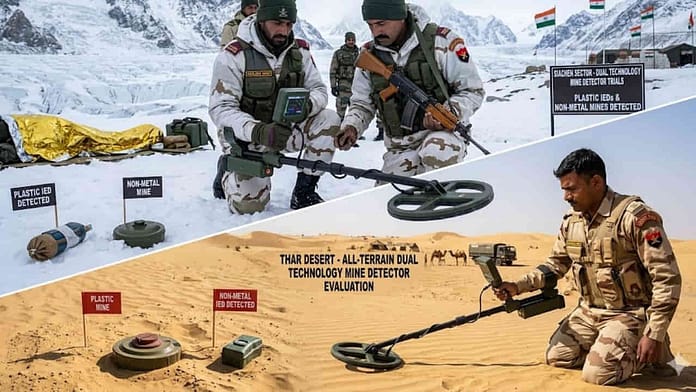
Dual Technology Mine Detector: The Indian Army is now preparing to purchase new-tech Mine Detectors, which will be able to detect both types of Mines and IEDs in the ground. Department of Military Affairs (DMA) under Ministry of Defence has released a tender of Rs 290.11 crore. This purchase is being made for "Dual Technology Mine Detector", designed by taking into account the needs of Modern Battlefield.

The project is therefore considered to be extremely important as terrorist organisations and enemy forces today are using such Mines and Improvided Explosive Devices (IEDs), with metals very low or not at all. The old metal detectors in such situations prove to be neutral at times.

Indian Army such Dual Technology Mine Detector Planning to buy 386 units of . The document stated that the chosen company has to complete the delivery of all equipment within 540 days i.e. close 18 months after the supply order has been received. The last date for this is laid on June 5.

Dual Technology Mine Detector: Why Necessary New Mine Detector

Indian Army Nearly, there are mainly mining detectors such as Shibel and Metex. These are traditional metal detectors, which search for the parts of the dube metal under the ground. But the way of war and terrorism has changed rapidly over the past few years.

अब प्लास्टिक, लकड़ी, सिरेमिक और दूसरी नॉन-मेटलिक सामग्री से बने माइंस और आईईडी का इस्तेमाल बढ़ा है। इनमें मेटल की मात्रा बेहद कम होती है। कई बार एक ग्राम से भी कम मेटल इस्तेमाल किया जाता है। ऐसे माइंस को सामान्य डिटेक्टर पकड़ नहीं पाते।

इसी वजह से सेना अब डुअल टेक्नोलॉजी माइन डिटेक्टर पर फोकस कर रही है। यह सिस्टम केवल मेटल नहीं खोजेगा, बल्कि जमीन के अंदर छिपी वस्तु की बनावट, डेंसिटी और अन्य सिग्नल्स के आधार पर भी उसकी पहचान कर सकेगा।

कैसे काम करेगा डुअल टेक्नोलॉजी सिस्टम

यह नया सिस्टम दो तकनीकों को एक साथ इस्तेमाल करेगा। पहला पारंपरिक मेटल डिटेक्शन सिस्टम होगा और दूसरा ग्राउंड पेनिट्रेटिंग रडार यानी जीपीआर या आईआर तकनीक होगी।

जीपीआर तकनीक जमीन के नीचे मौजूद वस्तु की पहचान उसके डाइइलेक्ट्रिक गुणों और डेंसिटी में बदलाव के आधार पर करती है। इससे यह पता लगाया जा सकता है कि मिट्टी के नीचे कोई संदिग्ध वस्तु दबाई गई है या नहीं।

यह तकनीक खासतौर पर उन इलाकों में उपयोगी होती है जहां दुश्मन कम मेटल वाले माइंस का इस्तेमाल करता है।

डीएमए की तरफ से जारी डॉक्यूमेंट में कहा गया है कि दोनों सब-सिस्टम स्वतंत्र रूप से भी काम कर सकेंगे और जरूरत पड़ने पर एक साथ भी इस्तेमाल किए जा सकेंगे। इससे ऑपरेटर अलग-अलग परिस्थितियों में यूज कर सकेगा।

एक ग्राम मेटल तक पहचानने की क्षमता

जीएसक्यूआर के मुताबिक यह सिस्टम जमीन में दबे ऐसे माइंस और आईईडी को पहचान सकेगा, जिनमें कम से कम एक ग्राम मेटल मौजूद हो।

डिवाइस को इस तरह डिजाइन किया गया है कि वह रियल टाइम में खतरे की पहचान कर सके। दस्तावेज में छह सेंटीमीटर व्यास और चार सेंटीमीटर ऊंचाई वाले ऑब्जेक्ट को रेफरेंस के रूप में लिया गया है।

सूखे इलाके जैसे लेटराइट, मिट्टी और रेतीली जमीन में यह सिस्टम 12 सेंटीमीटर तक गहराई में दबे माइंस का पता लगा सकेगा। वहीं बर्फ, पानी या नमक वाली मिट्टी में भी इसकी क्षमता करीब 10 सेंटीमीटर तक रखी गई है।

सियाचिन से रेगिस्तान तक इस्तेमाल

भारतीय सेना को अलग-अलग मौसम और भौगोलिक परिस्थितियों में ऑपरेशन करने पड़ते हैं। इसी वजह से नए सिस्टम को बेहद कठिन वातावरण के लिए डिजाइन किया गया है।

डॉक्यूमेंट के मुताबिक यह इक्विपमेंट माइनस 10 डिग्री सेल्सियस से लेकर 42 डिग्री सेल्सियस तक के तापमान में काम कर सकेगा। यानी इसे बर्फीले इलाकों से लेकर रेगिस्तान तक इस्तेमाल किया जा सकेगा।

सिस्टम को इस तरह तैयार करने की शर्त रखी गई है कि सैनिक एनबीसी सूट या भारी सर्दियों के कपड़ों में भी इसे आसानी से चला सकें। इसे दोनों हाथों से इस्तेमाल करने की सुविधा भी होगी।

लंबे समय तक ऑपरेशन के दौरान सैनिकों को कम थकान हो, इसके लिए इसमें सपोर्ट हार्नेस और स्लिंग सिस्टम भी दिया जाएगा।

ऑडियो और विजुअल अलार्म की सुविधा

नए डिटेक्टर में दो तरह के अलार्म सिस्टम होंगे। पहला ऑडियो अलार्म और दूसरा विजुअल अलार्म।

अगर जमीन के नीचे कोई संदिग्ध वस्तु मिलती है तो सिस्टम आवाज और स्क्रीन दोनों के जरिए संकेत देगा। दोनों तकनीकों के लिए अलग-अलग तरह की ध्वनि रखी जाएगी ताकि ऑपरेटर आसानी से समझ सके कि किस सिस्टम ने खतरा पकड़ा है।

इसमें हेडफोन के साथ इनबिल्ट स्पीकर का विकल्प भी होगा। विजुअल डिस्प्ले को दिन और रात दोनों समय साफ दिखाई देने लायक बनाया जाएगा। (Dual Technology Mine Detector)

वजन कम रखने पर जोर

भारतीय सेना ने इस सिस्टम के वजन को लेकर भी साफ मानक तय किए हैं। ऑपरेशनल मोड में बैटरी सहित इसका वजन आठ किलो से ज्यादा नहीं होना चाहिए। रक्सैक सहित मैन पोर्टेबिलिटी मोड में वजन 12 किलो से कम रखना होगा। ट्रांसपोर्टेशन मोड में पूरा सिस्टम 20 किलो से अधिक नहीं होना चाहिए।

सूत्रों का कहना है कि भारतीय सैनिक पहले से ही हथियार, गोला-बारूद और दूसरे उपकरण लेकर चलते हैं। ऐसे में हल्का सिस्टम उनकी मोबिलिटी बढ़ाने में मदद करेगा।

कई पोजिशन में इस्तेमाल करने की सुविधा

जीएसक्यूआर में यह भी कहा गया है कि सैनिक इस उपकरण को खड़े होकर, घुटनों के बल या लेटकर भी आसानी से इस्तेमाल कर सकें।

इसके अलावा इसमें “सेलेक्टिव म्यूटिंग” की सुविधा भी होगी। यानी ऑपरेटर जरूरत पड़ने पर अनचाहे सिग्नल्स को बंद कर सकेगा।

ट्रेनिंग के लिए एक्सटर्नल स्पीकर जोड़ने का विकल्प भी दिया जाएगा ताकि जवानों को अभ्यास के दौरान अलार्म स्पष्ट सुनाई दे सके। (Dual Technology Mine Detector)

बैटरी और फील्ड सपोर्ट पर फोकस

सिस्टम में कमर्शियली उपलब्ध रिचार्जेबल बैटरियों का इस्तेमाल किया जाएगा। सेना ने बैटरी बैकअप के लिए भी मानक तय किए हैं।

माइनस 10 डिग्री से लेकर 50 डिग्री तापमान तक यह कम से कम चार घंटे लगातार काम कर सके। वहीं सामान्य तापमान में आठ घंटे तक ऑपरेशन की क्षमता होनी चाहिए।

फील्ड में रखरखाव आसान बनाने के लिए इसमें बिल्ट-इन टेस्ट इक्विपमेंट यानी बीआईटीई सिस्टम भी होगा। इससे सैनिक मौके पर ही खराबी की पहचान कर सकेंगे। (Dual Technology Mine Detector)

बारिश और खराब मौसम में भी काम करेगा

भारतीय सेना चाहती है कि यह सिस्टम बारिश और खराब मौसम में भी प्रभावी तरीके से काम करे।

इसी वजह से इसे ऑल-वेदर ऑपरेशन के लिए डिजाइन किया गया है। हर यूनिट के साथ कैरींग केस और रक्सैक भी उपलब्ध कराए जाएंगे ताकि उपकरण को सुरक्षित तरीके से ले जाया जा सके।

बैटलफील्ड में इंजीनियरिंग यूनिट्स का सबसे महत्वपूर्ण काम सैनिकों और वाहनों के लिए सुरक्षित रास्ता तैयार करना होता है।

माइंस और आईईडी इस काम में सबसे बड़ा खतरा बनते हैं। कई बार सड़क, पुल या सीमावर्ती इलाकों में छिपाए गए विस्फोटक जवानों के लिए गंभीर खतरा पैदा करते हैं।

नया डुअल टेक्नोलॉजी माइन डिटेक्टर ऐसी परिस्थितियों में सैनिकों को तेजी से खतरे की पहचान करने में मदद करेगा। (Dual Technology Mine Detector)