📍New Delhi | 13 Oct, 2026, 11:58 AM
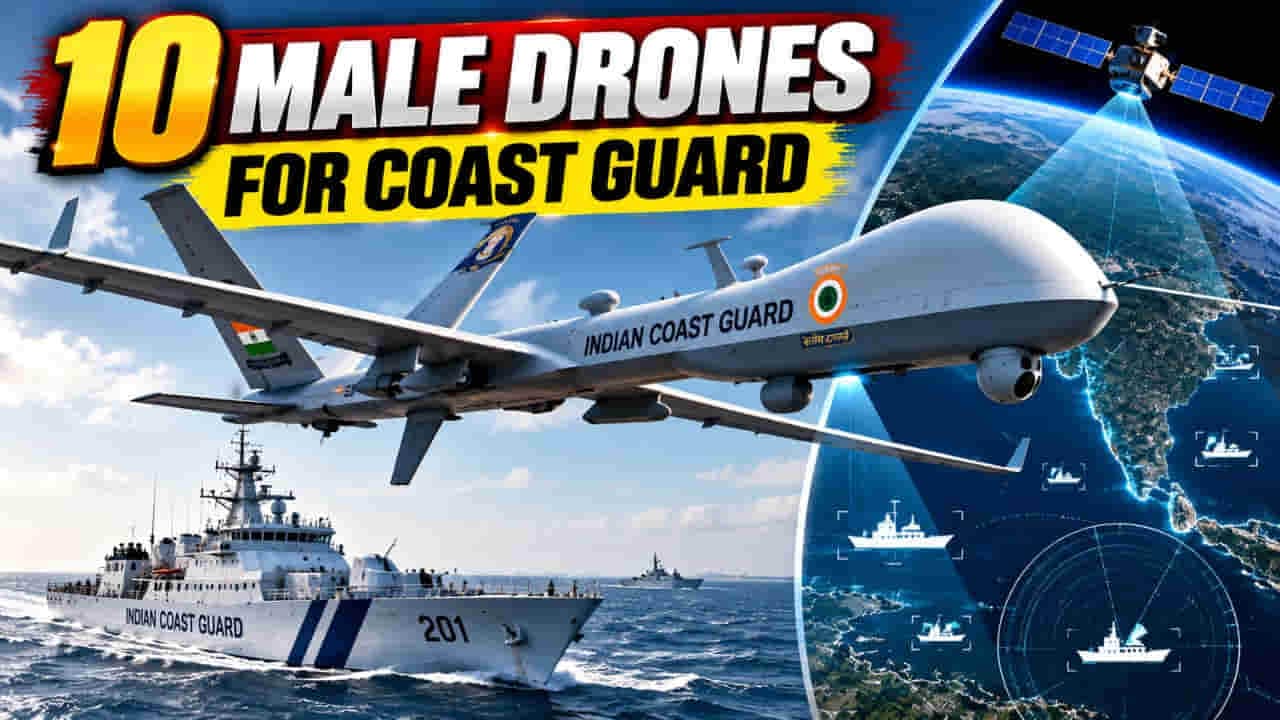
Indian Coast Guard MALE Drones: Indian Coast Guard is preparing to buy 10 Medium Altitude Long Endurance (MALE) Remotely Piloted Aircraft (RPA) to monitor the maritime boundaries of India and strengthen the ability to save people during sea crisis. Ministry of Defence has released RFI for this purchase.
These drones can be used to monitor the sea for a long time, identify suspected ships, help search and rescue operation and monitor marine pollution. It is important that the proposed drones will be equipped with a satellite communication. This will allow them to send information, regardless of the direct radio contact limit from the ground control station.
Indian Coast Guard MALE Drones: Why Need Marine Surveillance for India?
Ministry of Defence 10 MALE for Indian Coast Guard Remotely Piloted Aircraft The purchase of the RFI was released on 15 July 2026. The last date of which has been extended to 7 December 2026.
The scope of maritime security of India is quite large. As per the available government data, the country’s coastline is about 11,099 km long. India’s exclusive economy zone i.e. EEZ extends around 20.1 lakh square kilometres area. In addition, the area of Indian Search and Rescue Region i.e. ISR reaches 1,000 nautical miles from the coast in parts.
The EEZ includes a maritime area of up to 200 nautical miles from the coast. The security of the rights associated with marine resources and economic activities in this area is important. At the same time, ISRR is the maritime area where responsibilities associated with search and rescue are taken for ships and people caught in distress.
Indian Coast Guard Responsibilities such as implementing marine law, monitoring ships, saving people caught in the sea, dealing with marine pollution and protection of offshore establishments are assigned. Reliance on ships and helicopters can be challenging only for frequent monitoring in such a large area. Long-term air-living drones can give extra help in this work.
Satellite will be connected to drones
The need for a mail drone equipped with satellite communication in RFI is explained. These drones work to fly and monitor for a long time at medium height. It is necessary to have a system of line of site i.e. LOS and satellite communication based datalink. The direct contact between the drone and the ground station is required in the LOS link. While with the help of SATCOM, the drones present at a greater distance can also be able to maintain contacts.
These platforms have sought the ability to monitor the day and night, detect suspicious activities, identify ships and monitor their movement. Photos and videos from drones can be delivered to the respective control station in real-time.
Also it is important to have the ability to transmit communications, weather warnings with ships and share data with other systems. Indian Coast Guard MALE Drones
Options from the camera to the maritime radar
RFI should have a variety of payloads and sensors for different work. These include electro-optical and infrared cameras, maritime petrol radar, synthetic aperture radar and panoramic cameras.
Photos can be taken from the electro-optical camera at the time of the day, while the infrared sensors help in low light and night monitoring. Marytime Petrol Radar can be used to detect ships in the sea and monitor their activities.
Synthetic Upper Radar ie SAR is a different kind of radar technology, which can prepare a detailed picture of the ground or surface under the prescribed conditions. Also the proposed payload also includes the system associated with the identification of radar warping receiver, communication relay and ships.
Automatic identification system i.e. AIS is useful in identifying and securing information related to ships. At the same time, equipment such as Identification Friend Or Fore i.e. IFF and Traffic Alerts and Coligen Avaidance System i.e. TCAS operates connected with identity and security in the airspace.
Coast Guard has also taken the option of special equipment to monitor pollution. These include systems like SLAR Antenna, IR and UV Cameras and Laser Fluorescencer. They can be used to detect oil or other pollution in the sea.
RFI also mentions the ability of Communication Intelligence i.e. Comint System, HNS Detection Pod and Gun Pod. However, the final decision of whether all the equipment will be planted in every drone is not fixed right now. Indian Coast Guard MALE Drones
Ability to work even when GPS jam is
समुद्री निगरानी वाले ड्रोन को अलग-अलग मौसम और कठिन परिस्थितियों में काम करना होगा। इसलिए आरएफआई में बारिश, बादल, धूल, रेत और नमक वाली समुद्री हवा जैसे वातावरण में संचालन की क्षमता पर जोर दिया गया है।
ड्रोन में एंटी-जैमिंग और एंटी-स्पूफिंग क्षमता भी होनी चाहिए। जैमिंग में किसी संचार या नेविगेशन सिग्नल को बाधित करने की कोशिश की जाती है, जबकि स्पूफिंग में गलत सिग्नल देकर सिस्टम को भ्रमित किया जा सकता है।
वहीं, जीपीएस उपलब्ध न होने की स्थिति में नेविक के साथ नेविगेशन की क्षमता होनी चाहिए। नेविक भारत की क्षेत्रीय सैटेलाइट नेविगेशन प्रणाली है। हालांकि, किसी विशेष ड्रोन में इसकी वास्तविक क्षमता का आकलन उसके तकनीकी विवरण और परीक्षणों के आधार पर किया जाएगा।
सुरक्षा के लिए साइबर सिक्योरिटी, सिस्टम में अतिरिक्त बैकअप व्यवस्था और ड्रोन का पता लगाने या काउंटर-ड्रोन सिस्टम से जुड़ी क्षमताएं भी तकनीकी जरूरतों में शामिल हैं। (Indian Coast Guard MALE Drones)
ट्रेनिंग, मरम्मत और भारत में रखरखाव पर जोर
सिस्टम में ग्राउंड कंट्रोल स्टेशन, एलओएस और सैटकॉम डेटालिंक, मैनपोर्टेबल तथा वाहन पर लगाए जा सकने वाले रिमोट वीडियो टर्मिनल, ग्राउंड सपोर्ट उपकरण और ट्रेनिंग सिम्युलेटर भी शामिल हैं। ड्रोन में ऑटोमैटिक टैक्सी, टेकऑफ एंड लैंडिंग यानी एटीओएल सिस्टम होना चााहिए।
रक्षा मंत्रालय ने विक्रेताओं से ट्रांसफर ऑफ टेक्नोलॉजी यानी टीओटी की जानकारी भी मांगी है। इसमें यह स्पष्ट करना होगा कि तकनीक का कितना हिस्सा भारत में उपलब्ध कराया जा सकता है। इसके साथ ही स्पेयर पार्ट्स, मरम्मत के उपकरण, परीक्षण सुविधाओं और भारत में मेंटेनेंस, रिपेयर एंड ओवरहॉल यानी एमआरओ व्यवस्था की क्षमता भी महत्वपूर्ण होगी।
ड्रोन में इस्तेमाल होने वाले उपकरणों को भारतीय सेना, नौसेना, वायुसेना और तटरक्षक बल के अन्य आरपीए सिस्टम के साथ काम करने योग्य बनाना भी जरूरी है। इसके लिए इंटरऑपरेबिलिटी और संबंधित तकनीकी मानकों का पालन करना होगा।
साथ ही, ड्रोन को अलग-अलग तरह के हवाई क्षेत्र में ऑपरेट करने और अन्य विमानों से टकराव से बचने वाली प्रणाली की क्षमता भी प्रदर्शित करनी होगी।
यह खरीद डिफेंस एक्विजिशन प्रोसीजर यानी डीएपी 2020 के तहत आगे बढ़ेगी। आरएफआई के अनुसार, प्रक्रिया में सिंगल स्टेज-टू बिड सिस्टम अपनाने का प्रस्ताव है। (Indian Coast Guard MALE Drones)