📍Tokyo | 4 Sep, 2026, 5:19 PM
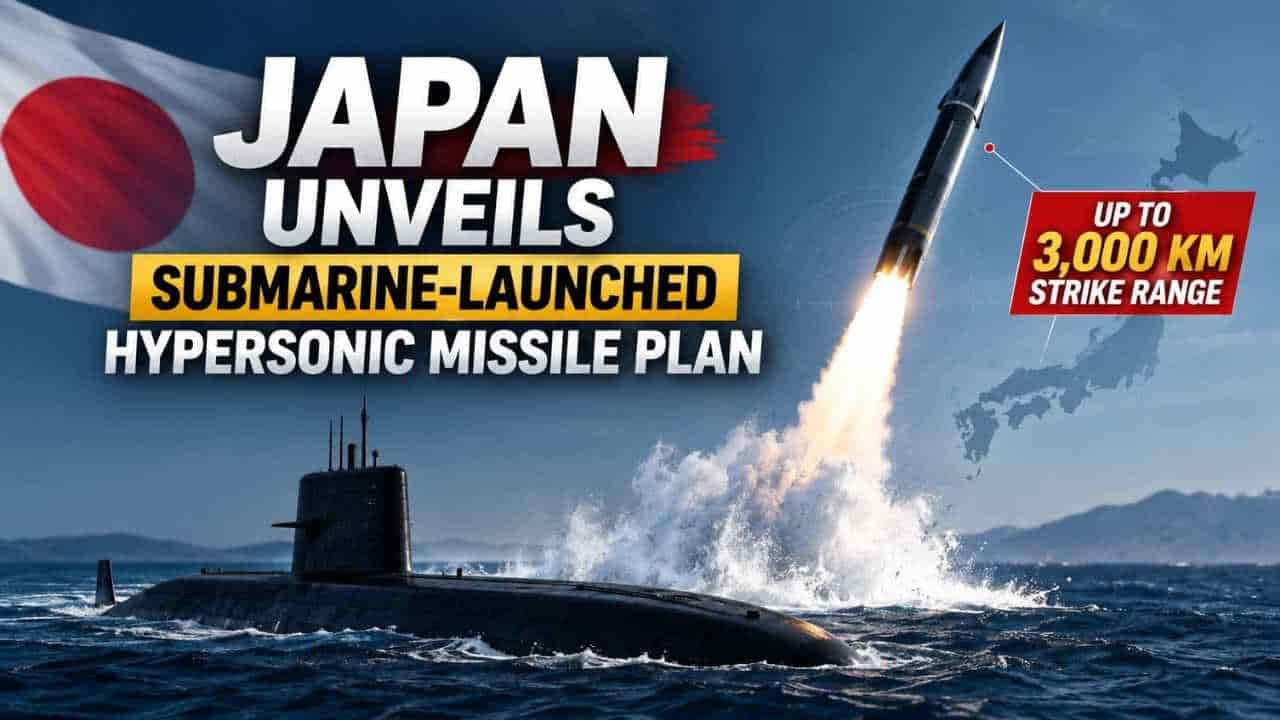
Japan Submarine-Launched Hypersonic Missile: Japan has a major change in its defense strategy. The Ministry of Defense of Japan has included the Underwater-Launch Hypersonic Weapon Program in the defence budget proposal of the FY2027. These hypersonic missiles will be launched from submarines. The aim is to increase the ability to target enemy military bases from a long distance and prepare secure strike platform from within the sea.
The move has been taken at a time when security challenges are increasing in East Asia and military activities in Taiwan Straight, East China Sea and Western Pacific region are constantly accelerating. Japan is now advancing from its traditional defense model and developing capacity that can give him more choice of accountable action in the event of an enemy attack.
Japan Submarine-Launched Hypersonic Missile: Will Launch From Submarines Hypersonic Missiles
japan The new submarines have been shown to be equipped with vertical launch systems i.e. VLS tubes in concept paintings released on behalf of the Ministry of Defence. Each launch tube will have seven to eight hypersonic missiles.
Hyper Velocity Glyding Projectile (HVGP) technology will be used in these missiles. This is a boost-glyde vapan in which the first rocket booster delivers the missile to the upper atmosphere. Glyde vehicle moves towards the target at a speed of more than Mac-5.
The biggest merit of hypersonic weapons is the ability to change direction during their fast speed and flight. That’s why preventing them for a traditional air defense system is considered extremely difficult.
Can reach 3,000 kilometres Marak capacity
Japan is already working on the HVGP program. The range is being extended continuously in its advanced version.
The approximate dot capacity of the block-2A version has been reported about 2,000 kilometres. While the block-2B version is being developed to distinguish targets at a distance of about 3,000 kilometres.
So long distances can give Japan the ability to reach military targets located far from its coastal areas. This capacity in the West Pacific and First Island Chain area in particular holds strategic importance.
Work on Hypersonic Cruise Missiles too
Japan Scrumjet based in addition to boost-glyde weapons Hypersonic Cruise MissyThe technique is also paving. This technology delivers the rocket booster missile to the required speed at the initial stage. Then the scramjet engine produces frequent thrusts from air to oxygen and maintains a sharp speed of the missile.
However, this technique is considered quite complex and is now at the stage of development, but when successful, it will help to create relatively small-sized missiles.
Drones are also equipped with weapons
Japan does not want to rely only on traditional submarines. Ministry of Defence Unmanned Underwater Vehicle i. UUV is also working on the possibilities of equipping long-distance weapons.
इन मॉड्यूलर सिस्टम्स का उपयोग समुद्र में लंबे समय तक गुप्त रूप से तैनात रहने और आवश्यक समय पर हमला करने के लिए किया जा सकता है। (Japan Submarine-Launched Hypersonic Missile)
चीन की नौसैनिक गतिविधियों पर नजर
जापान की यह नई योजना ऐसे क्षेत्रों पर केंद्रित है जहां चीनी नौसेना नियमित रूप से गतिविधियां करती है। विशेष रूप से मियाको स्ट्रेट को रणनीतिक दृष्टि से महत्वपूर्ण माना जाता है।
यह समुद्री मार्ग चीन की नौसेना को पश्चिमी प्रशांत महासागर तक पहुंच प्रदान करता है। किसी संभावित क्षेत्रीय संघर्ष की स्थिति में यही मार्ग नौसैनिक अभियानों के लिए महत्वपूर्ण हो सकता है।
जापान का मानना है कि समुद्र के भीतर छिपी पनडुब्बियों से लॉन्च होने वाले हाइपरसोनिक हथियार दुश्मन के युद्धपोतों, एयरक्राफ्ट कैरियर्स और एंफीबियस बेड़ों के लिए गंभीर चुनौती बन सकते हैं। (Japan Submarine-Launched Hypersonic Missile)
मौजूदा मिसाइलों की सीमाएं
जापान के पास पहले से टाइप-88 जैसी एंटी-शिप मिसाइलें मौजूद हैं। लेकिन इनकी रेंज लगभग 100 किलोमीटर है और ये सबसोनिक कैटेगरी में आती है।
आधुनिक युद्धपोत अब मल्टी-लेयर एयर डिफेंस सिस्टम, इलेक्ट्रॉनिक वॉरफेयर सिस्टम, Close-in Weapon System और एडवांस रडार से लैस हैं। ऐसे में पुराने हथियारों की प्रभावशीलता सीमित मानी जाती है।
इसी कारण जापान एक तरफ स्टेल्थ आधारित टाइप-12 एंटी-शिप मिसाइल विकसित कर रहा है, जबकि दूसरी तरफ हाइपरसोनिक कार्यक्रम को भी आगे बढ़ा रहा है। (Japan Submarine-Launched Hypersonic Missile)
वायुसेना ठिकानों की सुरक्षा चिंता की वजह
जापान ने अपने एयरबेस इन्फ्रास्ट्रक्चर को लेकर भी चिंता जताई है। जापान के पास आधुनिक हार्डनड एयरक्राफ्ट शेल्टर की संख्या सीमित है। अधिकांश संरक्षित शेल्टर शीत युद्ध काल के हैं और पिछले एक दशक में बहुत कम नए शेल्टर बनाए गए हैं।
इसी तरह एयर डिफेंस इंटरसेप्टर मिसाइलों की उपलब्धता को लेकर भी सवाल उठाए गए हैं। हाई इंटेसिटी वाले जंग के हालात में मौजूदा भंडार जल्दी समाप्त होने की आशंका जताई गई है।
ऐसे माहौल में समुद्र के भीतर तैनात पनडुब्बियां अधिक सुरक्षित और टिकाऊ स्ट्राइक प्लेटफॉर्म मानी जा रही हैं। (Japan Submarine-Launched Hypersonic Missile)
निगरानी और टारगेट की पहचान भी बड़ी चुनौती
हालांकि लंबी दूरी की हाइपरसोनिक मिसाइलें तभी प्रभावी होंगी जब उनके लिए सटीक लक्ष्य जानकारी उपलब्ध हो।
मार्च 2026 तक जापान के पास केवल नौ सैन्य निगरानी उपग्रह सक्रिय बताए गए हैं। यही वजह है कि जापान अभी भी कई मामलों में अमेरिका की इंटेलिजेंस, सर्विलांस और रिकॉनिसेंस क्षमताओं पर निर्भर है।
लंबी दूरी की स्ट्राइक क्षमता के लिए टारगेट की पहचान, संचार नेटवर्क और रियल-टाइम डेटा बेहद महत्वपूर्ण माने जाते हैं। (Japan Submarine-Launched Hypersonic Missile)