📍New Delhi | 13 Dec, 2024, 5:22 PM
India-China Disengagement: The big news has been revealed after the disengagement between the Army of India and China in Desang and Demchock on LAC in Eastern Ladakh. The recent satellite imagery of December 12, 2024 indicates that China has deployed in the new places in Depusang Bullz by removing its three posts in October 21, 2024. The Chinese army is close to 20 km back. The formulas say that the old position before the year 2013 has been restored by this step of the Chinese army. India has already reached the blocked petroling routes after the move.
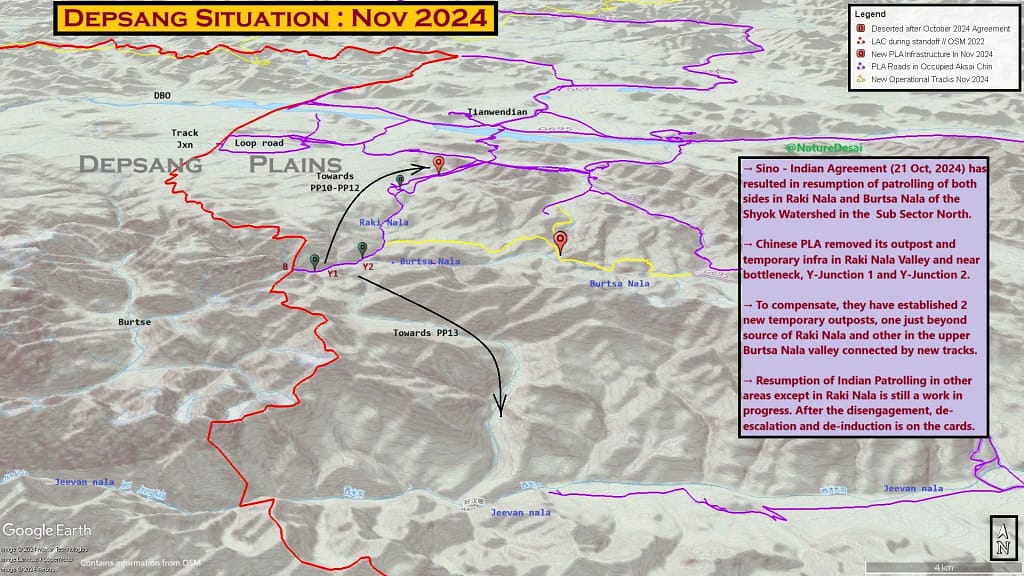
The new satellite photographs have revealed that the Chinese army present on Y-Janction 1 and 2 has removed its outposts and the Chinese army has retreated. Two of these posts were removed by the Chinese Army after the India-China Disingement Agreement in October 2024. The Indian Army was not able to do its petroling from PP-10 to PP-12. Although the third post that China has created has made some away from PP-13. At the same time, the new infrastructure that China has prepared is temporary and made from pre-fabric units.
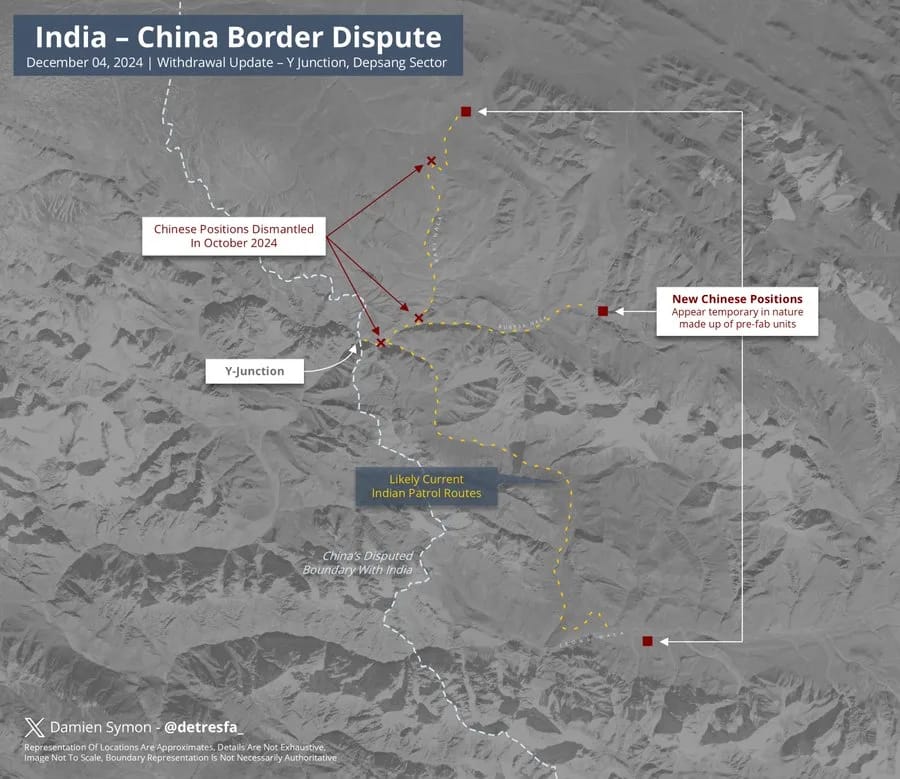
According to the satellite image that had appeared in November last month, China’s People’s Liberation Army (PLA) had removed some of its temporary checkpoints and infrastructure from Raki Nala, Y-Janction 1 and Y-Janction 2. He had made two new temporary checkpoints near Raki Nala’s source and in the upper part of Burtsa Nala. These new posts have been linked to operational tracks, making the mobility of the Chinese army. While this new situation can prove challenging for the Indian Army as it can affect the traditional petroling routes of these areas.
India-China Disengagement: Does PLA cross LAC?
Experts associated with this development say that it is not yet clear whether China has completely deleted its checkpoints across the real control line (LAC). Chinese posts and tents in multiple satellite imagery are visible within the "No-Deployment Zone". Experts say that this new strategy of China can be an attempt to retain its presence around Indian petroling routes.
India-China Disengagement: Chinese army’s return from Desang Balz! But two posts created in "No-Deplloyment Zone" intact the challenges for the Indian Army
Limited relief in petroling
While the Indian Army has resumed petroling in the Desang region, it is limited to only certain areas. First where Petroling Points (PP) had regular patrols from 10 to 13, now the presence of sugar posts and roads in these areas is limiting the petroling of the Indian Army.
Military experts believe that PLA has strategically restructured its presence so as to monitor the petroling of the Indian Army.
India-China talks: step toward trust restoration
India’s National Security Advisor Ajit Doval is the Chinese Foreign Minister Wang Yi to meet at the end of December. This meeting of the Special Representative (SR) level of both countries is being considered important for resolution of the dispute. It is likely to discuss issues related to deployment, petroling, and buffer zones in Ladakh and other areas. The special representative (SR) negotiations proposed at the end of December, will be the first high-level meeting to occur since the Galvan Valley conflict. Earlier, such last talks were held in December 2019 before the tension was increased.
Experts say that this talk can play a key role in carrying trust restoration and border dispute between India and China towards sustainable solutions. This new developments have strategically provided some opportunities to India, but challenges are still intact. Both countries have to work with transparency and trust in order to maintain peace in the Deshang region.