📍Mhow | 13 Feb, 2026, 11:57 AM
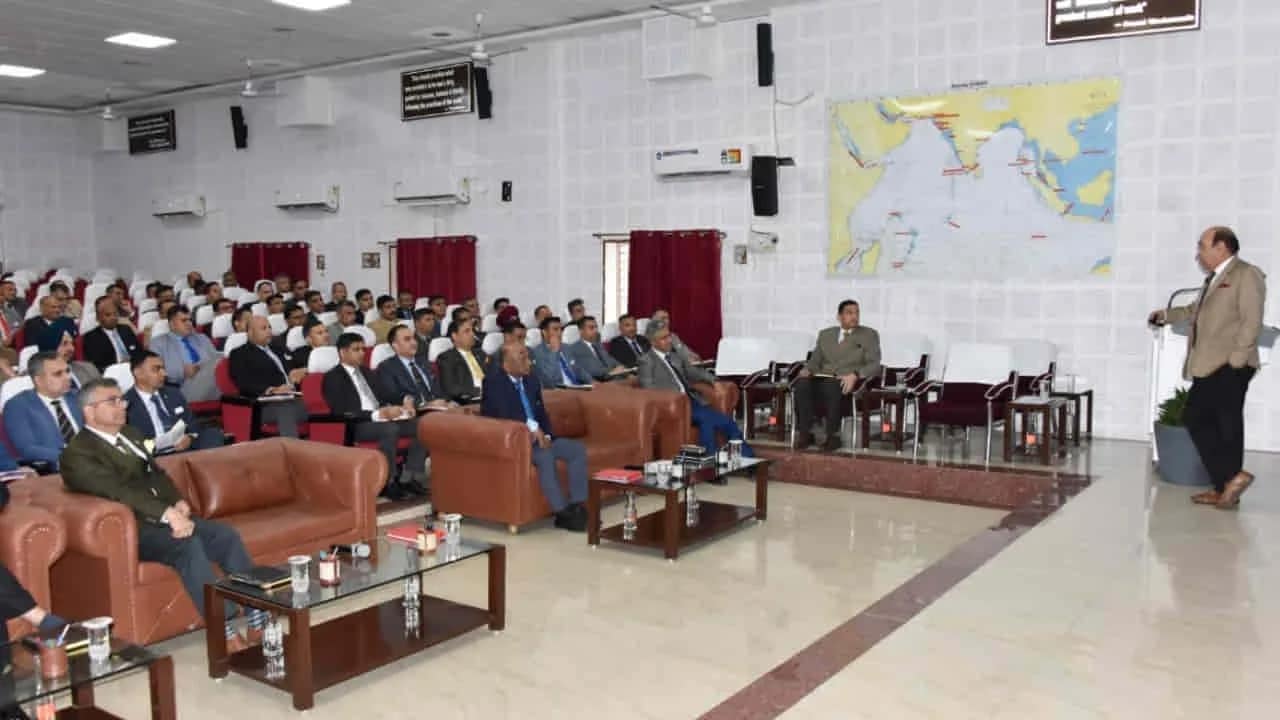
Military-Civil Fusion: Officers attending the Higher Command Course at Army War College were treated to a thought-provoking session as Lt Gen Syed Ata Hasnain (Retd), Member of the National Disaster Management Authority (NDMA), delivered a detailed lecture on the growing importance of disaster risk management in India’s national security framework.
The lecture, titled “Disaster Risk Management as Subset of India’s National Security,” focused on the need to view disasters not merely as humanitarian crises but as serious national security concerns. Addressing senior military officers, Lt Gen Hasnain explained that India’s geographic and climatic conditions make it highly vulnerable to natural disasters such as floods, cyclones, earthquakes, and landslides. These events, he said, can disrupt governance, strain resources, and affect internal stability if not managed effectively.
Drawing from his operational experience and current role with the NDMA, he underlined that disaster preparedness must be proactive rather than reactive. According to him, armed forces cannot limit themselves to post-disaster relief operations. Instead, planning, coordination, and preparedness must begin well before calamities strike.
An engrossing talk on ‘Disaster Risk Management as Subset of India’s National Security’ by Lt Gen S A Hasnain to Higher Command Course at #AWC Proactive role of Armed Forces & enhanced military Civil fusion, bedrock of effective Disaster response & mitigation@adgpi@artrac_ia pic.twitter.com/kxYL9podKE
— Army War College Mhow (@ia_awc) February 12, 2026
One of the key themes of his address was the importance of seamless coordination between military forces and civilian agencies. He emphasized that effective disaster response depends on strong cooperation between the armed forces, state administrations, disaster response units, and national-level agencies. Without proper communication and unified command structures, even well-equipped forces may struggle to deliver timely relief.
Lt Gen Hasnain highlighted the concept of “military-civil fusion” in disaster management. He explained that during emergencies, the armed forces often act as first responders due to their organizational strength, logistics capability, and rapid mobilization. However, long-term resilience can only be built when military expertise and civil planning mechanisms work in sync.
He also pointed out that disaster management today must be understood within the larger context of multi-domain security challenges. Modern security threats are not limited to conventional warfare. Climate change, environmental degradation, urban expansion in vulnerable areas, and infrastructure stress have increased the scale and frequency of disasters. Therefore, preparedness for such events is directly linked to national stability.
The session also included discussions on the importance of regular mock drills, joint training exercises, and integrated planning. Lt Gen Hasnain noted that shifting from a relief-based mindset to a resilience-based strategy requires institutional learning and sustained collaboration. He encouraged officers to think beyond traditional combat roles and appreciate the Army’s expanding responsibilities in safeguarding citizens during crises.
The Higher Command Course at the Army War College is designed to prepare senior officers for higher leadership roles. The inclusion of subjects such as disaster risk management reflects the evolving nature of military education in India. Officers are now being trained to address not only battlefield challenges but also complex internal and humanitarian situations.
Participants described the lecture as engaging and relevant, particularly in light of recent natural disasters across different parts of the country. The interaction that followed allowed officers to raise questions on coordination mechanisms, response timelines, and lessons learned from previous disaster relief operations.
Lt Gen Hasnain’s visit reinforced the Indian Army’s broader commitment to supporting national development and resilience. His address served as a reminder that national security today extends beyond defending borders- it also includes protecting communities from the growing impact of natural and environmental threats.