📍New Delhi | 19 Dec, 2024, 2:02 PM
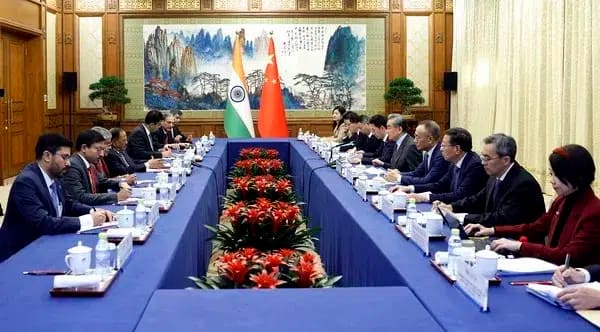
India-China Talks: China recently claimed that the National Security Advisor (NSA) Ajit Dobhal and Chinese Foreign Minister Wang Yi has "consent on six points" to resolve the border dispute. China cited the 2005 agreement in this negotiation, in which the border dispute was talked about separating from bilateral relations.
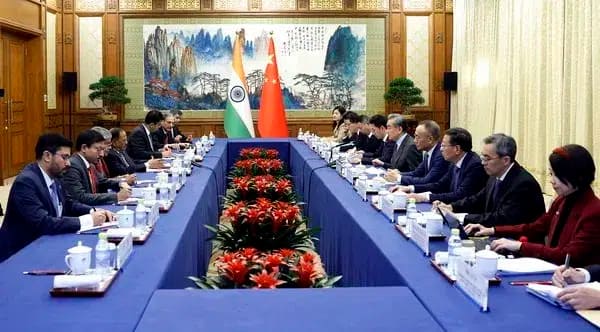
However, the Indian Ministry of External Affairs (MEA) did not mention this claim of China. In the Indian statement, "Consent on the Six Points" was not issued.
India-China Talks: China claims and India silence
The Ministry of External Affairs of China said that the two sides have committed to continuing interaction under the political guiding principles of 2005 to find the "reasonable solution" of the border dispute.
However, Indian sources say that it is China’s strategy to repeatedly mention the 2005 agreement, as it was said to separate the border dispute from bilateral relations, which India is not accepting.
India-China talks: China’s claim ‘Agree made on six points’, but India’s Sati silence!, Know where the trapped screw
2005 Agreement: What does it say?
In 2005 there was an agreement between the special representatives of the two countries. The agreement was made to enhance the long-term partnership between India and China and resolve the border dispute peacefully.
The main points of the agreement were as follows:
- Limit dispute will be resolved through peaceful and friendly interaction.
- Limit dispute shall not be affected by bilateral relations.
- Both sides will respect the actual control line (LAC) up to the final solution of the border.
- The range will be determined based on natural geographical features, which will be determined by the agreed by both sides.
- Under the agreement, both sides will work to maintain peace and stability in border areas.
China’s 2005 Returning to Agreement
According to the sources, China noted the 2005 agreement as it talks about separating the border dispute from bilateral relations. China has been emphasizing this in recent years, but India has not accepted it.
India has clarified that bilateral relations cannot be normal without restoring the first position of 2020. This means that it is not possible to progress in relations until China calls back its soldiers from advance areas.
India-China Disengagement: China’s dual attitude, agreed in negotiations but the soldiers’ deposit on LAC
India-China Talks: Infringement of Agreement and Dispute
China violated this agreement several times after 2005. Indian sources associated with defence and security say that each Chinese infiltration, even if it is temporary, had a violation of this agreement.
The Chinese infiltration was observed as a violation of this Agreement in the Desang Dispute of 2013, the Doclam Hazard of 2017 and the Galvan conflict of 2020.
Commitment to maintaining peace on the border
The agreement also stated that both sides should respect and adhere to the actual control line (LAC) until the final limitation is resolved.
The agreement was the provision of implementing trust construction measures in border areas based on the agreements between the two countries between 1993 and 1996 and ensuring the clarity of LAC.
Differences on Aksai Chin and Arunachal
The agreement stated that both sides will change their stance to find the "package solution" of the border dispute. India claims on Aksai Chin, while China holds its right on the Arunachal Pradesh, especially the Twang region.
भारतीय पक्ष ने हमेशा इस बात पर जोर दिया है कि चीन को 2020 से पहले की स्थिति में वापस जाना चाहिए, जबकि चीन सीमा विवाद को द्विपक्षीय संबंधों से अलग करना चाहता है।
चीन की बुनियादी ढांचे पर आपत्ति
भारतीय रणनीति के तहत 2009 से पूर्वी लद्दाख में बुनियादी ढांचे का निर्माण तेज किया गया। यह गति मोदी सरकार के कार्यकाल में और बढ़ी। चीन इसे 2005 के समझौते का उल्लंघन मानता है।
समझौते में कहा गया कि जब तक सीमा का अंतिम समाधान नहीं हो जाता, दोनों पक्षों को LAC का सम्मान करना चाहिए और शांति बनाए रखनी चाहिए।
नए विवाद की शुरुआत?
हालिया वार्ता में चीन ने 2005 के समझौते का उल्लेख करते हुए कहा कि दोनों पक्षों को सीमा विवाद पर “उचित समाधान” खोजने के लिए आपसी समझ और समायोजन करना चाहिए।
हालांकि, भारतीय विदेश मंत्रालय के बयान में इन दावों का कोई जिक्र नहीं था, जिससे यह सवाल उठता है कि क्या दोनों देशों के बीच सहमति वास्तव में बनी है या नहीं।
भारत और चीन के बीच सीमा विवाद लंबे समय से चल रहा है। 2005 का समझौता इस विवाद को सुलझाने का एक आधार हो सकता था, लेकिन दोनों पक्षों के अलग-अलग दृष्टिकोण और दावों ने इसे और जटिल बना दिया है।