

📍New Delhi | 16 Jan, 2026, 2:18 PM
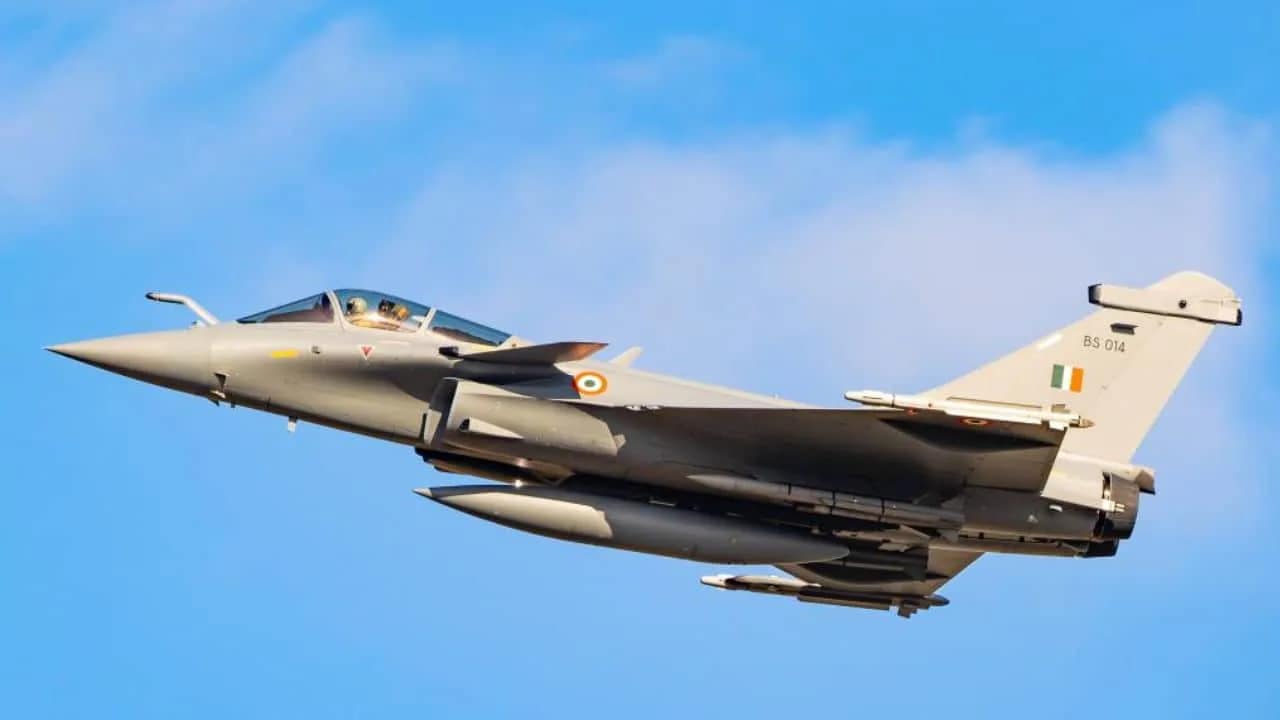
114 Rafale Fighters: India has drawn clear red lines for French aircraft manufacturer Dassault Aviation as negotiations move forward for the proposed acquisition and domestic production of 114 Rafale fighter jets.
According to highly places sources Government has communicated a set of non-negotiable clauses on technology transfer and combat integration conditions that will shape not only the cost and timelines of the programme, but also India’s long-term ability to operate the jets independently in a networked battlefield.
At the centre of India’s demands is a push to ensure the Rafale fleet is not merely assembled in India, but genuinely adapted for Indian operational requirements, including indigenous weapons, missiles and command-and-control systems.
114 Rafale Fighters: Two key non-negotiables: Indian weapons and secure data integration
Sources indicate that the most critical condition is that Indian-made weapons, missiles and ammunition must be integrated on all 114 jets. This would mean the Rafale’s onboard mission computer and weapons management system must be compatible with a range of Indian platforms and munitions, enabling seamless employment without depending on foreign approvals at every stage of modifications or upgrades.
Equally important is India’s insistence on secure data links that allow real-time connectivity between the Rafale and India’s wider air defence ecosystem. The idea is to digitally integrate the fighter with Indian radars and sensors, so imagery and operational data can be shared instantly with ground-based controllers. Such networking is increasingly viewed as decisive in modern air warfare, allowing pilots to receive updated threat information, coordinate engagements and operate as part of a multi-layered combat grid.
Though these conditions may appear routine on paper, they require deep technical access. Integration of weapons and secure communications typically demands changes in software architecture and coding of the fighter’s mission systems. This is where India is pushing Dassault to go beyond standard delivery terms.
Transfer of technology: airframe, engines and avionics
Beyond operational integration, India is seeking a significant transfer of technology (ToT) package for manufacturing. Sources said the ToT will include the airframe, and will involve Dassault’s major suppliers such as Safran, which makes the Rafale’s engines, and Thales, which provides key avionics and electronics.
If the ToT is executed fully, indigenous content in the aircraft could rise to an estimated 55–60 per cent over time. That would mark a major leap from basic assembly work, and aligns with India’s larger Make in India and defence manufacturing ambitions, building an ecosystem capable of producing and sustaining high-end fighter jets domestically.
Newer Rafale versions on the table: F4 and future F5
India’s current Rafale fleet of 36 jets, ordered in 2015, belongs to the F3R configuration-the same version flown by the French Air and Space Force. However, the Rafale itself has evolved significantly since then.
Dassault has introduced the upgraded F4 standard, and India is understood to be seeking a mix of the F4 and the upcoming F5 version. The upgrade path is expected to bring improvements across multiple areas: next-generation AESA radar with longer detection ranges, enhanced resistance to electronic warfare and more advanced self-protection suites capable of countering emerging threats.
The new standards are also expected to feature improved long-range detection and identification capabilities, supported by longer-range missiles. Enhanced satellite communications and AI-enabled decision-support tools for pilots and improving situational awareness and response time are also part of the envisioned upgrade package.
Deal size and manufacturing route
The Ministry of Defence is expected to move towards finalising the deal, valued at around $8 billion, aimed at bridging India’s widening air power gap. The jets are planned to be delivered under the Make in India framework, with Dassault partnering an Indian entity for domestic production.
A key development in this context came last year when Dassault increased its stake in Dassault Reliance Aerospace Limited (DRAL) from 49 per cent to 51 per cent, turning it into a majority-owned subsidiary. DRAL’s Indian partner is Reliance Infrastructure, led by Anil Ambani.
Why the Rafale expansion matters to the IAF
The Indian Air Force currently operates 36 Rafales, while the Indian Navy has ordered 26 Rafale-M jets for carrier operations. Expanding the Rafale numbers could yield cost efficiencies in training, spares and maintenance.
India already has a Rafale training and maintenance infrastructure at the Ambala air base, and Safran has announced an engine MRO hub in Hyderabad, strengthening in-country sustainment capabilities.
The urgency is real. The IAF’s squadron strength has fallen to 29, among the lowest levels in decades at a time when India faces a complex two-front security environment.
For New Delhi, the 114-jet programme is no longer simply a procurement plan, it is increasingly being framed as a strategic requirement to restore credible air combat capacity and ensure technological autonomy in the years ahead.


