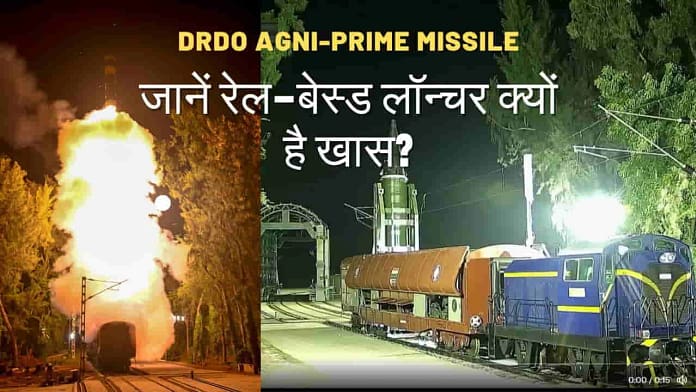
Agni-Prime Missile: DRDO successfully test fire-prime missiles while gaining historical achievement on Thursday. This test is so special as the first time this missile was launched from a rail-based mobile launcher. This test was found in the death of DRDO and Stratgeic Forces command. At the same time, India has joined the list of select countries that have the ability to launch missiles from the Canisterized Rail Network.
Astra BVRAAM: Indigenous Cayer, DRDO and Air Force, imposed in Astra Missile, Successful Test
Defence Minister Rajnath Singh congratulated DRDO, Strategic Forces Command and Indian Armed Forces, stating this success "historic moment". The Ministry of Defence said in its official statement that this test will further strengthen the strategic capabilities of India and prove decisive to future military strategies.
Agni-Prime Missile: What is Agni-Prime Missile?
The fire-prime missile is a new generation medium-range ballistic missile of India. It is designed to kill from 1,000 to 2,000 kilometres. This missile is capable of carrying both nuclear and traditional weapons.
It is the upgrade version of fire-I and fire-II, but it has a lighter, more accurate and technically advanced. The weight of fire-prim is about 11,500 kg, which is about half than fire-III. Its canisterized design allows it to store for a long time and launch immediately at any time.
🚨 Big Defense Milestone!
India successfully test-fires Intermediate Range Agni-Prime Missile from a Mobile Launcher — a first-of-its-kind feat 🇩
✅ Range: up to 2000 km
✅ Short time delivery time
✅ Advanced canisterised launch system
✅ Fully operational pic.twitter.com/NdSMlnOlmF— Raksha Samachar | 🇮🇳 (@RakshaSamachar) September 25, 2019
Why is Rail-based Mobile Launcher Special?
The biggest feature of this test is that the fire-prime for the first time was released from a rail-based mobile launcher. This launcher can be easily launched on Indian Railway Network without any special preparations.
Rail-based launcher is a fully self-contend system. It has the ability to launch modern communication tools, security systems and independently. It can prepare and launch the missile in a short time, allowing India to take immediate account actions.
India’s railway system is one of the largest network in the world, with a total length of 69,181 km. While, India is rapidly expanding rail networks around China border. The rail network here is mainly the gymmay of the North Eastern States (Northest Frontier Railway), where it plans to create 500 km new lines in 2025. Here the rail network of 800-1,000 km already exists in the areas adjacent to the LAC to 100 to 200 km. Whereas, Nathu La in Sikkam, adjacent to LAC and plans to connect several terrains to Tawaang in Arunachal. After which 10 to 12 cities of China will come to the range of fireprimes. Fire-prime missiles can become a major threat to military infrastructure deployed in the western regions of China.
The use of rail networks helps the missile to move to any part of the country, making it extremely difficult for the enemies to track and destroy it. Special trains carrying it can hide in tunnels. That doesn’t make it look at anyone. This technique can prove "Game Changer" in India’s defence strategy.
"Text Book Launch"
24 सितंबर को किए गए परीक्षण के दौरान मिसाइल की ट्रैजेक्टरी (trajectory) को कई ग्राउंड स्टेशनों से ट्रैक किया गया। डीआरडीओ के वरिष्ठ वैज्ञानिकों और स्ट्रैटेजिक फोर्सेसज कमांड के अधिकारियों ने इस लॉन्च को देखा और इसे “टेक्स्ट बुक लॉन्च” बताया, यानी यह पूरी तरह सफल रहा और मिशन के सभी उद्देश्यों को हासिल किया गया।
2,000 किलोमीटर तक की रेंज के साथ यह मिसाइल पाकिस्तान और चीन जैसे पड़ोसी देशों तक मार करने में सक्षम है। रेल-आधारित लॉन्चर से तैनाती से भारत की सेकंड स्ट्राइक कैपेबिलिटी मजबूत होगी। वहीं, परमाणु युद्ध की स्थिति में यह क्षमता बेहद महत्वपूर्ण होती है, क्योंकि इससे भारत दुश्मन के पहले हमले के बाद भी प्रभावी जवाब दे सकता है।
इससे पहले अग्नि-प्राइम का पहला सफल परीक्षण 28 जून 2021 को ओडिशा के डॉ. एपीजे अब्दुल कलाम द्वीप से किया गया था। इसके बाद दिसंबर 2021, जून 2023 और अप्रैल 2024 में भी सफल उड़ान परीक्षण हुए। सड़क-आधारित मोबाइल लॉन्चर से यह मिसाइल पहले ही सेना में शामिल की जा चुकी है। लेकिन रेल-आधारित लॉन्चर से यह पहला परीक्षण था।
अग्नि-प्राइम की खूबियां
अग्नि-प्राइम मिसाइल को कई एडवांस टेक्नोलॉजी से लैस किया गया है। हल्के डिजाइन होने की वजह से इसे ले जाना आसान है। इसमें डुअल रिडंडेंट नेविगेशन सिस्टम लगाया गया है, जिसमें आईएनएस, जीपीएस और आईआरएनएसएस शामिल हैं। इसके कारण इसका सर्कुलर एरर प्रोबेबल (सीईपी) 10 मीटर से भी कम है, यानी यह अपने लक्ष्य को बहुत सटीकता से भेद सकती है।
मिसाइल में मैन्यूवरेबल री-एंट्री व्हीकल (MaRV) तकनीक है, जो इसे दुश्मन के मिसाइल डिफेंस सिस्टम से बचने में सक्षम बनाती है। इसमें थ्रस्टर या एयरोडायनामिक कंट्रोल सिस्टम होते हैं, जिससे यह मिसाइल वायुमंडल में पुनः प्रवेश के दौरान अपनी दिशा बदल सकती है। यह दो चरणों में सॉलिड ईंधन पर चलती है। इस मिसाइल को कैनिस्टर में स्टोर किया जाता है। जिससे यह मौसम और बाहरी खतरों से बची रहती है और साथ ही इसे फटाफट लॉन्च किया जा सकता है।
किन-किन देशों के पास है यह सुविधा
रेल-बेस्ड लॉन्चर सिस्टम बहुत कम देशों के पास है। रूस ने 1980 में आरटी-23 मिसाइल के लिए इसका इस्तेमाल किया था। चीन के पास डीएफ-41 मिसाइल का रेल वर्जन है। डीएफ-41 आईसीबीएम के रेल वर्जन को 2015-2016 में टेस्ट किया गया था। यह सॉलिड-फ्यूल्ड और मल्टीपल इंडिपेंडेंटली टारगेटेबल री-एंट्री व्हीकल (MIRV) तकनीक से लैस है। MIRV की खासियत है कि एक मिसाइल कई वारहेड्स ले जा सकती है, और प्रत्येक वारहेड को अलग-अलग टारगेट्स पर निशाना बनाने की क्षमता होती है। इसे पीएलए की रॉकेट फोर्स ऑपरेट करती है।
वहीं, उत्तर कोरिया ने 15 सितंबर, 2021 में ह्वासोंग-11A मिसाइल को रेल से छोड़ा था। जिसे रेलवे-बोर्न मिसाइल रेजिमेंट ने ऑपरेट किया था। वहीं, पाकिस्तान के पास अभी ऐसी कोई सुविधा नहीं है और वह अभी भी रोड बेस्ड मिसाइलों पर ही निर्भर है।